You click Print, select Microsoft Print to PDF as your printer, and hit OK. A new file appears on your desktop. You feel safe. You assume that because you "printed" the document, it’s a fresh copy-like taking a photocopy of a page. The old drafts, comments, and author names should be gone, right?
Wrong. That assumption is one of the most common mistakes people make when sharing sensitive documents. In fact, Print to PDF workflows often retain hidden data like author names, software versions, and internal file paths. This isn’t just a minor glitch; it’s a structural design choice by operating systems that prioritizes visual fidelity over privacy. If you are sending contracts, resumes, or confidential reports, you might be leaking more information than you realize.
The Myth of the "Clean" Photocopy
Most users think of digital printing as analogous to physical printing. When you run a paper through a photocopier, you get a blank sheet with ink on it. No history, no metadata, just the image. We expect virtual printers to do the same thing: take the visual content and output a new file, leaving the old baggage behind.
But PDFs aren’t images. They are complex containers defined by the ISO 32000 standard. Inside every PDF, there are layers of data that exist independently of what you see on the screen. When you use a built-in OS tool like Microsoft Print to PDF or macOS Quartz PDF, the driver doesn’t “scrub” the file. It rebuilds it. And in rebuilding it, it often copies-or even adds-metadata from the source application.
Consider this scenario: You have a Word document titled "Q3_Salary_Negotiations_Draft.docx." You print it to PDF. The resulting PDF looks clean. But if you open its properties, you’ll likely find the Title field set to "Q3_Salary_Negotiations_Draft," the Author set to your name, and the Creator set to "Microsoft Word." The filename itself became part of the permanent record.
Where the Hidden Data Lives
To understand why Print to PDF fails to sanitize your files, you need to know where the data hides. The PDF format uses two primary storage areas for metadata, and most casual tools only touch one-or neither.
- The Info Dictionary: This is the older, traditional metadata container. It holds basic fields like Title, Author, Subject, Keywords, CreationDate, and ModDate. Many simple cleaners target this dictionary.
- The XMP Stream: Extensible Metadata Platform (XMP) is a newer, XML-based packet embedded directly into the PDF structure. It contains richer data, including detailed revision history, camera settings (if images are embedded), and custom tags added by software like Adobe Acrobat or Microsoft Office.
When you use Windows Print to PDF, the system maps job properties-like the document title and user name-from the Windows Print Spooler API directly into the new PDF’s Info dictionary. Meanwhile, the XMP stream might be regenerated with default values, but it rarely gets wiped clean. Worse, if your original PDF contained embedded fonts or images with their own EXIF data, those can survive the conversion process intact.
Why Operating Systems Don't Strip Metadata
You might wonder: Why don’t Microsoft, Apple, or Linux developers just add a "Strip All Metadata" checkbox to the print dialog? The answer lies in the purpose of these tools.
Virtual PDF drivers are designed for convenience and fidelity, not security. Their job is to ensure that the PDF looks exactly like the printed page would-preserving vector graphics, searchability, and layout. Security researchers and standards bodies like the PDF Association emphasize that metadata is essential for archiving (PDF/A) and accessibility (PDF/UA). Automatically stripping all metadata could break compliance requirements for organizations that rely on long-term document preservation.
Furthermore, sanitization is a high-risk operation. If a tool accidentally deletes critical structural data, the PDF becomes corrupted. By keeping the scope narrow-just rendering pages-the OS avoids liability for data loss. As a result, the burden of sanitization falls entirely on the user.

The Risks of Relying on Print-to-PDF
Assuming Print to PDF cleans your file can lead to serious privacy breaches. Here are three common scenarios where this matters:
- Job Applications: Your resume PDF might reveal the software version used to create it, your previous employer’s naming conventions (if saved internally), or even deleted sections that remain as orphaned objects in the file structure.
- Legal Documents: Lawyers often share redacted exhibits. If they merely "print to PDF" after blacking out text, hidden layers or metadata might still contain the original unredacted information. Courts have ruled against parties who failed to properly sanitize documents using proper redaction tools.
- Journalism and Whistleblowing: Source protection is paramount. A leaked document that retains an author’s name, creation timestamp, or internal server path can instantly identify the whistleblower, defeating the purpose of anonymity.
In each case, the visible content might look safe, but the invisible layer tells a different story.
How to Actually Remove PDF Metadata
If you need to share a PDF securely, you must use tools explicitly designed for sanitization. There are three main approaches, ranging from built-in features to specialized third-party solutions.
1. Use Document Inspectors (For Office Files)
If your source is a Word or PowerPoint file, use Microsoft’s built-in Document Inspector. Go to File > Info > Check for Issues > Inspect Document. This tool allows you to delete document properties, personal information, and revisions before you even convert to PDF. However, note that this only cleans the *source* file. The PDF generation step may still inject new metadata (like the Producer field).
2. Professional Desktop Software
Adobe Acrobat Pro offers a "Remove Hidden Information" feature under Tools > Protect. This is the industry standard for legal and corporate environments. It strips metadata, removes hidden text, and sanitizes scripts. The downside? It requires a paid subscription, and you must trust Adobe’s servers if you use their cloud features. For many users, the cost and complexity are prohibitive.
3. Browser-Based Client-Side Tools
For a faster, free, and more private option, consider using a browser-based tool that processes files locally. Unlike online converters that upload your document to a remote server, client-side tools run entirely in your browser using WebAssembly and JavaScript. This means your file never leaves your device.
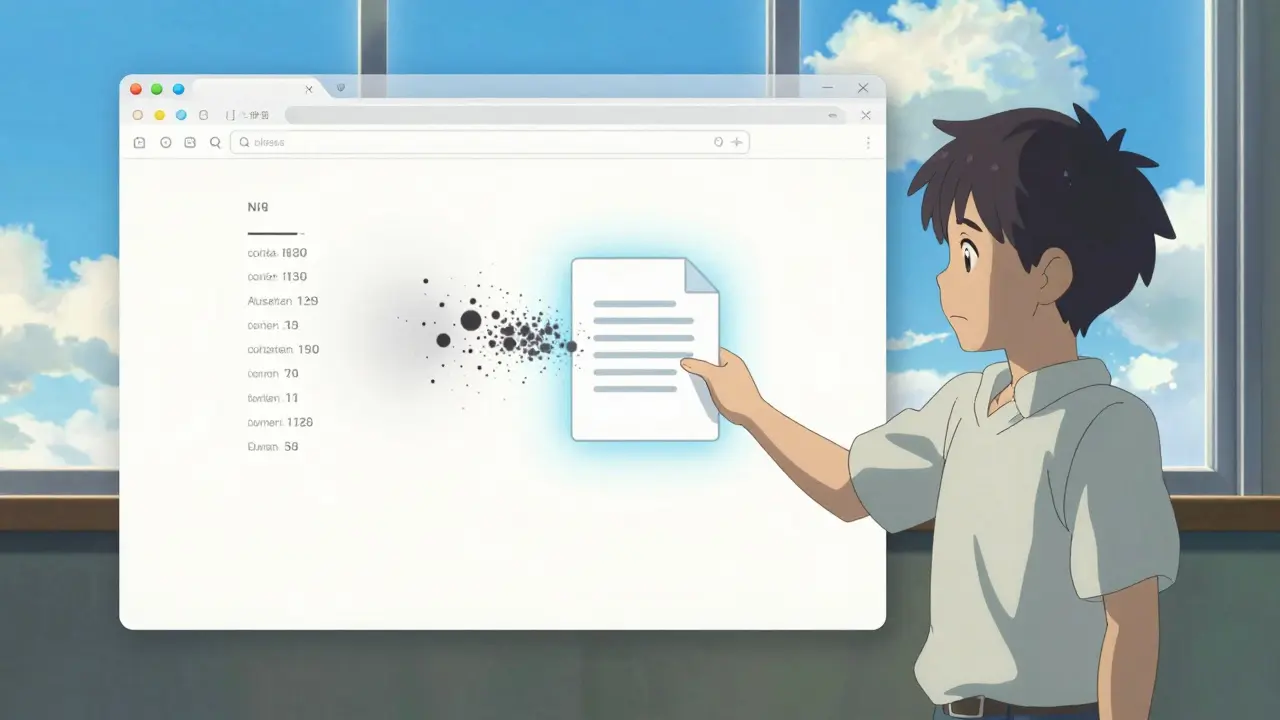
One such tool is Vaulternal's Metadata Remover. It works by reading the PDF structure directly in your browser, identifying both the Info dictionary and the XMP stream, and rewriting them to be empty. Because it runs locally, you can verify its privacy claims by opening your browser’s network tab-you’ll see no outbound requests while the tool processes your file. It also preserves the visual integrity of the document, ensuring that the cleaned PDF opens everywhere without re-rasterization artifacts.
This approach is ideal for journalists, freelancers, and anyone who wants to avoid installing heavy software or paying for subscriptions. It handles the technical complexity of dual-metadata stores automatically, giving you peace of mind without the learning curve.
Comparison: Sanitization Methods at a Glance
| Method | Metadata Stripped | Privacy Level | Cost | Best For |
|---|---|---|---|---|
| Print to PDF | Minimal (often adds new metadata) | Low | Free | Visual consistency only |
| Office Document Inspector | Source file properties only | Medium | Free (with Office) | Pre-export cleanup |
| Adobe Acrobat Pro | Comprehensive (Info, XMP, hidden layers) | High (local processing) | Paid Subscription | Enterprise/Legal teams |
| Vaulternal Metadata Remover | Comprehensive (Info + XMP) | Very High (Client-side only) | Free | Individuals, Journalists, Privacy-conscious users |
Verifying Your Cleaned PDF
After removing metadata, how do you know it’s actually gone? Don’t just guess. Verify it.
You can use free command-line tools like ExifTool to inspect the file. Run `exiftool yourfile.pdf` to see all remaining tags. If you prefer a graphical interface, many PDF viewers allow you to check the "Properties" or "Document Properties" window. Look for fields like Author, Creator, and Producer. If they are blank or generic, you’re good. If you see your name or internal filenames, start over.
Some advanced tools, including Vaulternal’s Metadata Remover, offer a JSON export of removed fields. This provides a clear audit trail, showing exactly what was stripped-a useful feature for compliance officers who need to prove that data minimization occurred.
Frequently Asked Questions
Does 'Print to PDF' remove all metadata from my file?
No. Print to PDF typically preserves or even adds metadata such as the document title, author name, and software version. It is designed for visual fidelity, not data sanitization. Both the Info dictionary and XMP streams often remain intact or are repopulated with new data.
What is the difference between the Info dictionary and XMP metadata?
The Info dictionary is an older, simpler metadata container holding basic fields like Title and Author. XMP (Extensible Metadata Platform) is a more complex, XML-based stream that can hold detailed revision history, custom tags, and embedded object data. Effective cleaning requires removing data from both locations.
Is it safe to use online PDF metadata removers?
Online tools require uploading your file to a remote server, which poses a privacy risk for sensitive documents. Client-side tools that process files locally in your browser via WebAssembly are safer because the file never leaves your device. Always check if the tool verifies local processing.
Can I remove metadata from a PDF without installing software?
Yes. Browser-based tools like Vaulternal's Metadata Remover allow you to strip metadata without installing any software. These tools run directly in your web browser, offering a quick and private solution for occasional users.
Will removing metadata affect the appearance of my PDF?
No. Properly designed metadata removers only alter the hidden data structures (Info dictionary and XMP streams) and leave the visual content streams untouched. The resulting PDF will look identical to the original and will open correctly in all standard viewers.
Why does Microsoft Print to PDF keep the filename as the title?
This is intentional behavior. The Windows print subsystem maps the document job name-which often defaults to the source filename-into the PDF's Title field. This helps users identify files later but compromises privacy if the filename contains sensitive information.
How can I verify that metadata has been removed?
You can use tools like ExifTool (command-line) or check the Document Properties in your PDF viewer. Look for empty fields in Author, Creator, and Title. Some specialized tools also provide a JSON report of removed fields for verification.
Is Adobe Acrobat Pro necessary for removing metadata?
While Adobe Acrobat Pro is a powerful industry-standard tool, it is not strictly necessary for individual users. Free, client-side browser tools can achieve similar results for metadata removal without the subscription cost or installation overhead.