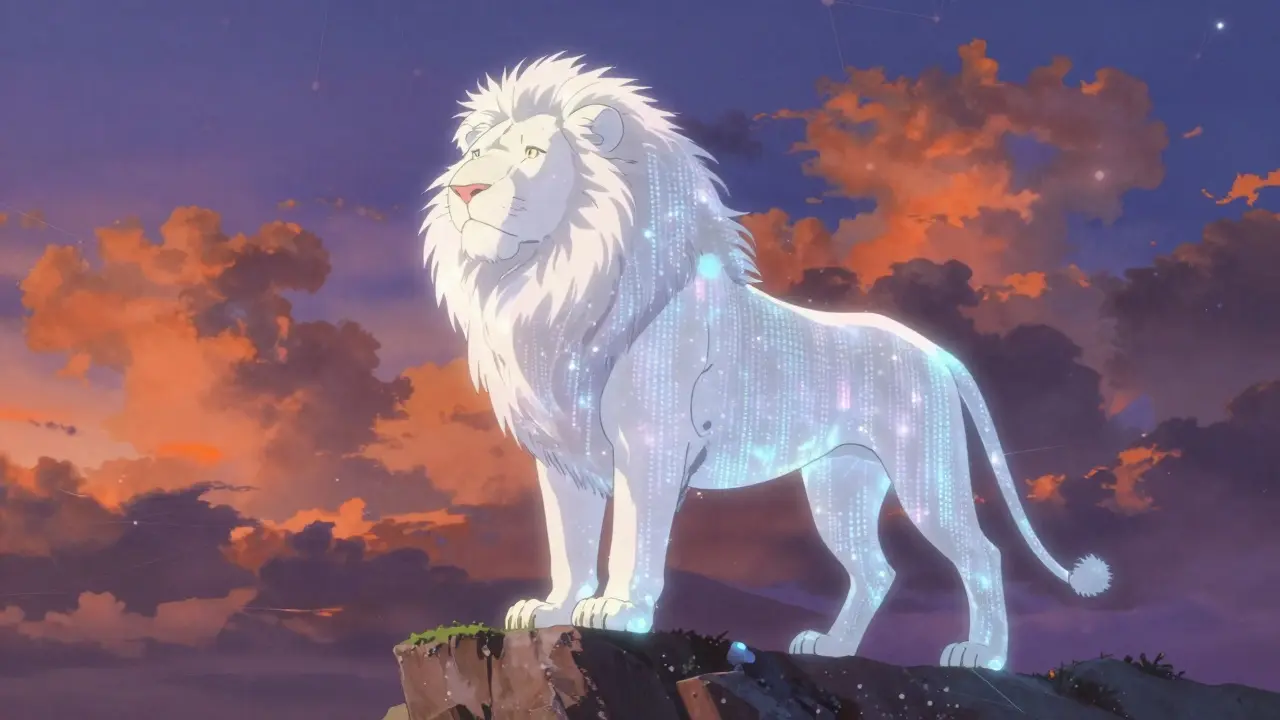
Have you ever seen a cryptocurrency with a name that sounds like a classic cartoon character and wondered if it’s the next big thing? You might have stumbled upon The White Lion (KIMBA), a meme token built on the Solana blockchain. It promises community spirit, nods to wildlife conservation, and tries to ride the wave of nostalgia for Osamu Tezuka’s famous anime. But here is the hard truth: KIMBA is not just another shiny new coin. It is a textbook example of what happens when hype meets extreme market thinness.
If you are looking at KIMBA right now, you probably want to know three things: What is it really? Is it safe to buy? And could it actually make you money? Let’s cut through the marketing noise and look at the raw data, the mechanics, and the risks involved in holding this specific asset in the current crypto landscape.
The Basics: What Exactly Is KIMBA?
KIMBA is a speculative meme token operating on the Solana network. Unlike utility tokens that power decentralized applications or governance tokens that give you voting rights in a protocol, KIMBA exists primarily as a cultural symbol. It draws its identity from "Kimba the White Lion," an iconic anime character created by Osamu Tezuka. The project claims to represent courage, justice, and creativity, aiming to unite fans under a digital banner.
Technically, there is nothing special about how KIMBA works. It uses the standard token architecture provided by Solana. This means it benefits from Solana’s fast transaction speeds and low fees, but it does not introduce any new code, smart contract innovations, or unique features. If you have used Phantom wallet to swap SOL for USDC, you already know exactly how KIMBA transactions work. It is a simple transfer of value between wallets, facilitated by decentralized exchanges (DEXs).
The supply structure is massive, which is common for meme coins trying to create psychological affordability. There are exactly 2.1 trillion KIMBA tokens in total supply. However, only about 168 billion are currently circulating. This gap between total supply and circulating supply matters because it affects the Fully Diluted Valuation (FDV). When you see a low price per token, remember that billions more could enter the market later, potentially diluting the value of your holdings.
Market Reality: Price, Volume, and Liquidity
Let’s talk numbers, because they tell a different story than the project’s website does. As of late 2025 and moving into 2026, KIMBA trades at a fraction of a penny-around $0.00000009 USD. While that looks cheap, the real issue is liquidity. Liquidity refers to how easily you can buy or sell an asset without causing its price to crash or spike wildly.
| Metric | Value | Implication |
|---|---|---|
| Market Cap | ~$19,500 USD | Extremely small; highly vulnerable to manipulation |
| 24-Hour Volume | $500 - $1,400 USD | Very low activity; difficult to exit large positions |
| All-Time High | $0.0003177 (Dec 2024) | Current price is down ~99.9% from peak |
| Holders | ~4,470 | Small community compared to top meme coins |
| Active Markets | 2 DEX pairs | Limited trading venues increase slippage risk |
A daily trading volume of less than $1,500 is dangerously low for any investment. To put that in perspective, major Solana meme coins like BONK or dogwifhat (WIF) trade hundreds of millions of dollars daily. With KIMBA, if you try to sell even a modest amount of tokens, you might not find enough buyers. This causes "slippage," where the price you expected to get drops significantly by the time your order executes. In some cases, you might not be able to sell at all until someone else buys first.
The market capitalization of roughly $19,500 places KIMBA outside the top 3,500 cryptocurrencies. This means it has no institutional interest, no major exchange listings (like Binance or Coinbase), and relies entirely on peer-to-peer trading on decentralized platforms like Raydium or Orca. For a beginner, this creates a high barrier to entry not because of technical complexity, but because of financial risk.

The Nostalgia Trap: Brand vs. Business
One of the main selling points of KIMBA is its connection to Osamu Tezuka’s legacy. The project description often mentions honoring the artist and promoting wildlife conservation. It sounds noble, doesn’t it? But we need to separate branding from business fundamentals.
There is no public evidence of an official licensing agreement between the KIMBA team and Tezuka Productions or any related copyright holders. In the world of intellectual property, using a character’s likeness without permission is risky. More importantly, none of the sources document actual partnerships with wildlife charities or educational institutions. When a project says it supports a cause, you should look for receipts: donation records, press releases from partner NGOs, or transparent treasury reports. KIMBA lacks these verifiable links.
This creates a "nostalgia trap." Investors buy because they love the anime, not because they believe in the token’s economics. Once the emotional hook fades, the price usually follows. We have seen this pattern repeatedly with other IP-themed meme coins that failed to deliver utility. Without a clear revenue model or active development roadmap, the brand appeal wears off quickly.
Risks You Need to Know Before Buying
Investing in low-cap meme coins is not investing in the traditional sense; it is speculation. Here are the specific dangers associated with KIMBA:
- Concentration Risk: With only 4,470 holders, a small number of "whales" likely control a large percentage of the supply. If one of these holders decides to dump their tokens, the price could collapse overnight.
- Liquidity Traps: As mentioned, low volume means you might get stuck. You could see your portfolio value go up on paper, but realize you cannot cash out without losing 50% or more of that value due to slippage.
- Regulatory Uncertainty: The SEC and other global regulators have been cracking down on unregistered securities and misleading marketing in crypto. Tokens with vague purposes and no clear utility are prime targets for scrutiny. The SEC’s warnings about low-liquidity tokens with celebrity or IP connections apply directly here.
- No Development Activity: There are no public GitHub repositories showing code updates, no regular technical blogs, and no visible product development. The project appears to be static, relying solely on community sentiment rather than technological progress.
Experts in the space often cite a survival rate of less than 5% for projects with these characteristics over an 18-month period. Most fade into obscurity as attention shifts to newer trends.
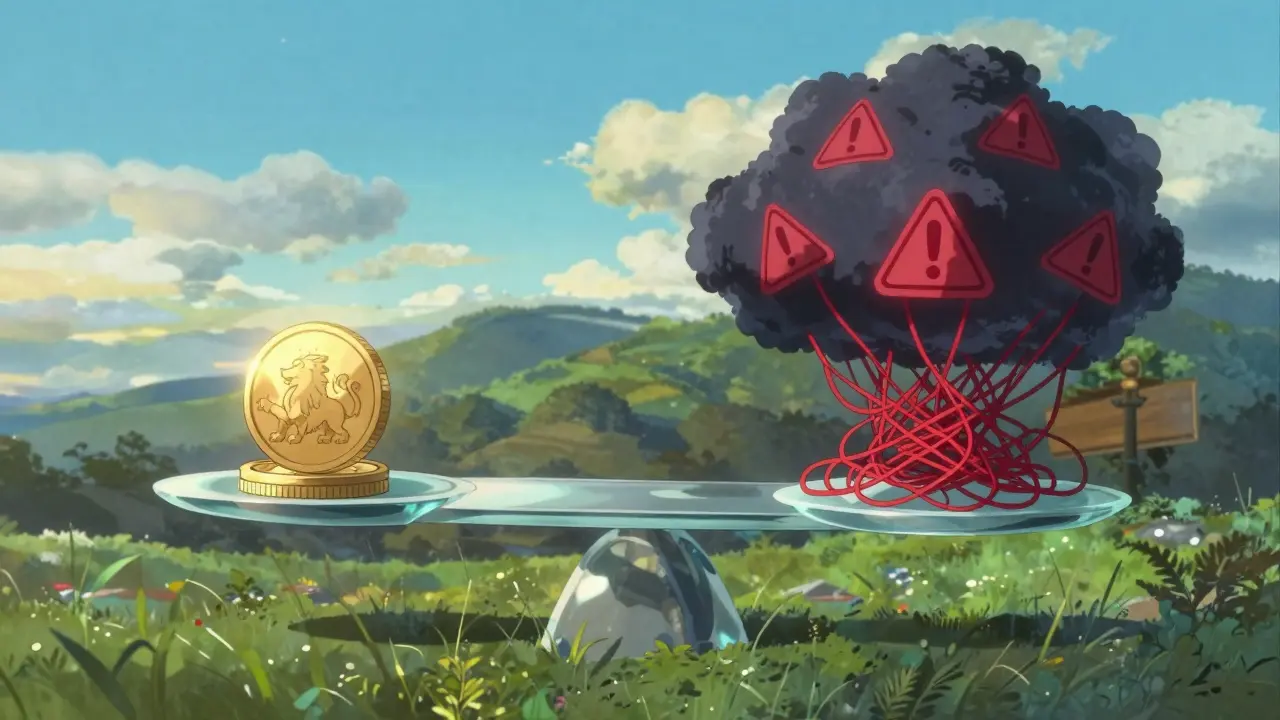
How to Trade KIMBA Safely (If You Choose To)
If you still decide to participate, treat it like buying a lottery ticket, not a savings account. Never invest money you cannot afford to lose completely. Here is how the process works technically:
- Set Up a Wallet: You will need a Solana-compatible wallet. Phantom Wallet is the most popular option for Solana users. Download it from the official site and secure your seed phrase offline.
- Fund Your Wallet: Buy SOL (Solana) on a major centralized exchange like Coinbase or Kraken, then withdraw it to your Phantom wallet address.
- Connect to a DEX: Use a decentralized exchange like Raydium or Jupiter. Connect your Phantom wallet to the platform.
- Find the Contract Address: This is critical. Paste the official contract address (
2CeYw1T512SaTrmfrCTRXyDLovtHDTASM7LMU7N8grZv) into the search bar. Do not click on random links from social media, as scammers often create fake tokens with similar names. - Swap Carefully: Set your slippage tolerance appropriately (often 1-5% for volatile tokens) and execute the swap. Be aware that the price you see might change before the transaction confirms.
Keep your position size tiny. Even if KIMBA doubles in price, a 100% gain on $10 is still just $10. The goal here is entertainment, not retirement planning.
KIMBA vs. Established Meme Coins
To understand KIMBA’s place in the ecosystem, compare it to established players. Dogecoin and Shiba Inu have years of history, massive communities, and integration into payment systems. On Solana, tokens like BONK and WIF have achieved significant liquidity and exchange listings. KIMBA sits far below these tiers. It lacks the network effects, brand recognition, and financial depth that sustain larger projects. This comparison highlights why KIMBA remains a niche curiosity rather than a mainstream contender.
Is The White Lion (KIMBA) coin a scam?
It is not necessarily a "scam" in the legal sense if the developers did not steal funds directly, but it carries many red flags associated with rug pulls or abandoned projects. These include lack of verified audits, no official IP licensing, extremely low liquidity, and no clear utility. Always assume high risk.
Where can I buy KIMBA tokens?
KIMBA is not listed on major centralized exchanges like Binance or Coinbase. You can only trade it on decentralized exchanges (DEXs) on the Solana blockchain, such as Raydium or Orca, using a wallet like Phantom. You must swap SOL for KIMBA using the correct contract address.
Does KIMBA have any real-world utility?
Currently, no. KIMBA functions purely as a meme token. While the project mentions goals related to wildlife conservation and honoring Osamu Tezuka, there is no public documentation of active partnerships, donations, or functional applications that provide utility to token holders.
Why is the price of KIMBA so low?
The price is low due to a combination of factors: a massive total supply of 2.1 trillion tokens, very low market demand, minimal trading volume, and a lack of perceived value or utility. The low price point is a common psychological tactic in meme coins to make the asset seem affordable, but it does not indicate potential for growth.
Is it safe to hold KIMBA long-term?
Long-term holding is highly risky. Historical data shows that low-cap meme coins with no development activity often lose nearly all their value over time. Without a strong community, liquidity, or utility, the token is vulnerable to being forgotten or abandoned by traders.
Tawny Holmes
July 10, 2026 AT 12:53It's a rug pull waiting to happen. The liquidity is non-existent.
Winston Lacewing
July 10, 2026 AT 14:26Oh my god, can we talk about the absolute audacity of this project?? 😱 I mean, really? Using Tezuka’s legacy for a token that has literally ZERO utility is just disgusting and morally bankrupt! 🤮 It makes me so angry that people are falling for this nostalgia trap. It’s not just bad investing, it’s an insult to art history! Everyone needs to wake up before they get wrecked! 💔📉
Kristine Lawson
July 12, 2026 AT 10:57I must respectfully disagree with the notion that this is merely "bad investing"; rather, it represents a fundamental failure of ethical discourse within the crypto community. One must consider the implications of unregulated intellectual property usage in such a volatile market. Furthermore, the lack of transparency regarding charitable contributions is, quite frankly, unacceptable. We cannot simply dismiss these projects as harmless fun when they exploit emotional connections for financial gain without any verifiable accountability or structural integrity.
Jessie Smith
July 14, 2026 AT 00:25look, its all just smoke and mirrors man. the whole concept of value is a social construct anyway, right? but yeah, this specific coin is trash because it lacks the deep philosophical underpinning required to sustain long term growth. most people here dont even understand the metaphysical implications of digital scarcity. its sad really. i guess im just above this level of discourse lol.
Drew M
July 15, 2026 AT 04:13Actually, let’s be real for a second. 🧐 This isn’t about philosophy or morals, it’s about pure, unadulterated greed masked as community spirit. The metrics are abysmal. A market cap of $19k? Please. If you’re holding this, you’re either delusional or donating to someone else’s Lambo fund. Don’t say I didn’t warn you. Stay classy, stay rich. 💸✨
Deep Rahman
July 16, 2026 AT 16:11I have been thinking deeply about the nature of trust in decentralized systems, and what strikes me is how fragile human connection becomes when mediated by code that offers no tangible benefit. When we look at something like KIMBA, we are not just looking at a token, but at a reflection of our collective desire for meaning in a void, which leads us to wonder if the nostalgia we feel for old anime characters is being hijacked by algorithms designed to exploit our longing for simpler times, thereby creating a cycle of disappointment that reinforces the very skepticism we should perhaps temper with more open-minded inquiry into the potential of community-driven initiatives, even if they seem flawed on the surface.
Melissa Beckwith
July 18, 2026 AT 08:50The technical analysis provided in the article is accurate, yet it fails to account for the psychological resilience of certain subcultures within the Solana ecosystem. Historically, assets with negligible liquidity have occasionally experienced irrational exuberance due to coordinated social media campaigns, which suggests that while the fundamental valuation is zero, the speculative premium driven by FOMO (Fear Of Missing Out) among inexperienced retail investors could theoretically create short-term volatility spikes that defy traditional economic logic, although relying on such anomalies is statistically unsound and generally discouraged by prudent risk management strategies.
Josephine Finlayson
July 18, 2026 AT 18:37I think it is important to approach this with kindness, especially towards those who may have already invested based on good intentions. While the risks are clearly outlined, we should remember that everyone learns differently. Perhaps focusing on the educational aspect of blockchain technology, rather than just the financial loss, could help foster a more supportive environment for new users who are trying to navigate this complex space. Let us encourage responsible exploration rather than harsh judgment.
Tuan Nguyen
July 18, 2026 AT 21:16This entire thread demonstrates a profound lack of analytical rigor. The participants here are reacting emotionally to data that requires cold, hard interpretation. The slippage metrics alone indicate a structure designed for extraction, not exchange. To suggest otherwise is to ignore the mathematical certainty of loss in illiquid markets. You are all missing the point entirely.