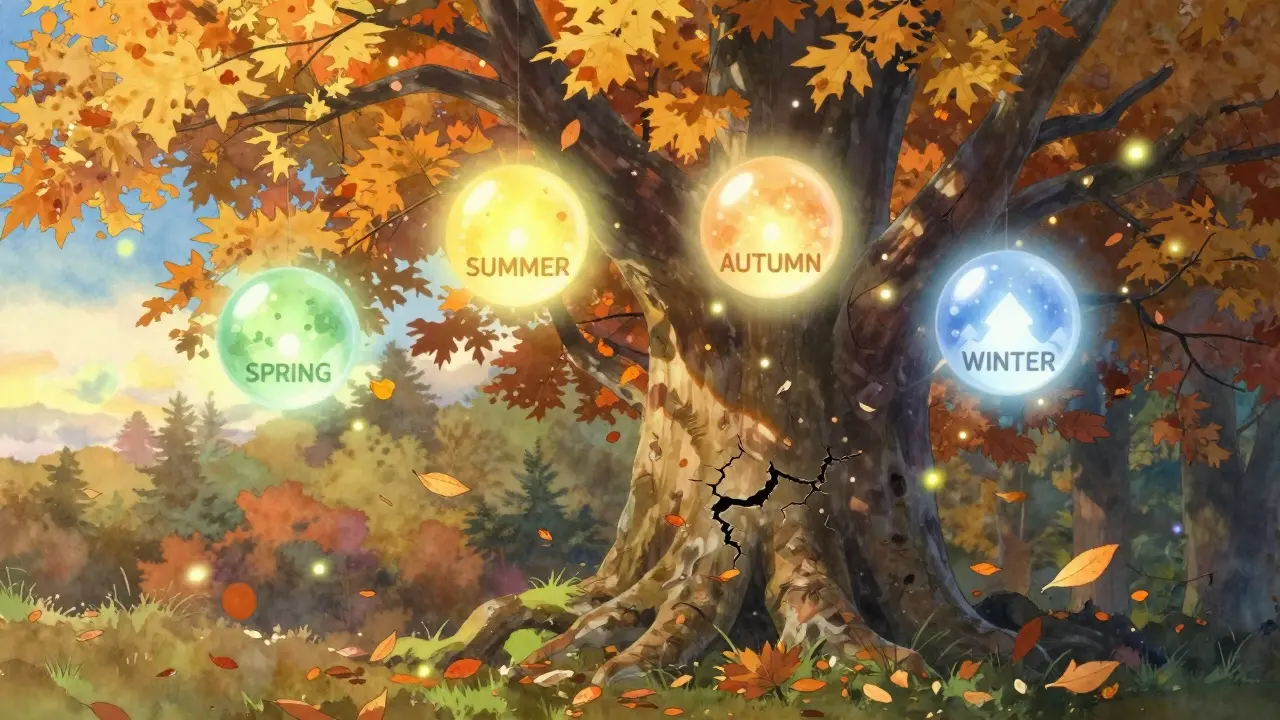
Spring (SPRING) isn’t another Bitcoin clone or Ethereum competitor. It’s part of a strange, quiet experiment in cryptocurrency - one that splits a single idea into four coins named after seasons. If you’ve heard of Spring token and wondered if it’s worth your time, here’s the real story: what it actually is, how it works, and why most people walk away confused - or worse, out of pocket.
Spring (SPRING) Is One of Four Seasonal Tokens
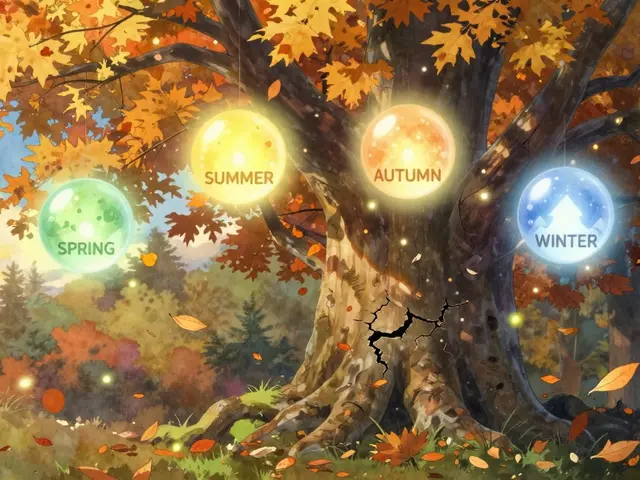
Spring isn’t standalone. It’s one of four tokens created together under the same project: Spring (SPRING), Summer (SUMMER), Autumn (AUTUMN), and Winter (WINTER). They all run on the same code, the same rules, and the same blockchain structure. The only difference? Their token supplies are separate. Think of it like four identical cars, each painted a different color, but you can’t swap parts between them. The project launched on October 15, 2022, with a whitepaper posted on GitHub by an anonymous team. No website. No team photos. No press releases. Just code and a name.
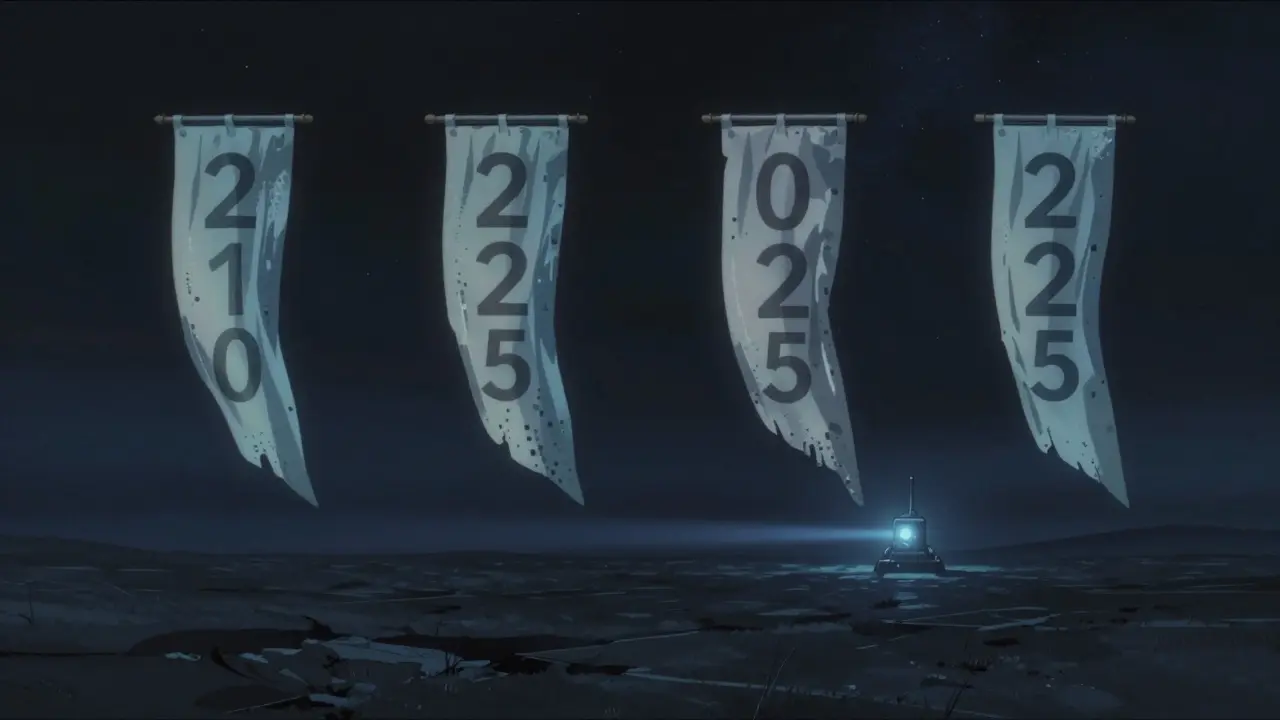
Each token follows a deflationary model where the block reward - the amount miners earn for adding a new block - cuts in half every three years. That’s faster than Bitcoin’s four-year cycle. The first halving for Spring is scheduled for October 15, 2025. That means miners who were getting 50 SPRING per block will start getting only 25. This is the core mechanic driving the whole project. It’s not designed for payments. It’s designed to be studied.
How Spring Works (Technically)
Spring runs on its own blockchain, not Ethereum or Binance Smart Chain. That means you can’t store it in MetaMask or Ledger. You need the official Seasonal Core wallet - a Java-based program that takes up 1.2GB of RAM and 15GB of disk space. Most users report sync issues. One Reddit user said it took them 11 hours just to get their wallet to catch up to the chain. And that’s if it works at all.
The blockchain uses SHA-256 - the same hashing algorithm as Bitcoin. That means you can mine Spring with regular Bitcoin ASIC miners. But here’s the catch: you can’t mine Spring on Bitcoin mining pools. You need to join a separate, tiny pool just for Spring. As of late 2023, the entire network’s hash rate was around 150 GH/s. Compare that to Bitcoin’s 400 EH/s - that’s 2.6 million times weaker. That’s not just small. It’s dangerously small.
Because the network is so weak, it’s been hit by chain reorganizations - where blocks get rewritten - three times in one quarter. That means your transaction might confirm, then vanish. It’s not a bug. It’s a feature of low-hash-rate networks. And with only three decentralized exchanges listing SPRING, finding buyers or sellers is hard. The 24-hour trading volume? Around $1,842. That’s less than what some meme coins make in an hour.
Market Value and Liquidity Problems
As of December 2023, Spring trades at roughly $0.000178. With a total supply capped at 100 million tokens, that gives it a market cap of just $17,800. That’s less than the cost of a used motorcycle. It ranks #4,872 out of over 25,000 cryptocurrencies. You won’t find it on Binance, Coinbase, or Kraken. You’ll need to use obscure decentralized exchanges like PancakeSwap clones or niche platforms no one’s heard of.
The biggest problem? Liquidity fragmentation. There are four tokens - Spring, Summer, Autumn, Winter - all nearly identical. That splits the user base, the miners, and the trading volume into four tiny puddles instead of one big lake. Investors who want to buy one season often end up buying all four just to trade between them. But converting between them? Fees eat up 10-20% of your balance. One user on Reddit said they tried to swap 10,000 SPRING for SUMMER and ended up with 7,800 after fees.
Why Experts Say It’s a Bad Idea
Dr. Evelyn Rodriguez from MIT Media Lab called Seasonal Tokens “death by a thousand cuts.” Her point? When you split one concept into four identical tokens, you don’t create more value - you just make it harder for anyone to use any of them. The Token Standards Association issued a public warning in August 2023, naming Seasonal Tokens as a textbook case of “unnecessary market fragmentation.”
Security researchers from Trail of Bits found another flaw: the difficulty adjustment algorithm is broken. Instead of keeping block times at 2.5 minutes as promised, the network sometimes produces blocks in 45 seconds - or waits 8 minutes. That makes mining unpredictable and undermines the whole economic model.
Even the project’s own documentation is a mess. GitHub has 47 open issues related to outdated guides, broken links, and unclear API specs. The Discord server has 1,247 members - but only 17 are active daily. That’s not a community. That’s a graveyard with a chat window.
Who Actually Uses Spring?
Most people who hold Spring are either:
- Curious beginners who bought it because it sounded “cool”
- Miners testing SHA-256 hardware on low-hash-rate chains
- Arbitrage traders trying to exploit price gaps between Spring and Summer tokens before the 2025 halving
There’s no real-world use case. You can’t pay for coffee with Spring. You can’t use it on any merchant platform. It doesn’t support smart contracts. It’s not part of DeFi. It doesn’t have NFTs. It’s just a digital token that slowly loses value over time - unless you’re lucky enough to catch a rare arbitrage window.
One Reddit user, u/SeasonalTrader, claimed to profit by buying Spring before the halving anticipation and selling to Summer holders. But those windows are closing. As more people learn how the system works, the price gaps shrink. What was once a potential edge is now a noise.
The 2025 Halving: Make or Break
The next 12 months are critical. On October 15, 2025, Spring’s block reward drops from 50 to 25 tokens. That means miners will earn half as much. Many will shut down their rigs. The network hash rate will likely drop further - maybe below 100 GH/s. At that point, a 51% attack becomes possible for under $50,000 using rented cloud mining power.
If that happens, the whole chain could be rewritten. Transactions could be reversed. Tokens could be stolen. And since there’s no team behind it, no one will fix it. No one will even acknowledge it happened.
Analysts at Micro-Cap Crypto have rated Spring as “high risk of abandonment” within 18 months. Eight out of ten firms say the same. The only reason it’s still alive is because a few diehards keep mining it - not because it has value, but because it’s a puzzle they refuse to solve.
Should You Buy Spring (SPRING)?
If you’re looking to invest - no. Don’t.
If you’re a student of blockchain economics and want to see how a token with a predictable halving schedule behaves over time - maybe. But only with money you’re willing to lose. Treat it like a science experiment, not a portfolio holding.
If you’re trying to use it for payments, trading, or long-term storage - forget it. The fees are high, the liquidity is nonexistent, and the wallet software is unreliable. Even getting started is a hurdle. You need to download a Java app, configure it manually, and hope it syncs. Most users give up after three days.
Spring (SPRING) isn’t a failure because it’s poorly built. It’s a failure because it was built for the wrong reason. It’s not meant to solve a problem. It’s meant to be a thought experiment - one that accidentally became a real, live blockchain. And like most experiments, it’s not designed to last.
Where to Find Spring (SPRING)
If you still want to try it:
- Go to the official GitHub repo: seasonaltokens/seasonaltokens
- Download Seasonal Core Wallet v1.0.3
- Install Java if you don’t have it
- Run the wallet and wait for sync (could take hours or days)
- Find one of the three DEXs that list SPRING: check CoinGecko for current listings
There’s no mobile app. No browser extension. No easy way in. This isn’t Web3 for beginners. This is crypto archaeology.
Final Thoughts
Spring (SPRING) is not a cryptocurrency you buy to grow wealth. It’s a relic of a weird, niche idea that somehow got mined into existence. It has no utility, no team, no roadmap, and no future. But it does have a clear, mathematically predictable supply schedule - and that’s the only thing keeping it alive.
If you’re drawn to Spring because of its name or its seasonal theme - look away. If you’re curious about how low-hash-rate blockchains behave under stress - then go ahead. Just don’t expect to cash out. And don’t expect anyone to help you if things go wrong.
Spring isn’t the future of money. It’s a footnote in the history of crypto experiments - one that might vanish when the next halving hits.
Rishav Ranjan
December 19, 2025 AT 13:20Tyler Porter
December 20, 2025 AT 02:45Jayakanth Kesan
December 20, 2025 AT 15:09Megan O'Brien
December 21, 2025 AT 12:30Mmathapelo Ndlovu
December 21, 2025 AT 16:11Aaron Heaps
December 21, 2025 AT 22:33Grace Simmons
December 22, 2025 AT 06:16Collin Crawford
December 22, 2025 AT 15:30Dusty Rogers
December 24, 2025 AT 14:10Earlene Dollie
December 24, 2025 AT 20:21Steve B
December 26, 2025 AT 13:26Rachel McDonald
December 28, 2025 AT 04:30Tristan Bertles
December 30, 2025 AT 01:18