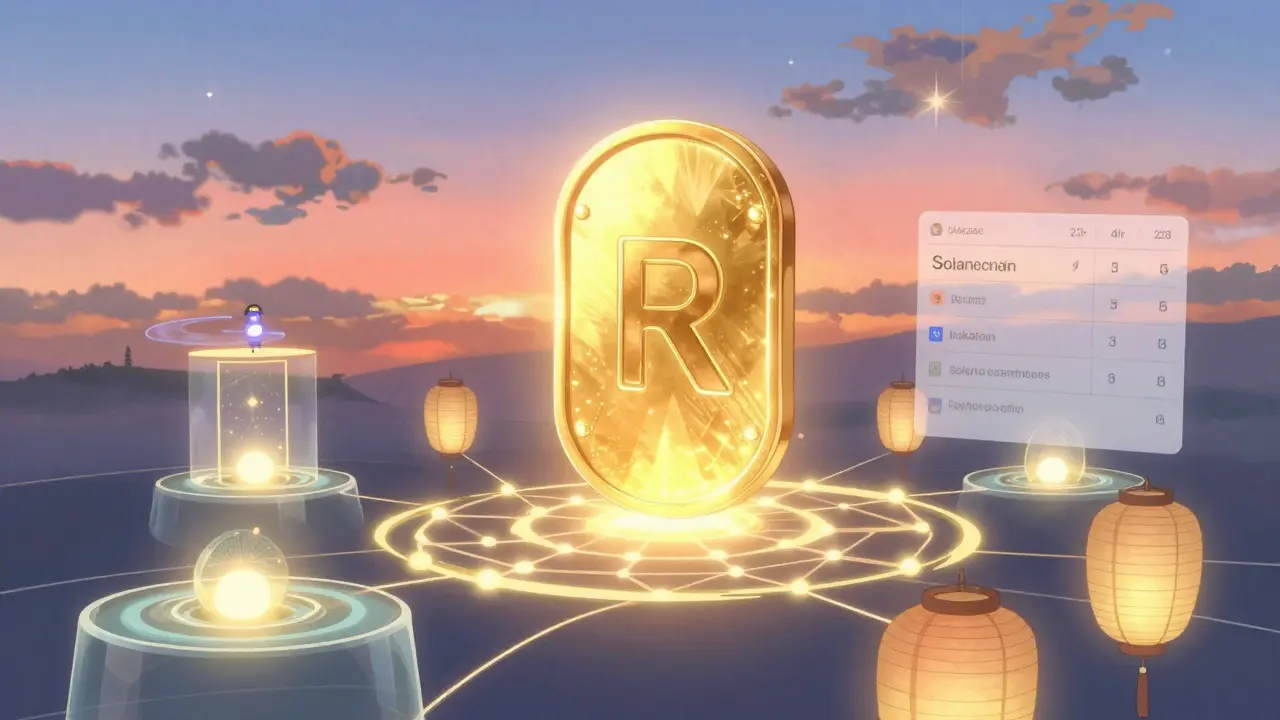
Raydium isn’t just another crypto coin. It’s the engine behind one of the fastest and most used decentralized exchanges on the Solana blockchain. If you’ve ever traded tokens on Solana-whether it’s SOL, USDC, or some new meme coin-you’ve likely used Raydium without even realizing it. The RAY token powers the whole system, but understanding what it actually does takes more than just knowing its price.
What Raydium Actually Does
Raydium is a decentralized exchange (DEX), meaning it lets people trade cryptocurrencies directly with each other, without a middleman like Binance or Coinbase. Most DEXs use something called an Automated Market Maker (AMM), which sets prices based on how much of each coin is in a shared pool. But Raydium is different. It combines AMM with a real order book-the same kind used by traditional exchanges. This hybrid model pulls liquidity from both sources, giving users better prices and faster trades.This isn’t just a technical detail. It means if you want to swap 100 USDC for a new Solana token, Raydium finds the best deal by looking at both its own liquidity pools and the deeper order book from OpenBook (the updated version of Serum). You get tighter spreads and less slippage, especially on larger trades. On Ethereum-based DEXs like Uniswap, you’d pay more in fees and wait longer. On Raydium, a trade often finishes in under a second for less than a penny.
The RAY Token: More Than Just a Coin
The RAY token isn’t just a speculative asset. It has four real jobs inside the Raydium ecosystem:- Governance: Holders vote on changes to the protocol-like fee structures, new features, or how rewards are distributed.
- Yield farming rewards: When you provide liquidity (by depositing two tokens into a pool), you get LP tokens. Staking those LP tokens earns you RAY as a reward.
- Staking: You can lock up RAY directly to earn more RAY, similar to earning interest in a savings account.
- Launchpad access: New projects use Raydium’s Accelerator program to launch their tokens. RAY holders often get early access to these sales.
As of January 2026, RAY is trading at $1.82 with a market cap of around $530 million. That’s down from its all-time high of $16.93 in September 2021, but it’s still one of the top 100 cryptocurrencies by market value. The total supply is capped at 555 million RAY, but only about 291 million are in circulation right now. The rest are locked up and released slowly over time to avoid flooding the market.
Why Raydium Runs on Solana
Raydium doesn’t work on Ethereum, BSC, or Polygon. It’s built entirely on Solana. That’s intentional. Solana can handle 65,000 transactions per second with fees under $0.01. Ethereum, by comparison, struggles at 15-30 transactions per second and often charges $5-$20 per trade during busy times.This speed and low cost are why Raydium grew so fast. In 2022, it became the most-used DEX on Solana, handling more daily volume than any other. Even today, it accounts for nearly 40% of all trading on Solana-based DEXs. That’s not because it’s the prettiest interface-it’s because it’s the most efficient. Traders don’t care about flashy designs. They care about getting their trades done quickly and cheaply.
But there’s a trade-off. If Solana goes down-which it has, a few times-Raydium goes down too. That’s the risk of being tied to one blockchain. Other DEXs like Uniswap can run on multiple chains, so if Ethereum is congested, they can shift traffic to Arbitrum or Base. Raydium can’t. It’s all in on Solana.

How Raydium Compares to Other DEXs
| Feature | Raydium | Uniswap (Ethereum) | Orca (Solana) | OpenBook |
|---|---|---|---|---|
| Blockchain | Solana | Ethereum | Solana | Solana |
| Trading Model | AMM + Order Book | AMM only | AMM only | Order Book only |
| Avg. Trade Fee | $0.001 | $5-$20 | $0.001 | $0.001 |
| Trade Speed | <1 second | 10-60 seconds | <1 second | <1 second |
| Liquidity Depth | High (combined pools + order book) | High, but expensive | Moderate | Very High (but no AMM) |
| Token Utility | Governance, staking, farming | Governance only | Governance, farming | No native token |
Raydium stands out because it’s the only one that blends both AMM and order book liquidity. Orca is simpler and easier for beginners, but it doesn’t have the same depth of liquidity. OpenBook has the deepest order book, but you can’t use it alone-you need an AMM like Raydium to fill in the gaps. That’s why Raydium is the go-to for serious traders on Solana.
How to Use Raydium
Getting started is simple, but it requires a few setup steps:- Get a Solana wallet. Phantom or Solflare are the most popular. Both are free and easy to install as browser extensions or mobile apps.
- Buy some SOL. You need SOL to pay for transaction fees. Even if you’re trading USDC or other tokens, you still need SOL to sign transactions.
- Connect your wallet to raydium.io. The site is straightforward-no sign-up required.
- Choose your trade: swap tokens, add liquidity, or start farming.
Adding liquidity is where things get a little trickier. You’re pairing two tokens (like SOL and USDC) and depositing them into a pool. In return, you get LP tokens. If the price of either token moves a lot while your funds are locked, you could lose value-a risk called impermanent loss. That’s why many beginners start with stablecoin pairs (like USDC/SOL) where price swings are smaller.
Yield farming is where most people earn RAY. You stake your LP tokens in a farming pool, and the protocol pays you RAY daily. Some pools offer 20-50% annual returns, but those often come with higher risk. Always check the pool’s APY, token pair, and lock-up terms before depositing.

Who Uses Raydium and Why
Raydium’s user base falls into three main groups:- Traders: People who swap tokens daily. They love the speed and low fees. Many say they switched from Ethereum DEXs because they were tired of paying $10 to trade $500 worth of crypto.
- Liquidity providers: These are users who deposit crypto into pools to earn rewards. Some are small-time stakers earning a few dollars a day. Others are institutional players moving millions.
- Project founders: New tokens use Raydium’s Accelerator program to launch. It’s cheaper and faster than doing an ICO. The platform gives them instant access to Raydium’s 200,000+ active users.
Community feedback is mostly positive. Reddit and Discord users regularly praise the platform’s reliability and low cost. But newcomers often get overwhelmed. There’s no customer support team. If you mess up a transaction, there’s no one to call. You’re on your own. That’s why many users recommend starting with small amounts and watching YouTube tutorials before risking real money.
What’s Next for Raydium
The team behind Raydium is still anonymous-no names, no faces. But their roadmap is clear:- Improving concentrated liquidity tools so farmers can manage positions more precisely.
- Expanding the Accelerator program to include more token launch options.
- Testing cross-chain bridges to allow RAY to be used on other networks like Ethereum or Base.
That last point is huge. If Raydium becomes multi-chain, it could double its user base overnight. Right now, it’s stuck on Solana. But Solana’s future isn’t guaranteed. If Ethereum or another chain pulls ahead, Raydium could lose ground. That’s why the team is quietly building bridges.
For now, Raydium remains the most powerful DEX on Solana. Its combination of speed, low cost, and hybrid liquidity makes it the default choice for anyone trading crypto on that chain. RAY isn’t a coin you buy and forget. It’s a tool you use-whether you’re swapping tokens, earning rewards, or launching a new project.
Frequently Asked Questions
Is Raydium safe to use?
Raydium’s code has been audited by multiple security firms, and there have been no major exploits directly tied to its smart contracts. However, like all DeFi platforms, you’re responsible for your own security. Always double-check token addresses before swapping, use a hardware wallet for large holdings, and never share your private key. The biggest risk isn’t hacking-it’s user error.
Can I stake RAY directly?
Yes. You can stake RAY tokens directly on the Raydium website to earn more RAY as rewards. This is separate from liquidity farming. Staking RAY gives you a smaller, more stable return-usually around 5-10% APY-while liquidity farming can offer higher yields but with more risk from price swings and impermanent loss.
How do I earn RAY tokens?
There are three main ways: 1) Provide liquidity to a Raydium pool and stake your LP tokens to farm RAY rewards. 2) Stake RAY directly to earn more RAY. 3) Participate in new token launches through the Accelerator program, where early participants often get RAY as a bonus. Some airdrops also distribute RAY to active users.
Is RAY a good investment?
RAY’s value is tied to the success of the Raydium platform and the Solana ecosystem. If Solana grows, RAY is likely to grow with it. But crypto prices are volatile. RAY dropped over 90% from its peak. Don’t invest more than you can afford to lose. Think of RAY as a utility token-not a guaranteed return. Its value comes from usage, not speculation.
Do I need SOL to use Raydium?
Yes. Every transaction on Solana requires a small fee paid in SOL. Even if you’re trading USDC or another token, you still need SOL in your wallet to pay for network fees. You can buy SOL on exchanges like Kraken, Binance, or Coinbase, then send it to your Phantom or Solflare wallet.
What’s the difference between Raydium and Serum?
Serum was the original order book DEX on Solana. Raydium was built on top of it. Today, Serum’s order book technology is called OpenBook, and Raydium integrates with it. So Raydium is the user-friendly interface that combines OpenBook’s order book with AMM liquidity pools. Think of Serum/OpenBook as the engine and Raydium as the car that drives it.

Rajappa Manohar
January 2, 2026 AT 08:43Abhisekh Chakraborty
January 3, 2026 AT 17:09Mandy McDonald Hodge
January 5, 2026 AT 12:52Brooklyn Servin
January 5, 2026 AT 14:15Mike Pontillo
January 5, 2026 AT 15:49NIKHIL CHHOKAR
January 7, 2026 AT 05:47dina amanda
January 7, 2026 AT 11:07Andrew Prince
January 8, 2026 AT 02:14Jordan Fowles
January 9, 2026 AT 17:50Joydeep Malati Das
January 11, 2026 AT 01:05Elisabeth Rigo Andrews
January 11, 2026 AT 21:21Ryan Husain
January 12, 2026 AT 09:57Johnny Delirious
January 13, 2026 AT 20:45Bruce Morrison
January 14, 2026 AT 20:16