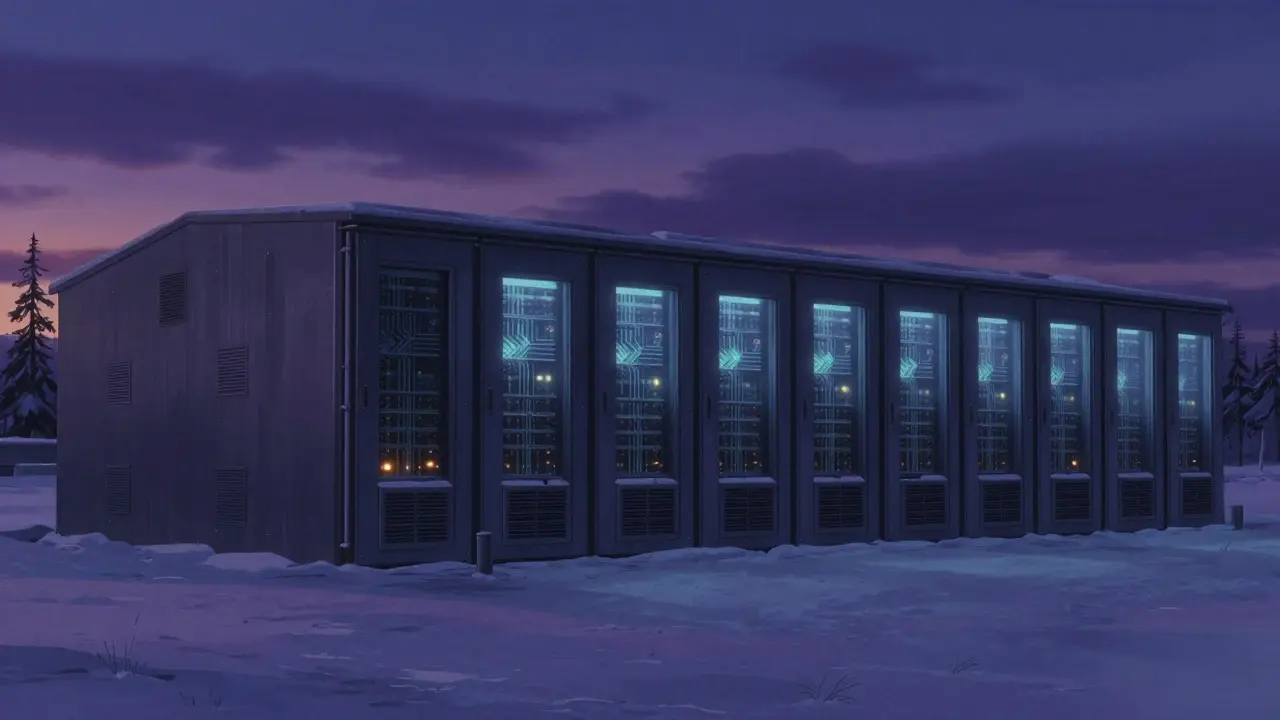
Sweden used to be one of the easiest places in Europe to mine Bitcoin. Cool weather, cheap hydroelectric power, and a 98% tax break for data centers made it a magnet for crypto miners. By 2022, over 150 megawatts of mining capacity were running across northern Sweden - mostly in towns like Luleå and Skellefteå, where power was abundant and winters kept servers cool without expensive air conditioning. Then, in July 2023, everything changed. The Swedish government didn’t just tweak the rules. It erased the entire incentive system - and slapped on a new energy tax that made mining mathematically impossible.
What Changed in Sweden’s Crypto Mining Rules?
Before 2023, Sweden offered data centers a 98% reduction on energy taxes. That meant a mining rig drawing 1,000 kilowatts of power paid almost nothing for electricity. The goal was to attract tech giants like Microsoft and Amazon, and it worked. But when Bitcoin mining started booming in the same regions, the government took notice. Miners weren’t building software or creating jobs. They were just using power - a lot of it. And they weren’t paying for it. The 2023 budget, published in November 2022, announced two brutal changes:- The 98% tax reduction was eliminated entirely.
- The energy tax for data centers jumped from SEK 0.006 ($0.0006) per kWh to SEK 0.36 ($0.035) per kWh.
Why Did Sweden Do This?
The government didn’t say, “We hate Bitcoin.” They said miners were a drain on public resources. According to official reports, crypto mining contributed almost nothing to local employment, economic growth, or infrastructure development. Meanwhile, it consumed massive amounts of clean energy - energy that could’ve gone to hospitals, schools, or factories. There was also a bitter memory from 2018. During the last crypto crash, dozens of mining companies vanished overnight - leaving unpaid energy bills and abandoned hardware behind. Local grid operators were stuck covering the costs. That left a bad taste. Policymakers decided: if you’re not contributing, you’re not welcome. They also pointed out that Bitcoin mining wasn’t even the main reason they’d created the tax break in the first place. The original incentive was meant for cloud computing, AI research, and enterprise data centers - companies that hired engineers, paid local taxes, and built long-term infrastructure. Miners? They showed up, plugged in, and left when the price dropped.What Happened to the Miners?
Within six months, nearly every commercial mining operation in Sweden shut down or packed up and moved. Operators didn’t have time to adapt. The policy took effect in July 2023, with no grace period. Some tried to sell their ASIC miners locally, but there was no market. The machines were useless without cheap power. Others tried to relocate - but shipping hundreds of tons of mining equipment across continents isn’t cheap. Many ended up selling gear for pennies on the dollar just to cover moving costs. The exodus was fast and total. By late 2023, Sweden went from hosting one of Europe’s largest mining hubs to having virtually zero commercial operations. The few remaining rigs were hobbyist setups - small, under 10 kW, and barely breaking even. No serious investor or company would touch Sweden after this. The biggest relocation destinations? Kazakhstan, Texas, and parts of Canada - especially Quebec and Ontario, where hydro power is still cheap and regulations are clear. Some miners even moved to Georgia and Paraguay, where electricity costs are under $0.02 per kWh.
How Does Sweden Compare to Other Countries?
Sweden’s move was extreme - even by European standards. - Norway: Still allows mining. Power is cheap, and there’s no special tax on crypto. Miners there still operate. - Germany: No tax breaks, but no extra mining tax either. Miners pay normal electricity rates - around €0.30/kWh - which is high, but not prohibitive. - United States: States like Texas, Georgia, and Kentucky actively compete to attract miners with low rates, tax exemptions, and even direct power deals. - El Salvador: Made Bitcoin legal tender and even built a geothermal-powered mining city near a volcano. Sweden didn’t just say “no.” It said, “We’ll make it so expensive you’ll beg us to let you leave.”What’s the Real Impact?
The policy achieved exactly what it set out to do: kill crypto mining in Sweden. But the collateral damage was real. Local energy companies lost a major consumer - and with it, a source of stable, predictable demand. Some grid operators had to reconfigure power distribution because a 150 MW load suddenly disappeared. That’s like turning off a small city’s electricity. The abandoned mining facilities? Many sit empty. Some are being converted back to regular data centers, but that’s slow. The specialized cooling systems, reinforced floors, and high-capacity transformers aren’t easy to repurpose. And the human cost? Hundreds of jobs vanished - not just miners, but electricians, technicians, logistics workers, and maintenance staff who kept the rigs running. No one in the government offered retraining. No support programs. Just silence.
Could This Happen Elsewhere?
Sweden’s model is now being studied - not as a success story, but as a warning. Other countries are watching to see if the energy savings from killing mining actually benefit the grid. So far, the answer is mixed. Sweden’s electricity prices didn’t drop for households. The grid didn’t suddenly become more stable. The power wasn’t redirected to schools or hospitals. It just… disappeared. But the message is clear: if your country offers tax breaks for tech, and miners show up, you might end up paying for it later. Sweden chose to cut the cord - hard and fast. Other governments now have a blueprint: Don’t incentivize mining unless you’re ready to burn it down.What’s Left in Sweden Today?
There’s no official ban on crypto mining. You can still run a rig in your basement if you want. But the economics are broken. Even the most efficient ASIC miners - like the Antminer S21 - can’t turn a profit in Sweden anymore. At $0.035/kWh, the cost to mine one Bitcoin exceeds its market value. The math doesn’t work. Not even close. The few remaining operations are either:- University research projects testing energy efficiency
- People running one or two rigs as a hobby
- Companies testing blockchain tech unrelated to mining
Harshal Parmar
January 24, 2026 AT 21:15Man, this is such a wild story. I mean, Sweden basically turned into the Bitcoin graveyard overnight. I remember when I first heard about Luleå being this crypto haven - all those rigs humming in the cold, using hydro power like it was free coffee. And then boom, policy change, no warning, no grace period. It’s like they woke up one day and said, 'Hey, we didn’t mean for you to actually use this.' The miners didn’t even get a chance to pivot. They just got ghosted by the government. I’m not saying mining is perfect, but this feels like kicking a guy while he’s down - especially when he was just using resources that were sitting idle. Now those machines are rusting in warehouses, and the grid’s just… quieter. Not better. Just quiet.
Matthew Kelly
January 25, 2026 AT 13:09Kinda sad but also kinda fair? 😔 I get why they did it - those miners weren’t creating jobs or building anything, just sucking power like a vacuum. I’m from Quebec, and we’ve got tons of hydro, but even here, we’re starting to limit new mining permits. It’s not anti-crypto, it’s pro-sustainability. If you’re gonna use energy, you gotta give back. Sweden just drew the line hard. Respect.
Clark Dilworth
January 26, 2026 AT 00:54From a macroeconomic standpoint, this is textbook regulatory arbitrage collapse. Sweden created a positive externality for data centers via energy tax abatement, but failed to implement usage-based gating mechanisms - i.e., no SLA on job creation, no KPI on infrastructure investment. The mining operators exploited the loophole as a pure arbitrage play: low marginal cost of power + zero fiscal contribution = high ROI. Once the marginal benefit of the incentive was neutralized by taxation, the Nash equilibrium shifted instantly. The exodus wasn’t unexpected - it was inevitable. What’s fascinating is the lack of transitional policy - no phased exit, no buyout program, no repurposing incentives. Pure hard fork.
Mark Estareja
January 26, 2026 AT 13:34Ugh. I knew this was coming. Every time some country tries to be ‘cool’ and attract tech, the crypto bros show up like uninvited guests at a wedding. They don’t care about the culture, the people, the future - they just want to mine, cash out, and leave. Sweden didn’t hate Bitcoin. They hated the freeloaders. And honestly? Good for them. I’ve seen this play out in Texas too - same thing. People act like it’s a tragedy, but it’s not. It’s justice.
Heather Crane
January 26, 2026 AT 23:18Okay, but can we just pause for a second and acknowledge how brutal this was for the workers? The electricians, the maintenance crews, the local vendors who supplied parts? These weren’t just ‘miners’ - they were people with families, bills, dreams. And now? Silence. No retraining. No support. No ‘thank you for helping us grow.’ Just a policy change and a shrug. I get the energy argument - I really do - but there’s always a way to do this with compassion. Why didn’t they try? Why not offer a 12-month transition? Why not partner with universities to repurpose rigs for AI research? This wasn’t just a tax hike - it was a betrayal of trust. And it hurts.
Catherine Hays
January 28, 2026 AT 08:19Sweden did what America won’t. Stop pretending crypto is innovation. It’s a glorified electricity scam. Miners don’t create value. They consume. They pollute. They scam retirees with fake tokens. And now Sweden’s saying NO. Good. Let them go to Kazakhstan where the air is dirty and the cops don’t ask questions. We should do the same here. Stop subsidizing digital gambling with clean power. This isn’t a loss. It’s a win.
Nathan Drake
January 30, 2026 AT 04:41There’s a deeper question here: what do we value more - utility or speculation? Sweden chose utility. They decided that clean energy should serve society, not speculative financial games disguised as technology. Bitcoin mining doesn’t heal the sick, educate children, or build bridges. It hashes. And hashing doesn’t feed anyone. Maybe the real tragedy isn’t that miners left - it’s that we ever thought their presence was progress. We built a system that rewarded extraction over contribution. Sweden just ended the charade. Whether you like it or not, they’re asking us to grow up.
Mike Stay
January 31, 2026 AT 02:24Allow me to offer a perspective grounded in both economic pragmatism and cultural context. Sweden, as a nation, has long prioritized social cohesion, environmental stewardship, and long-term institutional integrity over short-term speculative gains. The decision to revoke the energy tax incentive was not reactive; it was deliberative. The original policy framework was designed to attract enterprise-grade data infrastructure - entities that would contribute to Sweden’s knowledge economy through employment, R&D, and tax compliance. Crypto mining, by contrast, functioned as a parasitic overlay: high energy consumption, zero value-added labor, and transient presence. The abrupt termination of the incentive, while harsh, was consistent with Sweden’s governance philosophy: clear boundaries, zero tolerance for free-riding, and an unwavering commitment to public good. The exodus of mining operations was not a failure - it was a correction. The infrastructure left behind may be costly to repurpose, but the moral clarity of the policy remains unshaken. This is not anti-innovation. This is pro-society.
Taylor Mills
January 31, 2026 AT 22:40lol sweden thought they were smart huh? now their grid is unstable because they killed the only stable load they had. miners were the only ones paying for peak power usage. now the locals are getting rate hikes bc the energy co’s got no one to cover fixed costs. also, most of those rigs were running on surplus hydro that would’ve gone to waste anyway. now it’s just wasted. and guess what? the miners just went to texas where the power is dirt cheap and no one cares. so sweden didn’t stop mining - they just outsourced it to a state that doesn’t care about the environment. nice job.
Ryan Depew
January 31, 2026 AT 22:49Honestly? This is why you never bet on government incentives. I’ve seen this movie before - tax breaks for solar, then they get cut. Tax breaks for EVs, then they vanish. Miners thought they were playing the system, but the system was never theirs to play. Sweden didn’t break a promise - they just stopped pretending the promise was real. If you’re building a business on a tax break, you’re not building a business. You’re building a house of cards. And when the wind blows? Well… you get to watch it fall. Lesson learned. Move on.
Tammy Goodwin
February 2, 2026 AT 05:47I think it’s important to remember that Sweden didn’t ban mining - they just made it not worth doing. That’s actually a really smart move. No censorship. No crackdown. Just economics. Let the market decide. And the market said: ‘Nope, not here.’ That’s how you handle controversial tech - not with fear, but with fairness. Maybe other countries should try it. Instead of banning, just make the cost real. Let people choose - with their wallets.