
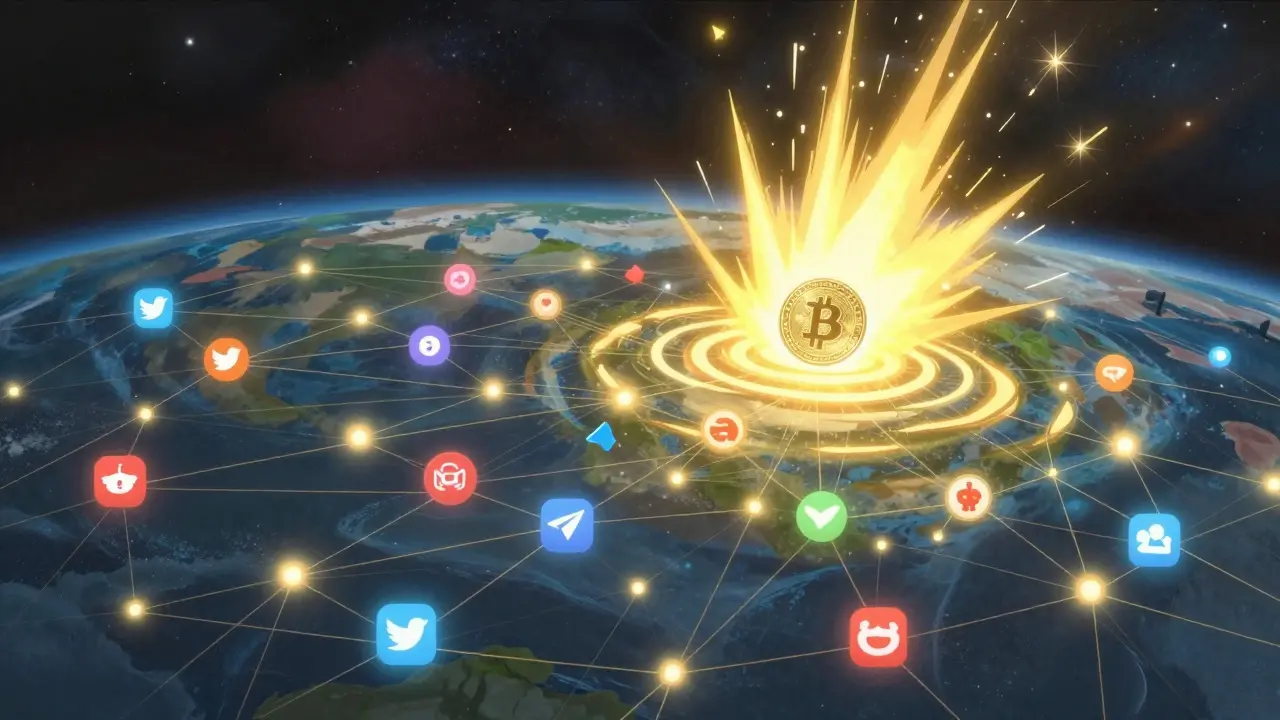
When you see a cryptocurrency price spike out of nowhere, it’s rarely because of a news headline or a technical chart pattern. More often, it’s because thousands of people suddenly started talking about it - on Twitter, Reddit, Telegram, or even TikTok. That collective mood - the buzz, the fear, the hype - is what sentiment analysis tries to measure. And for traders, especially in crypto, it’s become one of the most powerful tools to spot moves before they happen.
Think of sentiment analysis like a weather radar for markets. You don’t wait for rain to fall before you grab an umbrella. You look at the clouds. Sentiment analysis does the same: it scans the digital chatter around assets like Bitcoin, Ethereum, or Solana and tells you whether people are feeling bullish, bearish, or just confused. It doesn’t predict the future. But it can show you when the crowd is getting too excited or too scared - and that’s often where big price turns begin.
How Sentiment Analysis Actually Works
It starts with data. Millions of pieces of text every day: tweets about Dogecoin, Reddit threads on r/WallStreetBets, news articles from CoinDesk, Discord messages, YouTube comment sections, even earnings call transcripts from blockchain companies. These aren’t just random words. They’re emotional signals.
Using NLP (natural language processing), machines break down this text. They look for phrases like “this is going to the moon” versus “I’m dumping everything.” They don’t just count words - they understand context. “I love BTC” is positive. But “I love BTC so much I’m buying at $100k” might mean the opposite - it’s a sign of overconfidence. Tools like Sentdex and PsychSignal use machine learning models trained on years of market data to assign a sentiment score to each piece of content. A score of +0.8 means strong bullish sentiment. A score of -0.6 means heavy fear.
These scores are timestamped and linked to specific assets. So if 80% of posts about Solana in the last hour are positive, the system flags it. If that same asset hasn’t moved in price yet, you’ve got a potential breakout. If the price already jumped 20% and sentiment is still climbing? That’s a red flag. The crowd might be chasing, not leading.
Why It Matters More in Crypto Than Stocks
Crypto markets are different. There’s no earnings report to analyze. No balance sheet. No Fed meeting to watch. The price moves because people believe - or stop believing. That makes sentiment the primary driver.
Take the 2021 GameStop squeeze. It wasn’t a technical indicator that caused it. It was a Reddit thread. The same thing happens every week in crypto. A single tweet from a well-known influencer can move a coin 15%. A viral meme can pump a low-cap token overnight. Sentiment analysis tools catch these patterns before they explode.
According to CryptoCompare’s Q1 2023 report, about 30% of algorithmic trading signals in crypto come from sentiment data. In traditional equities? Only 15%. Why? Because crypto traders rely more on community and narrative. There’s less institutional data. More emotion. More noise. And that noise? It’s the signal.
Real Examples: When Sentiment Got It Right
Let’s look at a real case. In late 2022, Bitcoin was trading around $16,000. The market was crushed. News outlets were calling it the “crypto winter.” But sentiment analysis tools started picking up something odd: while prices were low, the volume of positive mentions on Twitter and crypto forums was rising steadily. People weren’t giving up - they were buying the dip. Within three weeks, Bitcoin broke $20,000. Then $25,000.
Another example: in early 2023, a small altcoin called $FET (Fetch.ai) had almost no trading volume. But sentiment scores from Reddit and Telegram spiked for three straight days. The price didn’t move. Then, on day four, it jumped 40%. Why? Because the sentiment surge came from developers and early adopters - not retail traders. They knew something was coming. The market caught up.
These aren’t lucky guesses. They’re patterns. Sentiment analysis doesn’t tell you what to buy. It tells you when the crowd is shifting. And in crypto, the crowd is the market.
The Limits: When Sentiment Fails
Sentiment analysis isn’t magic. It fails when the market gets driven by something bigger than emotion.
Remember March 2020? The pandemic hit. Markets crashed. Bitcoin fell 50% in three days. But sentiment analysis tools were still showing “neutral” to “slightly bullish” readings. Why? Because social media was flooded with memes like “Bitcoin is the new gold.” People were optimistic - but the real force behind the crash was global liquidity drying up. Sentiment didn’t see that. It was blind to macro.
Same thing happened in 2022 when TerraUSD collapsed. Sentiment was still positive on many forums. The data didn’t reflect the underlying code failure. Sentiment tools can’t audit smart contracts. They can’t read balance sheets. They only see words.
And then there’s manipulation. A 2023 MIT study found that 41% of retail investor sentiment on crypto social platforms is artificially boosted by coordinated groups - bots, paid shills, fake accounts. These aren’t real people. They’re actors. And sentiment models that don’t filter them out will give you false signals.
How to Use It Without Getting Burned
You don’t need a PhD in AI to use sentiment analysis. But you do need to use it right.
- Use it as a filter, not a trigger. Don’t buy just because sentiment is positive. Wait for price to confirm. If sentiment is high and price is flat? That’s a potential breakout. If sentiment is high and price is already up 30%? That’s a trap.
- Look for divergence. When price hits a new high but sentiment doesn’t - that’s a warning. The crowd is losing interest. This pattern worked in 62% of S&P 500 futures trades from 2015 to 2022.
- Combine it with volume. High sentiment + low volume = low conviction. High sentiment + rising volume = real momentum.
- Avoid the extremes. When sentiment hits +0.9 or -0.9, it’s usually a contrarian signal. Too much fear? That’s often a bottom. Too much greed? That’s often a top.
Many retail traders use free tools like the CryptoFear&Greed Index or the sentiment dashboard on TradingView. These are good starters. But if you’re serious, consider paid services like Sentdex or PsychSignal. They offer real-time data, sector-specific scores, and historical backtests. Sentdex charges $499/month - expensive, but it’s used by hedge funds. For most retail traders, a free tool used wisely is better than a paid one used blindly.

The Future: AI, Tone, and Cross-Asset Signals
The next leap in sentiment analysis isn’t just about text anymore. It’s about voice, tone, and context.
J.P. Morgan’s new “Speech Analytics” tool doesn’t just read earnings calls - it analyzes CEO tone, pauses, and word stress. A shaky voice during a “strong quarter” announcement can be a red flag. A confident tone with low technical detail? That’s a warning too. This tech is already being used in crypto for project announcements.
And now, tools like Accern’s SentimentGPT (launched in May 2023) use generative AI to understand sarcasm, irony, and cultural context. “This coin is a joke” used to be classified as negative. Now, AI can tell if it’s meant as a meme or a real critique.
By 2026, sentiment analysis will likely connect global events - like a war in the Middle East or a new U.S. regulation - to crypto sentiment automatically. If a country bans crypto, sentiment in that region drops. But if it adopts Bitcoin as legal tender? Sentiment spikes. These cross-asset correlations will become part of the signal.
But here’s the catch: as these tools get smarter, so do the manipulators. The arms race between sentiment detectors and fake sentiment generators is just beginning. The winners won’t be the ones with the best AI. They’ll be the ones who know how to spot the noise.
Final Thought: Sentiment Is a Mirror, Not a Crystal Ball
Sentiment analysis doesn’t tell you what will happen. It tells you what people think is going to happen. And in crypto, what people think - even if it’s wrong - often moves the price.
The best traders don’t chase sentiment. They watch it. They wait. They look for the quiet moments before the storm. They know that when everyone is shouting “BUY,” the smart money is already selling. And when everyone is screaming “SELL,” the real opportunity is just starting.
Use sentiment as a compass - not a map. It won’t show you the destination. But it will tell you which way the wind is blowing.
Can sentiment analysis predict cryptocurrency price movements?
Sentiment analysis doesn’t predict prices directly. It reveals the emotional state of market participants. When sentiment reaches extreme levels - either euphoric or panicked - it often precedes price reversals. For example, when 80% of social media posts about a coin are bullish, it often signals a top. It’s a contrarian indicator, not a directional one.
Is sentiment analysis reliable for crypto trading?
Yes - but only when used with other tools. Sentiment data works best as a confirmation layer. Combine it with price action, volume, and on-chain metrics. Relying on sentiment alone leads to false signals, especially during macro events like Fed rate hikes or regulatory crackdowns. In crypto, where narrative drives price, sentiment is powerful - but not infallible.
What’s the difference between sentiment analysis and technical analysis?
Technical analysis looks at historical price and volume data to find patterns. Sentiment analysis looks at human emotion expressed in text - tweets, forums, news. Technical indicators like RSI or moving averages have lag. Sentiment can shift before price moves. One tells you what happened. The other tells you what people are about to do.
Are free sentiment tools good enough for beginners?
Yes. Tools like CryptoFear&Greed Index, TradingView’s sentiment indicator, and even Twitter trend trackers are great for learning. They won’t give you institutional-grade data, but they’ll help you spot emotional extremes. The key is consistency - track sentiment over time, not just one spike. Most retail traders don’t need paid tools until they’re trading larger positions.
How do bots and fake accounts affect sentiment analysis?
They distort it. A 2023 MIT study found that 41% of crypto sentiment on social media is artificially inflated by coordinated groups using bots and paid promoters. This creates false bullish or bearish signals. Good sentiment tools filter out spam, fake accounts, and repetitive messaging. If you’re using a basic tool, assume some noise. Always cross-check sentiment with price and volume.


Basil Bacor
March 6, 2026 AT 23:36man i swear ppl overthink this so much. sentiment analysis? its just vibes bro. if everyone’s talkin bout a coin, it’s gonna pump. no need for fancy ai or whatever. i seen doge go up cause some dude tweeted ‘to the moon’ and i bought. made 3x. that’s it. no math. just vibes.
Emily Pegg
March 8, 2026 AT 10:12omg yes!!! i love this so much!! 🥹✨ i’ve been using crypto fear & greed for months and it’s literally changed my life. like last week, sentiment was at -0.8 and i was like ‘this is it’ and bought btc at 58k. now it’s at 71k. i’m not even mad anymore. this is the only thing that makes sense. why are people still using rsi?? 😭
Ethan Grace
March 8, 2026 AT 19:41sentiment analysis is just the modern version of divination. we used to read chicken entrails. now we read tweets. the truth is, markets are not rational. they are rituals. and sentiment is the incense we burn to summon the spirits of mass delusion. when the crowd screams ‘BUY,’ the gods of liquidity are already laughing. the only wisdom is silence. and watching. always watching.
Eva Gupta
March 10, 2026 AT 15:27thank you for writing this so clearly! 🙏 i’m from india, and i’ve seen how memes and whatsapp groups move prices here more than any news outlet. last month, a meme of a cat holding a bitcoin sign made $PEPE jump 400% in 2 hours. no fundamentals. just pure emotion. i think sentiment analysis is the only real indicator in crypto - because we’re not trading assets, we’re trading stories. and stories? they’re human.
Christina Young
March 12, 2026 AT 01:57This is amateur hour. Sentiment data is garbage. You’re ignoring liquidity, order flow, and macro. A 41% bot rate? That’s not a flaw - it’s the entire system. You’re not analyzing sentiment. You’re analyzing noise. And noise doesn’t pay bills. If you’re relying on this, you’re one bad tweet away from bankruptcy.
Drago Fila
March 14, 2026 AT 00:53you guys are doing amazing work here. seriously. i started trading with just the fear & greed index and a notebook. tracked sentiment for 6 months. no trades until i saw 3 days of consistent divergence. now i’m consistently profitable. it’s not about the tool - it’s about the discipline. if you’re patient, sentiment gives you a window. not a crystal ball. just a window. and that’s enough.
Leah Dallaire
March 14, 2026 AT 06:49of course sentiment works. because they want you to think it works. the fed, the banks, the exchanges - they all pump fake sentiment to lure retail in. that ‘80% bullish’ alert? it’s a trap. they’re seeding bots to make you buy at the top. then they dump. you’re not trading. you’re being farmed. wake up. the market is a casino with a fancy algorithm.
prasanna tripathy
March 15, 2026 AT 13:59bro this post is fire. i’ve been quietly watching this for a year. i don’t trade much. just watch. last time sentiment spiked on $FET like in the example? i didn’t buy. i just smiled. i knew the devs were prepping a launch. 4 days later - boom. i didn’t need to act. just being there was enough. crypto isn’t about speed. it’s about patience. and seeing what others miss.
James Burke
March 16, 2026 AT 22:50agree with the divergence point. i use sentiment + volume + on-chain. if sentiment is up but on-chain transfers are flat? that’s a warning. if whales are moving and sentiment is low? that’s your entry. i don’t even look at charts anymore. just the three. simple. clean. no fancy tools. just logic. and yeah, free tools work fine if you’re consistent. no need to spend $500/month.
Nick Greening
March 17, 2026 AT 14:27you say sentiment is the driver of crypto? that’s cute. it’s not. it’s the narrative. sentiment is just the echo. the real power is in who controls the narrative. who owns the influencers? who funds the reddit threads? who writes the ‘organic’ tweets? if you think this is about emotion, you’re missing the puppet show. the market doesn’t move because people feel. it moves because someone paid them to feel.
Issack Vaid
March 18, 2026 AT 08:25While I appreciate the nuanced perspective presented here, I must respectfully challenge the foundational assumption that sentiment - a subjective, emotionally volatile metric - can be reliably quantified through natural language processing. The very notion of assigning numerical values to human emotion is, in my view, an epistemological fallacy. Furthermore, the reliance on social media as a data source betrays a profound misunderstanding of information cascades and herd behavior. In classical economic theory, markets are driven by rational actors. Here, we are merely observing the pathological manifestation of collective irrationality. This is not analysis. It is anthropology. And anthropology does not generate alpha.
Shawn Warren
March 18, 2026 AT 22:00SENTIMENT IS THE FUTURE OF TRADING. DO NOT UNDERESTIMATE THE POWER OF EMOTIONAL DATA. THE MARKET IS NOT A MACHINE. IT IS A LIVING ENTITY. AND IT SPEAKS THROUGH PEOPLE. IF YOU ARE NOT LISTENING YOU ARE ALREADY LOSING. STAY FOCUSED. STAY HUMBLE. STAY DATA-DRIVEN. THE WINNERS ARE THE ONES WHO UNDERSTAND THE HEART OF THE CROWD. NOT THE CHARTS. NOT THE INDICATORS. THE HEART.
Jackson Dambz
March 20, 2026 AT 02:28Wow. This whole post feels like someone trying to sell a course. Sentiment analysis? Please. I’ve seen this same garbage since 2017. Every time someone says ‘it’s not magic, it’s patterns’ - it’s just another way to say ‘I have no edge so I’m pretending emotion is data.’ I’m out. This is noise dressed as insight. And I’m tired of it.