
It is easy to get confused if you follow the news from the Gulf region. You hear about Dubai becoming a global hub for Bitcoin and Ethereum, then you look at Qatar and see strict warnings against digital currencies. So, what is actually going on in Doha? The short answer is that Qatar has banned cryptocurrencies, but it is simultaneously building one of the world’s most sophisticated frameworks for tokenizing real-world assets.
This might sound contradictory, but it is a deliberate strategy. Since 2018, the Qatar Central Bank (QCB) and the Qatar Financial Centre Regulatory Authority (QFCRA) have drawn a hard line in the sand. They do not want speculative coins like Bitcoin or Solana driving financial instability. However, they absolutely want the technology behind them-blockchain-to modernize their economy. This article breaks down exactly what is illegal, what is allowed, and how this unique "hybrid" model affects investors, businesses, and everyday people in 2025 and beyond.
The Origin Story: How the Ban Started
To understand where Qatar stands today, we have to look back at February 2018. That was when the Qatar Central Bank (QCB) issued Circular No. (6) of 2018. This document explicitly told all banks and financial institutions in the country to stay away from cryptocurrencies. They were forbidden from holding, trading, or facilitating transactions involving these digital assets.
Why did they do this? At the time, the global crypto market was volatile, and regulators worldwide were worried about money laundering and investor fraud. Qatar chose a conservative path to protect its financial system. Then, in December 2019, the Qatar Financial Centre Regulatory Authority (QFCRA) stepped up the pressure. They issued an alert banning virtual asset services within the Qatar Financial Centre (QFC). This meant you couldn't exchange crypto for fiat currency, store crypto, or offer financial advice related to it inside the QFC zone.
For years, this created a gray area for many users. If you wanted to buy Bitcoin while living in Qatar, you had to use offshore exchanges. This often meant higher fees, slower customer support, and navigating complex Know Your Customer (KYC) hurdles. For a long time, the message from Doha was simple: "We don't trust unregulated digital money."
The Big Shift: QFC Digital Assets Regulations 2024
If you thought Qatar would stay completely closed off from digital finance, you would be wrong. On September 1, 2024, the landscape changed dramatically with the launch of the QFC Digital Assets Regulations 2024. This wasn't a reversal of the ban; it was a refinement. The government realized that blockchain technology could make traditional finance faster and cheaper, even if they didn't like the wild speculation of crypto markets.
The new rules created a clear distinction between two types of digital tokens:
- Excluded Tokens (Banned): These are assets that act as a substitute for currency or don't represent a right to any physical property. This category includes Bitcoin, Ethereum, stablecoins like USDT, and even Central Bank Digital Currencies (CBDCs) unless specifically authorized by the QCB. You cannot trade these legally in Qatar.
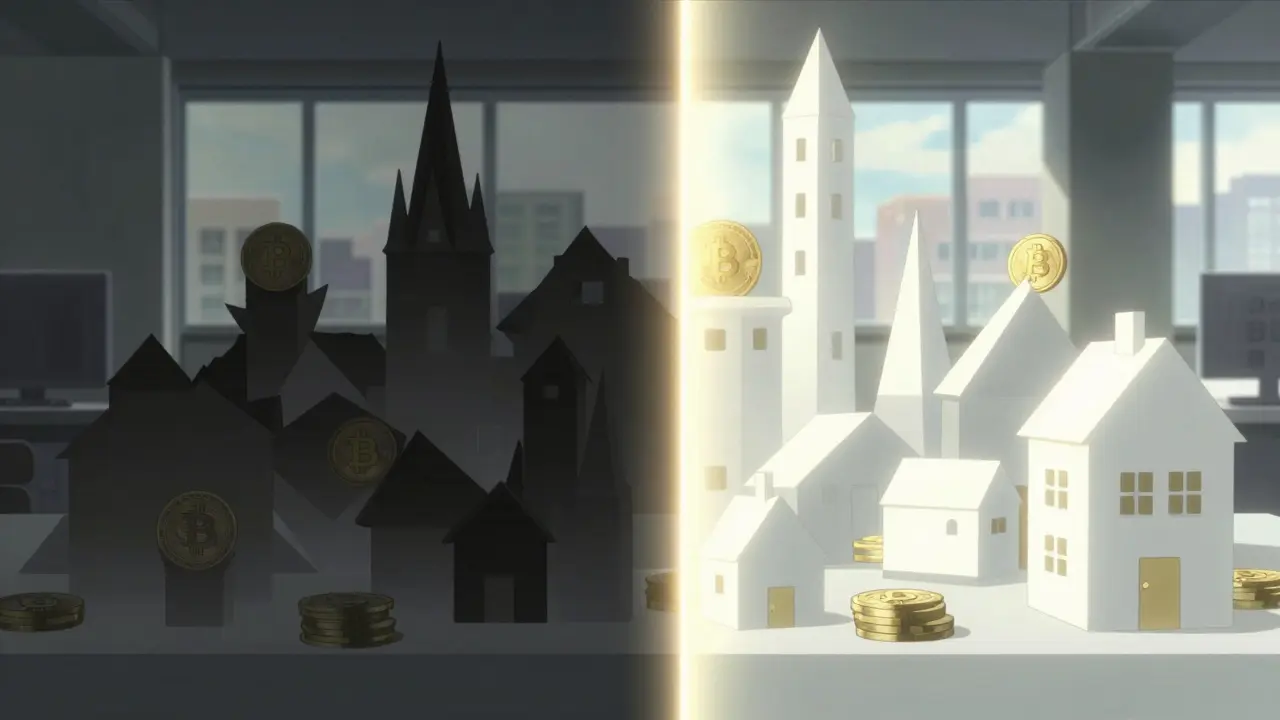
- Permitted Tokens (Allowed): These are digital representations of real-world assets. Think of shares in a company, ownership in a commercial building, or bonds. These tokens must be backed by tangible value and regulated strictly.
Yousef Al-Jaida, CEO of the Qatar Financial Centre, put it best when he said the ban doesn't stop innovation-it just redirects it toward stability. Instead of gambling on coin prices, Qatar wants companies to use blockchain to sell fractions of skyscrapers or Islamic finance products (sukuk).
What Can Be Tokenized? Real-World Examples
So, if you can't buy Bitcoin, what can you actually do in this new framework? The focus is entirely on "Real-World Asset" (RWA) tokenization. This process involves taking an illiquid asset-something hard to sell quickly-and turning it into digital tokens that can be traded easily.
Here is a look at what is currently being tokenized under the QFC framework:
| Asset Type | Status in Qatar | Key Benefit |
|---|---|---|
| Commercial Real Estate | Allowed (via SPVs) | Lowers entry barrier for high-value properties |
| Sukuk (Islamic Bonds) | Allowed | Faster settlement and Sharia compliance tracking |
| Bitcoin / Ethereum | Banned | N/A (Considered speculative risk) |
| Stablecoins (USDC, USDT) | Banned | N/A (Viewed as currency substitutes) |
| Commodities (Gold/Oil) | Allowed (Regulated) | Transparent ownership records |
A great example of this in action happened in early 2025. Barwa Real Estate Company tokenized a QAR 150 million commercial property. In the past, selling a piece of such a large property took weeks of paperwork. With tokenization, the settlement time dropped from 30 days to just 48 hours. This is the kind of efficiency Qatar is chasing-not the price swings of crypto.
How Qatar Compares to Its Neighbors
When you look at the wider Gulf Cooperation Council (GCC), Qatar's approach stands out. It is not the most open, nor is it the most closed. It sits in a unique middle ground that prioritizes institutional safety over retail freedom.
- United Arab Emirates (UAE): The UAE, particularly Dubai, has embraced crypto fully. They have the Virtual Assets Regulatory Authority (VARA) which licenses exchanges for Bitcoin and other coins. The UAE handles about 68% of the GCC's crypto trading volume.
- Kuwait: Kuwait is stricter than Qatar. As of late 2024, Kuwait maintains a comprehensive ban on almost all crypto activities, including payments, investments, and mining. Multiple government bodies have issued absolute prohibition circulars.
- Bahrain: Bahrain allows licensed cryptocurrency exchanges through its Central Bank's Crypto-Asset Module, making it more friendly to retail traders than Qatar.
- Saudi Arabia: Saudi Arabia is in the middle, issuing frameworks for service providers but not yet licensing public exchanges widely.
Qatar's strategy is different. By banning retail crypto, they avoid the volatility that hurt investors in other regions. By allowing tokenization, they attract big institutional money. According to Carnegie Endowment research from May 2025, Qatar is deliberately excluding itself from the "casino" aspect of crypto while building a serious fintech infrastructure.
The Cost of Compliance: What Businesses Face
If you are a business looking to operate in this space, the bar is high. The QFC provides a regulatory sandbox where you can test your tokenization models for up to 18 months before getting a full license. But it is not cheap or easy.
Data from February 2025 shows that setting up a compliant tokenization operation costs an average of QAR 850,000 (about $233,500 USD). The process takes 6 to 8 months. You need to provide detailed legal opinions on the underlying assets, prove your blockchain infrastructure is secure, and pass strict audits. About 63% of compliance officers in Qatari financial firms reported needing specialized blockchain training to handle these requirements.
However, there is interest. The QFC received 47 formal inquiries from international asset managers in the first few months of 2025 alone. Many are attracted by the chance to tokenize Islamic finance products, which made up 58% of all tokenization initiatives under the new framework. For institutions, the regulatory clarity is worth the cost.

Impact on Everyday People and Retail Investors
For the average person living in Qatar, the situation remains challenging if you love cryptocurrencies. You cannot legally trade Bitcoin on a local exchange. A survey by Qatar University in February 2025 found that 68% of citizens aged 18-35 support limited legalization of crypto. They feel left out of the global market.
Many Qatari residents turn to offshore platforms. One user on a local crypto forum noted that using foreign exchanges costs them about 2.5% more per transaction due to fees and withdrawal hurdles. Retail adoption of crypto in Qatar is very low, estimated at only 0.8% of the population, compared to 14% in the UAE.
But for those interested in real estate or fixed-income investments, the door is opening. Soon, you might be able to buy a fraction of a luxury hotel or a green energy project via a regulated app, with the same security guarantees as buying a stock. This is the future Qatar is betting on.
Future Outlook: Will the Ban Lift?
Is Qatar going to allow Bitcoin soon? Probably not anytime soon. Sheikh Bandar bin Mohammed Al Thani, Governor of the Qatar Central Bank, stated clearly in January 2025 that the priority is investor protection and financial stability over short-term market participation. The current roadmap suggests the ban on cryptocurrencies will remain through 2030.
Instead of lifting the ban, Qatar plans to expand what *can* be tokenized. The QFC's 2025-2027 roadmap identifies carbon credits, intellectual property rights, and art collections as the next targets. The goal is to become the global hub for safe, regulated digital assets, rather than a playground for speculative coins.
As the technology matures, we may see more cross-border transfers of these tokenized assets. But for now, the line is clear: no crypto speculation, yes to blockchain utility. It is a cautious, calculated move that aligns perfectly with Qatar National Vision 2030's goal of diversifying the economy without risking its financial reputation.
Is Bitcoin legal in Qatar?
No, Bitcoin is not legal for trading or investment in Qatar. It falls under the category of "Excluded Tokens" in the QFC Digital Assets Regulations 2024. The Qatar Central Bank prohibits financial institutions from engaging with cryptocurrencies, and individuals face significant restrictions and risks if they attempt to trade them through unofficial channels.
Can I buy tokenized real estate in Qatar?
Yes, but primarily through institutional or accredited investor channels within the Qatar Financial Centre (QFC). The regulations allow for the tokenization of real-world assets like commercial real estate. Companies like Barwa Real Estate have already started this process, allowing fractional ownership of properties through regulated digital tokens.
What is the difference between Qatar's ban and the UAE's approach?
The UAE, especially Dubai, has fully legalized and regulated cryptocurrency trading through authorities like VARA. Qatar, on the other hand, bans speculative cryptocurrencies but encourages the use of blockchain technology for tokenizing traditional assets like bonds and real estate. Qatar prioritizes financial stability, while the UAE focuses on capturing crypto market volume.
Are stablecoins like USDT allowed in Qatar?
No, stablecoins are generally prohibited. Under the QFC Digital Assets Regulations 2024, stablecoins are classified as "Excluded Tokens" because they act as substitutes for currency. Only central bank-issued digital currencies (if approved by the QCB) would be exempt from this specific exclusion.
How much does it cost to start a tokenization business in Qatar?
As of early 2025, the average setup cost for a compliant tokenization operation in the QFC is approximately QAR 850,000 ($233,500 USD). The process typically takes 6 to 8 months and requires extensive legal documentation, technical audits, and compliance training.

Jay Sharma
June 29, 2026 AT 12:27They are lying to you about the stability. This is just a way for the elite to control the money supply while pretending to be progressive with their blockchain toys. The ban on Bitcoin isn't about safety; it's about keeping the people from having true financial freedom that they can't monitor or tax effectively.
Rebecca Shoniker
July 1, 2026 AT 02:46Oh, please. Do not pretend this is some sophisticated economic strategy when it is clearly just regulatory overreach designed to protect the status quo of traditional banking institutions. You are ignoring the fundamental rights of individuals to manage their own assets without government interference, and frankly, your analysis lacks any real understanding of decentralized finance principles which are far superior to these centralized, corrupt tokenization schemes.
Sajjad Ghorbani Moghaddam
July 1, 2026 AT 17:09I get where you are coming from, but maybe we should look at the practical side of things here. It seems like Qatar is trying to find a middle ground that works for their specific economic goals rather than just following the hype train. It might not be perfect for retail investors, but it could be a solid model for institutional growth if executed correctly.
Ryan Peters
July 3, 2026 AT 14:50Typical weak approach by a nation that doesn't understand real power. If you want to lead in fintech, you don't ban the most powerful asset class in history, you regulate it properly and let the market decide. This is just bureaucratic cowardice disguised as prudence, and it will only push innovation to more competent jurisdictions like Dubai or Singapore.
ross harris
July 4, 2026 AT 05:08The irony is thick enough to cut with a knife. They ban the wild west of crypto only to build a gated community version of it for the rich. It's like banning alcohol but opening a speakeasy for senators. The whole concept of 'tokenizing real-world assets' is just a fancy suit for old-school securitization, repackaged with buzzwords to attract venture capital that has nowhere else to go.
Rob Morton
July 5, 2026 AT 02:31This raises an interesting philosophical question about the nature of value itself. By stripping away the speculative element, are they revealing the true utility of blockchain, or are they neutering its revolutionary potential? It makes one wonder if technology should serve the market or if the market should adapt to the ethical implications of the technology.
Mélanie Boulay
July 5, 2026 AT 04:32While I appreciate the detailed breakdown of the regulations, I must express my concern regarding the accessibility of these new financial instruments for the average citizen, who often finds themselves excluded from such high-barrier entry investments due to the stringent compliance requirements and significant costs involved in participating in these tokenized asset markets.
Carol @minaszilda
July 5, 2026 AT 23:59It's actually quite hopeful to see a country prioritizing long-term stability over short-term gains. We need more places thinking about sustainable growth rather than quick flips.
Carl Hanzel
July 6, 2026 AT 16:47You are all missing the point entirely because you are too busy cheering for whatever shiny object the regulators hand you. This isn't progress, it's stagnation wrapped in tech jargon. The fact that they allow tokenization of real estate while banning Bitcoin shows a complete misunderstanding of what drives technological adoption and user engagement in the digital age.
Routh Middaugh
July 8, 2026 AT 00:16I think there is a lot to unpack here, especially regarding how this compares to the UAE's much more open stance. It really highlights the different philosophies within the GCC, and while Qatar's path seems cautious, it might just be the smarter play in the long run for attracting serious institutional capital rather than retail speculators.
Carl Belgrave
July 9, 2026 AT 22:18Finally, someone gets it right. This is exactly how sovereign nations should handle disruptive technologies. Protect your citizens from scams and volatility, and use the underlying tech to strengthen your own economy. Other countries should take notes instead of letting their financial systems become playgrounds for fraudsters.