
Imagine casting your vote from your couch, knowing it’s recorded forever and can’t be changed. That’s the promise of blockchain voting. No more long lines, no more lost ballots, no more doubts about whether your vote counted. Sounds perfect, right? But here’s the truth: blockchain voting isn’t a magic fix. It’s a high-tech experiment with serious risks-and we’re not ready for it yet.
How Blockchain Voting Actually Works
At its core, blockchain voting uses the same tech behind Bitcoin: a distributed ledger that copies itself across hundreds or thousands of computers. Every vote becomes a transaction, locked in a block with a unique code. Once added, it can’t be erased or altered. No central server holds all the votes. Instead, each node on the network keeps a copy. If someone tries to change one vote, the system notices the mismatch and rejects it.
Here’s how it typically plays out:
- You download a voting app and verify your identity using government-issued ID or biometrics.
- The system gives you a digital ballot token stored in your encrypted wallet.
- You select your choice, sign it with your private key, and send it to the blockchain.
- Smart contracts automatically tally the votes without human intervention.
- Anyone can audit the results because the entire history is public and verifiable.
This is where the magic seems to happen: immutability, transparency, and decentralization. Unlike traditional e-voting systems that rely on a single database, blockchain spreads control. No single hack can wipe out the votes. That’s why groups like the Brookings Institution is a Washington D.C. think tank that has studied blockchain voting for its potential to reduce fraud and increase accessibility see it as a game-changer.
Two Ways Blockchain Voting Is Built
Not all blockchain voting systems are the same. There are two main models, and they change who’s really in charge.
Multi-owner chain means no single group runs the system. Think of it like a jury: multiple independent organizations-maybe a university, a tech nonprofit, and a government agency-each run a node. They watch each other. If one tries to cheat, the others catch it. This is the ideal for public elections. It’s trustless, meaning you don’t need to trust any one entity. The BELEM is a blockchain-based voting technique that uses smart contracts to automatically count votes in real time system uses this model.
Single-owner chain is simpler. One organization-say, a city’s election office-controls all the nodes. It’s easier to set up, but it defeats the point of decentralization. If that one group gets hacked or corrupted, the whole system is compromised. It’s basically a fancy database with blockchain branding.
Most real-world pilots use the single-owner model. Why? Because governments don’t want to give up control. But that’s also why experts are skeptical.
The Allure: Why People Think Blockchain Voting Is the Future
Proponents list a long wishlist of benefits:
- Zero tampering: Votes are permanent and cryptographically sealed.
- Instant counting: Smart contracts tally votes in seconds, not days.
- Lower costs: No printing ballots, no renting polling stations, no hiring poll workers.
- Higher turnout: People who can’t get to polls-disabled voters, expats, shift workers-can vote from anywhere.
- Full transparency: Anyone can verify the results using public blockchain explorers.
These aren’t theoretical. Estonia has been using blockchain for parliamentary elections since 2014. Switzerland tested it in local referendums. A pilot in West Virginia let overseas military personnel vote via blockchain in 2018. The University of Minnesota Morris conducted research indicating blockchain could be useful in emergency voting scenarios where paper ballots are impractical found it useful for voters in extreme situations-like during natural disasters or pandemics.
For organizations, it’s even simpler. Companies use blockchain to vote on board decisions. HOAs use it for electing board members. These low-stakes uses prove the tech works in controlled environments.
The Hard Truth: Why Experts Warn Against It
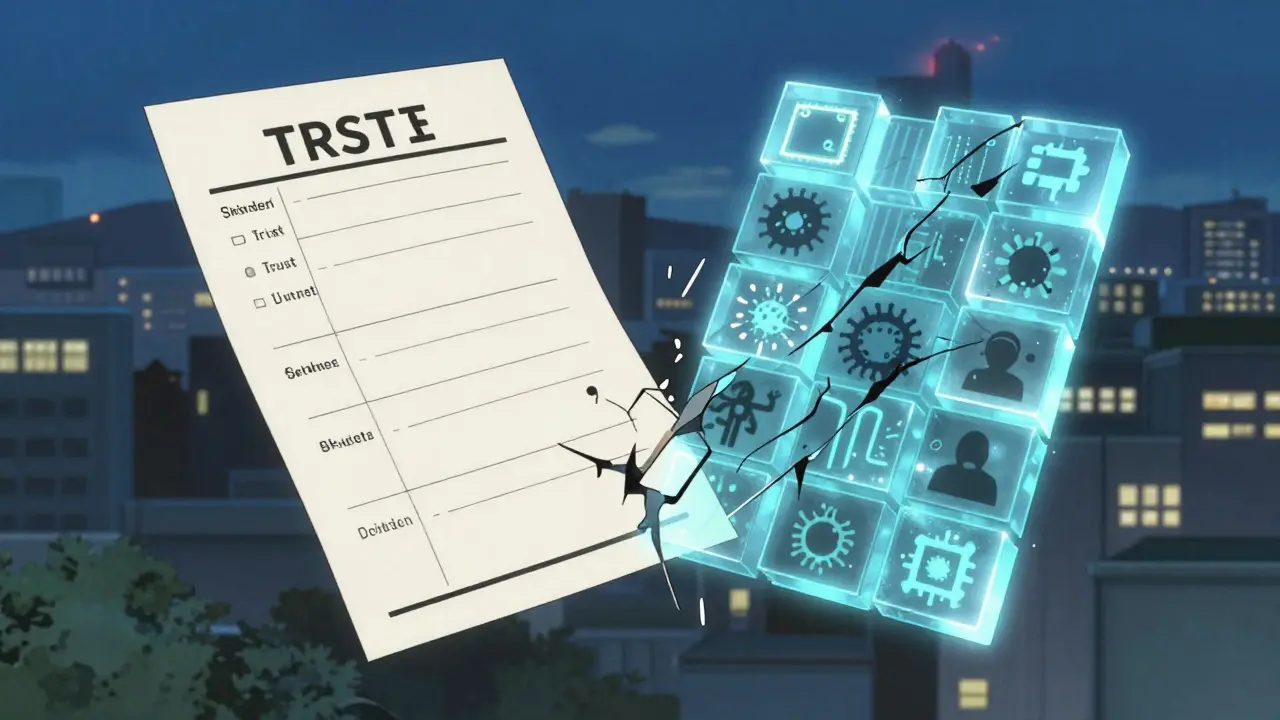
Here’s the problem no one talks about: blockchain doesn’t fix the weakest link-the voter’s device.
Imagine you vote on your phone. A hacker slips malware onto it. They change your vote before it even leaves your device. The blockchain records the altered vote. It’s perfectly legal on the chain. But it’s not your vote anymore. The blockchain can’t tell the difference between a real vote and a hacked one.
This isn’t hypothetical. In 2020, researchers at MIT’s Digital Currency Initiative found that internet-based voting systems dramatically increase the risk of undetectable, nation-scale election failures showed that even the most secure blockchain systems can’t protect against device-level attacks. Malware, phishing, fake apps-these are everyday threats. And voters? Most don’t know how to spot them.
Then there’s the Denial of Service (DoS) attack. Hackers flood the voting servers with fake traffic. The system crashes. No one can vote. The blockchain doesn’t stop this. It’s just as vulnerable as any website. And there’s no backup.
And what about secrecy? In traditional voting, no one knows who you voted for. In blockchain, if your public key is linked to your identity (which it often is), someone could trace your vote. Some systems use zero-knowledge proofs to hide this, but they’re complex, slow, and rarely implemented correctly.
David Jefferson from the U.S. Vote Foundation states that blockchain is not a security strategy and that most vulnerabilities occur before votes reach the blockchain says it bluntly: “Blockchain doesn’t solve election security. It just moves the problem somewhere else.”
Who’s Really Using It? And Where?
Forget national elections for now. Right now, blockchain voting is being tested in places where the stakes are low and control is easier:
- Corporate boards: Shareholders vote on mergers or executive pay using secure apps.
- Student unions: Universities in Canada and Australia use blockchain for student elections.
- HOAs and cooperatives: Community groups use it to vote on renovations or fees.
- Remote military voting: West Virginia’s 2018 pilot let 144 service members vote from overseas.
These aren’t perfect. In West Virginia, 20% of voters couldn’t complete the process because the app was too confusing. Some didn’t know what a private key was. Others lost access after switching phones.
And here’s the kicker: no large-scale public election has ever used blockchain as its primary system. Not in the U.S., not in Europe, not anywhere. Why? Because the risks outweigh the rewards-for now.
The Real Barrier Isn’t Tech-It’s People
Blockchain voting doesn’t just need secure code. It needs:
- Technical literacy: Voters must understand digital wallets, private keys, and encryption.
- Infrastructure: Reliable internet, smartphones, and power-things millions don’t have.
- Legal trust: Courts, election commissions, and voters must believe the system is fair.
- Regulation: No country has laws that fully govern blockchain elections.
Most voters don’t care how the system works. They just want to know: Is my vote safe? Is it counted? Paper ballots give them that. A piece of paper they can see, touch, and verify. Blockchain gives them a digital receipt they can’t fully understand.
That’s why the U.S. Vote Foundation categorically rejects blockchain voting as a security solution and recommends paper ballots as the gold standard says: “The most secure ballot is the one you can hold in your hand.”
Where Do We Go From Here?
Blockchain voting isn’t dead. But it’s not ready. The future likely looks like this:
- Hybrid systems: Voters choose paper or digital. Digital votes are printed and audited manually.
- Low-stakes elections: First used in small organizations, then in local referendums.
- Post-election audits: Blockchain records votes, but paper ballots are counted to verify.
Some researchers are working on solutions: better voter authentication using biometrics, anonymous voting with zero-knowledge proofs, and offline ballot submission that syncs later. But these are years away from mass adoption.
For now, the safest path isn’t to replace paper with blockchain. It’s to use blockchain to strengthen paper. Imagine a system where your paper ballot is scanned, encrypted, and stored on a blockchain as a backup. That way, you get the security of paper with the audit trail of blockchain.
The dream of frictionless, tamper-proof voting is still out there. But the path to it isn’t through tech alone. It’s through patience, testing, and-above all-respect for the fact that democracy isn’t just about convenience. It’s about trust.
Can blockchain voting prevent election fraud?
Blockchain can prevent tampering after a vote is cast, but it can’t stop fraud before that. If a hacker takes over your phone or impersonates you during registration, the blockchain will record the fake vote as real. It secures the chain, not the voter.
Is blockchain voting already used in major elections?
No. No national election has used blockchain as its primary voting method. Estonia runs a limited online voting system, but it doesn’t use blockchain for vote storage-it uses encrypted servers. Most blockchain voting pilots are small, like student elections or military voting trials.
Why don’t governments just switch to blockchain voting?
Because the risks are too high. Experts from MIT, the U.S. Vote Foundation, and cybersecurity labs agree: current systems are vulnerable to large-scale attacks. A single failure could undermine public trust in democracy itself. Paper ballots, while slower, are far more resilient.
Does blockchain voting increase voter turnout?
Studies show mixed results. Some pilot programs saw small increases, especially among overseas voters. But others found no change-or even lower participation because the system was too confusing. Convenience doesn’t guarantee participation if people don’t trust the process.
What’s the safest way to vote today?
Hand-marked paper ballots, counted in public with observers present. This system has been tested for centuries. It’s slow, but it’s transparent, verifiable, and nearly impossible to hack at scale. Blockchain may one day help audit these ballots-but it’s not ready to replace them.

Henrique Lyma
March 15, 2026 AT 10:32Look, I get it-blockchain sounds sexy. Like, you slap ‘decentralized’ on something and suddenly it’s the future. But let’s be real: most voters can’t tell the difference between a phishing link and a QR code. You think they’re gonna understand private keys? Nah. They’ll click ‘I agree’ on a popup that says ‘Verify your vote’ and accidentally sign over their crypto wallet too. The system’s not broken because of the blockchain-it’s broken because we’re asking humans to do cybersecurity tasks they’re not equipped for. And don’t get me started on ‘transparency.’ Public ledger my ass. If I can’t read it without a PhD in cryptography, it’s not transparent-it’s performative.
Also, who approved this as a democracy experiment? We’re not beta testing a new Netflix feature. People’s votes aren’t data points. They’re the foundation of governance. And we’re letting engineers design it like it’s a startup pitch deck. Just… stop.
Steph Andrews
March 16, 2026 AT 11:01I love how we keep treating tech like a magic wand. Blockchain doesn’t fix trust, it just moves where the trust has to be. I mean, think about it-we already have paper ballots with human observers, audits, recounts. Simple. Slow. Reliable. Why do we need to overcomplicate it? I’m all for innovation, but not when it makes things harder for people who already struggle to vote. My grandma can’t use an app. She can hold a pencil. And that’s okay. Democracy shouldn’t be about who’s tech-savvy. It should be about who’s included.
Also, I’ve seen blockchain demos. The UI looks like a 2008 iPhone app. No one’s gonna bother. We need better access, not better crypto.
Prakash Patel
March 16, 2026 AT 20:42Actually, you’re all wrong. Blockchain voting is the future and you’re just scared of change. Look at Estonia-they’ve been doing it for a decade. No fraud. No recounts. Instant results. And you’re talking about grandma? Who cares? Progress doesn’t wait for the elderly. Also, why are you so obsessed with paper? It’s inefficient. It costs money. It’s prone to human error. Blockchain eliminates all that. And if people can’t use the app? Then they shouldn’t vote. Simple. The system rewards competence. That’s not a bug, that’s a feature.
Elizabeth Kurtz
March 18, 2026 AT 02:01Prakash, I hear you-but let’s not pretend that Estonia’s system is flawless. They use encrypted servers, not blockchain, for vote storage. And even then, there were security breaches in 2019. The real issue isn’t the tech-it’s the narrative. We keep selling blockchain as this utopian fix when it’s really just a new kind of vulnerability. I’ve worked with election systems for 15 years. The moment you remove physical ballots, you remove accountability. And trust? Trust is built in the open, not in encrypted ledgers.
Let’s make voting easier, yes-but not by replacing the only system that’s never failed us. Let’s improve paper: better ink, clearer ballots, mobile drop boxes, extended hours. That’s real progress. Not blockchain branding.
shreya gupta
March 20, 2026 AT 01:25Oh please. You all sound like you’re advocating for democracy in a TED Talk. Blockchain voting? More like blockchain branding. The fact that West Virginia’s pilot had a 20% failure rate among military personnel tells you everything. These aren’t tech illiterates-they’re Americans with access to smartphones. If they couldn’t use it, what hope do we have for rural voters, seniors, or people without reliable internet? And yet, we’re still pushing this? It’s not innovation. It’s arrogance dressed up as progress.
Also, ‘zero tampering’? What a joke. A hacker doesn’t need to touch the blockchain. They just need to change the vote on the voter’s phone. And then? The blockchain records the lie like it’s gospel. That’s not security. That’s a lie with a cryptographic seal.
Derek Lynch
March 20, 2026 AT 04:38Y’all are overthinking this. We’ve been stuck in the 1800s with paper ballots while the rest of the world moved on. Blockchain isn’t perfect-but neither is paper. Paper gets burned. Paper gets stolen. Paper gets miscounted by tired volunteers. Blockchain? It’s auditable by anyone. It’s instant. It’s tamper-proof after submission. Yes, device security is a problem-but that’s not a reason to reject the tech. That’s a reason to build better authentication. Biometrics. Multi-factor. Hardware wallets. We can do this. We’ve done harder things. We’ve landed on Mars. We can secure a vote.
Stop treating democracy like a fragile artifact. Treat it like a system that needs upgrades. And if you’re scared of change, that’s fine-but don’t block progress for people who need it. Imagine a soldier overseas voting from a warzone. Or a single mom working three shifts. Paper doesn’t serve them. Tech can.
Sarah Zakareckis
March 21, 2026 AT 09:52Let’s reframe this. Blockchain voting isn’t about replacing paper-it’s about augmenting it. Think of it as an audit trail. You mark your paper ballot. It gets scanned. The scan is encrypted and anchored to a blockchain. You get a receipt with a hash. You can verify it later. No one can alter the paper. But now, we have immutable proof it was counted. That’s not replacing democracy. That’s strengthening it.
Hybrid systems are the answer. Not either/or. Both/and. We don’t need to reinvent the wheel. We just need to add GPS tracking to it. The tech exists. The infrastructure is emerging. The question isn’t ‘can we?’ It’s ‘will we?’ And if we don’t, we’re choosing convenience over integrity. And that’s not democracy. That’s surrender.
Heather James
March 22, 2026 AT 13:19Paper. Always paper. You can hold it. You can see it. You can touch it. That’s trust. Blockchain? It’s a black box with fancy lights.
Sarah Hammon
March 24, 2026 AT 05:01Okay I just read this whole thing and I think we’re missing the point. The real issue isn’t the tech or the paper. It’s access. If you don’t have internet, a smartphone, or even electricity, blockchain voting doesn’t help you. It hurts you. And if you’re low-income, disabled, elderly, or in a rural area, you’re already marginalized. Adding a complex digital system just makes it worse. We need to fix voting access first-mobile ballot drop boxes, extended hours, language support, polling places in every neighborhood. Then, maybe, we can think about blockchain as a backup. Not the main thing. Not the future. Just… a tool. One tool. Not the whole toolbox.