You might think mining hardware is just about brute-force computing power or heavy steel machines digging holes. But the reality in 2026 is far more nuanced. The industry is undergoing a silent revolution driven by the convergence of artificial intelligence, autonomous systems, and immutable data structures. We aren't just looking at faster chips or bigger trucks; we are seeing a fundamental reimagining of how raw materials are extracted, processed, and tracked. If you're still thinking of mining as purely physical labor, you're missing the digital layer that now dictates efficiency, safety, and profitability.
The shift isn't theoretical. Market projections show the autonomous mining equipment market doubling from $3.1 billion to $6.2 billion by 2026. That's not a small bump; it's a structural change. Companies are deploying fleets of driverless trucks and robotic drilling rigs that operate 24/7 without fatigue. But what powers these machines? It’s not just diesel or electricity anymore-it’s data. And where does that data live? In ruggedized, AI-optimized storage nodes that survive the harsh conditions of remote sites while processing information in real-time. This article breaks down exactly how these technologies are merging to define the future of mining.
The Rise of Autonomous Fleets and Robotic Drilling
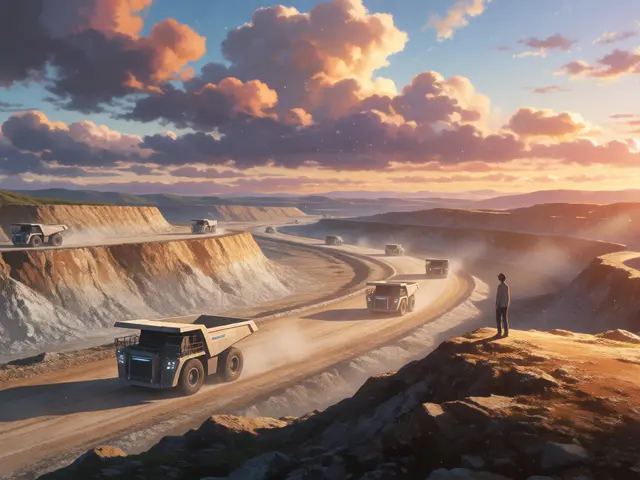
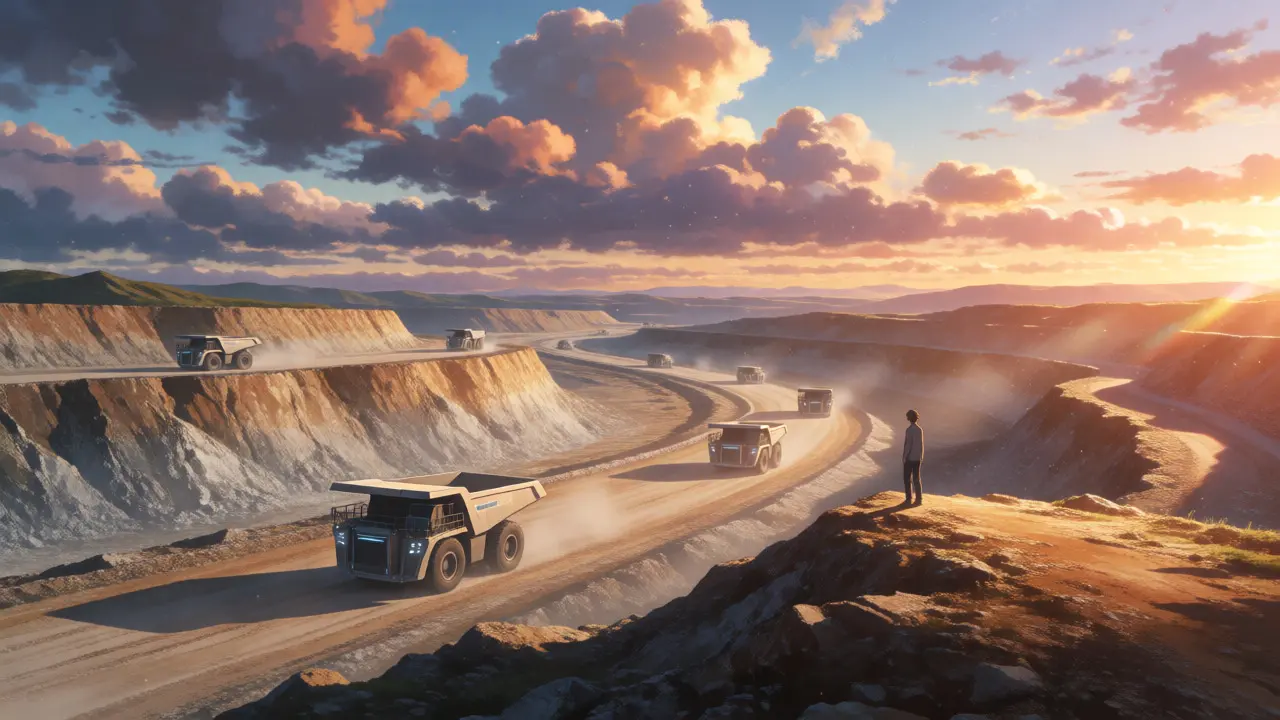
Let’s start with the most visible change: the removal of humans from hazardous zones. Traditional mining is dangerous. Workers face rockfalls, toxic gases, and extreme weather. Now, driverless haul trucks and robotic loaders are taking over. These aren't remote-controlled toys; they are fully autonomous units guided by LiDAR, GPS, and computer vision. They communicate with each other to optimize routes, avoid collisions, and maintain consistent speeds.
Why does this matter for the bottom line? Because humans need breaks, shifts, and sleep. Machines don’t. A fleet of autonomous trucks can run continuously, only stopping for maintenance or refueling. This increases throughput significantly. More importantly, it improves safety. By removing people from the pit, accident rates drop dramatically. You’re no longer risking lives on every shift change. Instead, you have a control center miles away, where operators monitor multiple vehicles simultaneously. It’s less like driving a truck and more like managing a swarm of intelligent agents.
Drilling has seen similar changes. Automated drilling systems use real-time geological data to adjust their path mid-drill. If the sensor detects a harder rock formation, the drill bit adjusts its torque and speed instantly. This precision reduces wear and tear on equipment and ensures that the drill hits the target ore body accurately. No more guessing games based on outdated survey maps.
AI-Optimized Edge Storage: Processing Data Where It’s Created
Here’s the bottleneck: all those sensors on trucks, drills, and conveyor belts generate massive amounts of data. Sending all that raw data to a central cloud server is slow and expensive due to bandwidth limitations in remote locations. The solution? AI-optimized edge storage nodes. These are ruggedized devices placed directly on-site that process data locally before sending only the critical insights to the cloud.
Think of it as having a brain right next to the muscle. An edge node can analyze ore grade in real-time, adjusting extraction parameters on the fly. This approach boosts efficiency by up to 40% compared to traditional centralized processing. It also lowers latency, meaning decisions happen in milliseconds rather than minutes. For a mining operation, milliseconds can mean the difference between hitting a high-grade vein and wasting time on low-grade waste rock.
| Metric | Traditional Systems | Future Hardware (2026) |
|---|---|---|
| Data Processing Location | Central Cloud Servers | Edge Nodes / On-Site |
| Latency | High (Seconds to Minutes) | Low (Milliseconds) |
| Efficiency Gain | Baseline | +40% via AI Analytics |
| Durability | Standard Industrial | Ruggedized HDD/SSD Hybrids |
| Data Integrity | Manual Audits | Blockchain-Ledger Verified |
These nodes often use hybrid storage architectures, combining Hard Disk Drives (HDDs) for long-term archival of survey data with Solid-State Drives (SSDs) for instant access to operational metrics. This tiered approach balances cost and speed. You don’t need lightning-fast access to data from five years ago, but you do need it for the current shift’s production numbers.
Blockchain Integration for Traceability and Trust
If you think blockchain is only for cryptocurrency, you’re outdated. In mining, blockchain technology is becoming essential for data traceability. Why? Because supply chains are complex. When a consumer buys a smartphone, they want to know if the cobalt inside was ethically sourced. Blockchain provides an immutable ledger that tracks the journey of minerals from the mine to the manufacturer.
Integrating blockchain modules into mining hardware allows for automatic recording of key events: when a batch of ore was extracted, who operated the machinery, and under what environmental conditions. This guarantees data integrity. You can’t alter the history once it’s written to the chain. For compliance audits, this is gold. Instead of digging through paper logs or vulnerable databases, auditors can verify the entire lifecycle of a mineral deposit in seconds. This transparency helps companies meet increasingly stringent regulatory requirements and appeals to environmentally conscious investors.

Additive Manufacturing: Printing Parts on Demand
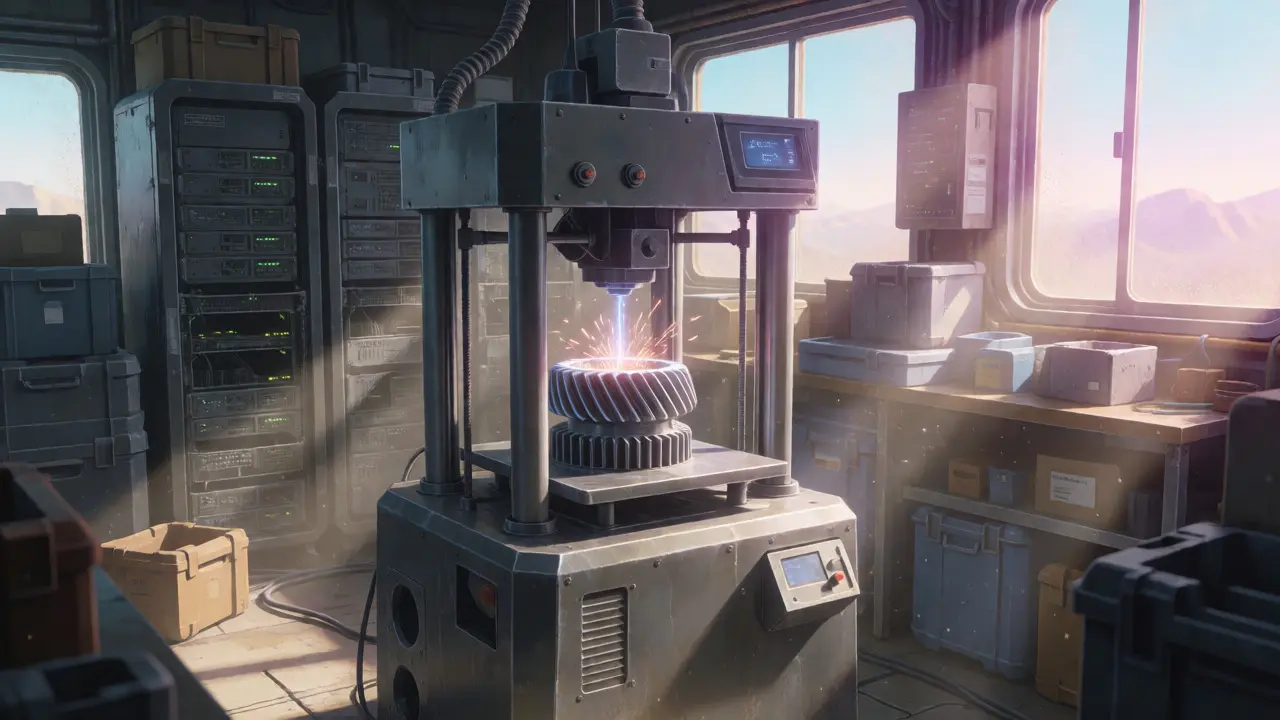
One of the biggest headaches in remote mining is equipment failure. If a specific gear breaks, waiting weeks for a replacement part means lost revenue. Enter additive manufacturing, commonly known as 3D printing. Modern metal 3D printers can fabricate strong, lightweight parts on demand using steel, titanium alloys, or bronze.
This isn't just about convenience; it’s about resilience. Companies like Arcobo are already producing large-scale metal products for mining clients, delivering custom parts within days instead of months. This reduces reliance on fragile global supply chains. If a machine fails, you print the part, install it, and get back to work. It minimizes downtime and keeps operations running smoothly. Plus, additive manufacturing allows for designs that were previously impossible to cast, leading to lighter and more efficient components.
Sustainability Through Precision and Electrification
The pressure to go green is intense. Mining has a reputation for being dirty, but new hardware is changing that narrative. Electric and hybrid mining equipment are gaining traction, reducing emissions and fuel consumption. But it’s not just about swapping diesel engines for batteries. It’s about precision.
Advanced sensors and AI allow for "precision mining," where machines extract only the valuable ore, leaving behind waste rock. This reduces the volume of material moved, which cuts energy consumption and waste generation. Furthermore, energy-efficient HDD devices with advanced thermal management help reduce the carbon footprint of the data centers supporting these operations. Sustainability isn't just a marketing buzzword here; it’s a design constraint built into the hardware itself.
The Human Element: Workforce Transition
With all this automation, you might worry about job losses. The truth is more complicated. While fewer people are needed for manual labor, there’s a growing demand for tech-savvy professionals. The workforce is shifting from physical laborers to data analysts, remote operators, and maintenance technicians who understand robotics and software.
This transition requires training. Mining companies are investing heavily in upskilling their staff. They need people who can interpret AI-generated insights, manage autonomous fleets, and troubleshoot complex electronic systems. It’s a new career landscape that attracts diverse talent, including women and younger workers who might have overlooked mining jobs in the past. The job isn't gone; it’s just changed clothes.
Key Takeaways
- Autonomy is mainstream: Driverless trucks and robotic drills are moving from pilot projects to standard deployment, doubling the market value by 2026.
- Edge computing wins: Processing data on-site with AI-optimized nodes reduces latency and boosts efficiency by up to 40%.
- Blockchain adds trust: Immutable ledgers ensure data integrity for compliance and ethical sourcing claims.
- 3D printing solves supply chains: On-demand part fabrication reduces downtime and logistical complexity.
- Workforce evolution: Jobs are shifting from physical labor to technical supervision and data analysis.
What is the main benefit of AI-optimized edge storage in mining?
The primary benefit is reduced latency and increased efficiency. By processing data locally at the source (the edge), mining operations can make real-time adjustments to extraction processes without waiting for data to travel to and from a central cloud server. This results in up to a 40% improvement in operational efficiency and enables immediate responses to changing geological conditions.
How does blockchain technology improve mining operations?
Blockchain enhances data traceability and integrity. It creates an immutable record of the mining process, from extraction to transport. This ensures that data cannot be tampered with, simplifying compliance audits and providing verifiable proof of ethical sourcing for end consumers. It integrates directly with hardware modules to automatically log key operational events.
Are autonomous mining trucks safe?
Yes, they are generally considered safer for human workers because they remove people from hazardous environments. Equipped with LiDAR, cameras, and collision avoidance systems, these vehicles operate consistently without fatigue-related errors. Safety incidents decrease significantly as human exposure to risks like rockfalls and heavy machinery accidents is minimized.
What role does additive manufacturing play in mining?
Additive manufacturing, or 3D printing, allows mining companies to produce replacement parts on-site. This reduces dependency on long supply chains and minimizes downtime caused by waiting for spare parts. It enables the creation of custom, lightweight, and durable components using metals like steel and titanium, improving overall equipment availability.
How is the mining workforce changing with new hardware?
The workforce is transitioning from manual labor to technical roles. There is a growing demand for employees skilled in data analysis, remote operation of autonomous vehicles, and maintenance of electronic systems. Companies are focusing on upskilling existing staff to handle these new responsibilities, creating a more diverse and tech-oriented workforce.