
The CYC airdrop wasn’t just another free token giveaway. It was a carefully designed system to reward real contributors to a privacy-focused blockchain protocol - not people who joined ten Telegram groups and called it a day. Cyclone Protocol launched its Anonymity for Everyone airdrop in early 2021 with one goal: distribute its native token, CYC, fairly to those who actually helped build the network. No pre-mining. No team allocations. No insiders. Just points earned through real actions.
How the CYC Airdrop Actually Worked
Cyclone Protocol didn’t hand out 1,500 CYC tokens equally. That would’ve been too easy - and too easy to game. Instead, they used a points-based system tracked by a Telegram bot. Every action you took added points. More activity = more points = bigger share of the airdrop. You earned points for things like:- Connecting your wallet to the official bot
- Joining the main Cyclone Protocol Telegram group
- Referring others who completed all required steps
- Participating in community discussions
- Sharing updates about the protocol on social media
Why Cyclone Protocol Didn’t Pre-Mine CYC
Most crypto projects start by giving big chunks of tokens to founders, investors, and venture capitalists. Cyclone Protocol did the opposite. They announced from day one: no pre-mining. Every single CYC token was distributed through participation. This wasn’t just a marketing move. It was core to their philosophy. If you wanted to own CYC, you had to help make the protocol work. That meant using it, testing it, telling others about it, and staying involved. The airdrop wasn’t a giveaway - it was a vote of trust from the community to the early builders. The team knew that if early adopters were just speculators, the protocol would collapse once the hype faded. So they designed the system so that the people who got the most tokens were the ones who stuck around.How Privacy Tech Made the Airdrop Possible
Cyclone Protocol runs on zkSNARKs - a type of zero-knowledge proof that lets you prove you did something without revealing what you did. Think of it like showing a secret code that says, “I deposited $100,” without showing where that $100 came from or where it went. This same tech was used in the airdrop. When you claimed your CYC tokens, you didn’t have to link your public wallet to your identity. You got a cryptographic note - like a private key - that let you withdraw your tokens later. Lose that note? You lose your tokens. Forever. No recovery. No customer support. That’s how serious privacy is. The airdrop didn’t just give you tokens. It gave you a lesson: if you want anonymity, you have to protect your keys like your life depends on it. And it did.
Who Got Paid - And Who Didn’t
The airdrop data was published publicly on GitHub. Anyone could check if their address qualified. But many didn’t get what they expected. Common reasons for missing tokens:- Your referral didn’t complete their setup
- You used a wallet that wasn’t supported
- You joined the Telegram group but didn’t interact with the bot
- You created multiple accounts - the system caught it
- You didn’t verify your wallet before the deadline
What Happened After the Airdrop
The airdrop wasn’t the end - it was the start. After distribution, Cyclone Protocol planned to launch a DAO (Decentralized Autonomous Organization) in late 2021. Token holders would vote on new anonymity pools, fee structures, and which blockchains to expand to next. They also planned to let users earn yields by providing liquidity. If you locked up CYC or other assets in the protocol, you’d earn more tokens - but only if the community voted to keep that pool active. If no one used it, the rewards would drop. It was a self-correcting system. The protocol expanded from IoTeX to Ethereum, Polkadot, and Heco. That meant more users, more privacy, and more ways to earn CYC. But it also meant more complexity. You couldn’t just hold CYC and wait. You had to stay active.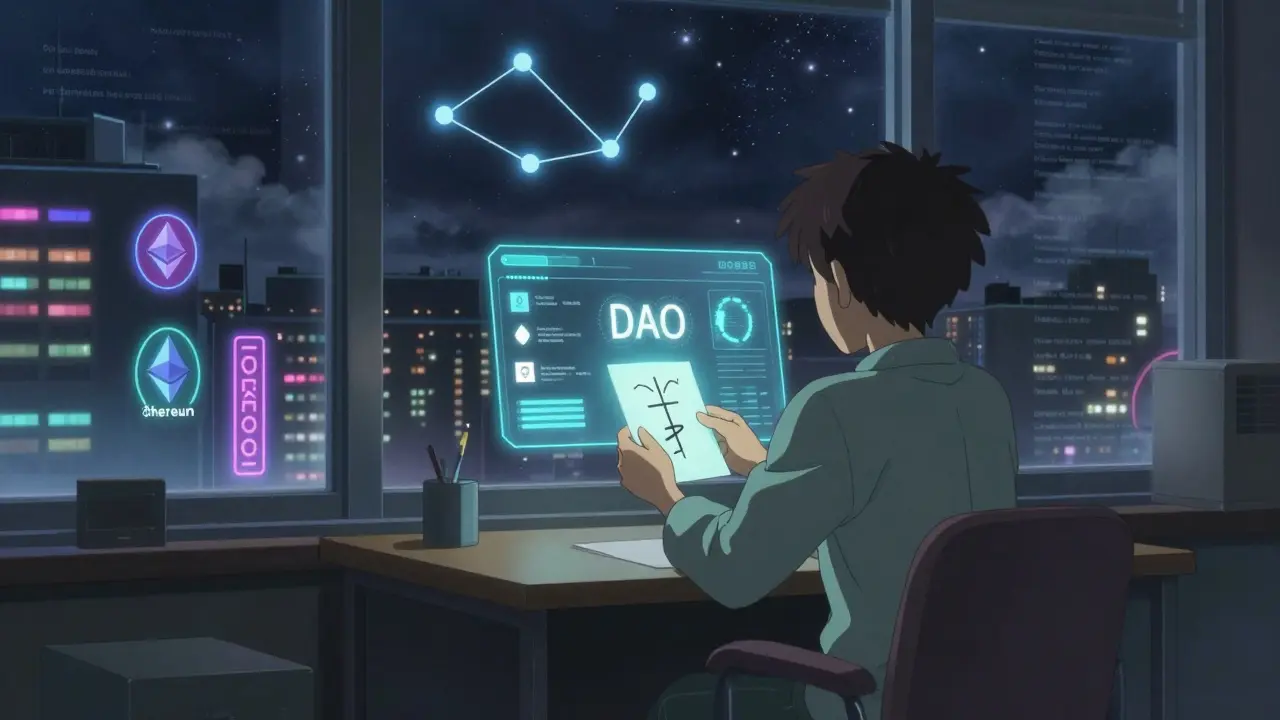
Why This Airdrop Still Matters Today
In 2025, most airdrops are dead. They’re just marketing tools. Projects give away tokens to get listed on exchanges, then vanish. Cyclone Protocol’s airdrop was different. It was a test of community commitment. It rewarded people who understood that privacy isn’t free - it’s built. And it built a core group of users who still care about anonymity, even when the price of CYC drops. Today, CYC trades on a handful of decentralized exchanges. It’s not a top 100 coin. But it’s still running. The code is open. The governance is live. And the original airdrop participants? Many are still using the protocol, still contributing, still believing in the idea that financial privacy should be available to everyone - not just the wealthy or the tech-savvy.What You Can Learn From the CYC Airdrop
If you’re thinking about joining the next airdrop, here’s what the CYC experience teaches you:- Don’t chase free tokens. Chase useful tools.
- If a project doesn’t explain how points are earned, walk away.
- Always read the fine print - especially about referrals and wallet requirements.
- Store your withdrawal keys like gold. If you lose them, you lose everything.
- Real privacy requires effort. It’s not a feature. It’s a habit.
Was the CYC airdrop open to everyone?
Yes, but only if you completed the required steps. Anyone could join the Telegram group and connect their wallet. But points were only awarded for verified, active participation. Accounts flagged as spam, duplicate, or inactive were excluded. The system was designed to reward genuine contributors, not people who signed up for every free token offer.
How many CYC tokens were distributed in the airdrop?
A total of 1,500 CYC tokens were distributed in the initial airdrop. These were not split equally. Instead, they were allocated proportionally based on each participant’s accumulated points from verified activities. The highest-scoring users received the largest shares, while those with minimal or invalid activity received little or nothing.
Did Cyclone Protocol pre-mine any CYC tokens?
No. Cyclone Protocol explicitly stated that no CYC tokens were pre-mined or allocated to the team, investors, or early backers. All tokens were distributed through the airdrop and later through on-chain participation like liquidity provision and anonymity services. This was a core part of their commitment to decentralization and fairness.
Can I still claim CYC tokens from the 2021 airdrop?
No. The airdrop claim period ended in late 2021. After that, the smart contracts were locked, and no further claims are possible. If you didn’t claim your tokens before the deadline, they were redistributed to the protocol’s liquidity pools or governance reserves. There is no way to recover them now.
What happened to the CYC token after the airdrop?
After the airdrop, CYC began trading on decentralized exchanges like Uniswap and PancakeSwap. The token’s value fluctuated based on usage of the protocol, liquidity provided, and community governance decisions. While it never became a top-tier coin, it maintained a small but active user base focused on privacy. The project continued development with planned upgrades to its anonymity pools and yield mechanisms.
Is Cyclone Protocol still active in 2025?
Yes. As of 2025, Cyclone Protocol continues to operate on multiple blockchains, including Ethereum and Polkadot. The core privacy technology remains active, and users can still deposit and withdraw funds anonymously using zkSNARKs. While development pace has slowed compared to 2021-2022, the protocol is still maintained by a small core team and active community contributors.
How do I know if a CYC-related offer is real?
Only trust official channels: the Cyclone Protocol website (verified domain), their GitHub repository, and their Telegram bot (linked from their official site). Never click links in DMs. Never give your private keys or withdrawal notes to anyone. If someone claims to be helping you claim CYC tokens, it’s a scam. The airdrop is long over - there are no new claims or payouts.
prashant choudhari
December 27, 2025 AT 21:04The CYC airdrop was one of the few crypto initiatives that actually delivered on its promise of fairness
Most projects just hand out tokens to their friends and call it decentralization
Cyclone made you earn it
No shortcuts
No fake engagement
Just real work for real rewards
That’s rare in this space
And it’s why the community still exists today
Mike Pontillo
December 28, 2025 AT 21:43Oh wow another crypto cultist who thinks punishing people for not reading the fine print is ‘fair’
Let me guess you also think people who didn’t memorize the Telegram bot’s 17-step process deserve to lose everything
What a noble idea
Let’s make privacy a privilege for the hyper-literate and punish everyone else
Real progressive
Joydeep Malati Das
December 30, 2025 AT 01:32The design philosophy behind Cyclone Protocol’s airdrop reflects a deep understanding of human behavior in decentralized systems
By tying token distribution to verifiable, non-repetitive actions, the protocol discouraged gaming while incentivizing sustained participation
This is not merely a distribution mechanism-it is a social contract encoded in code
Its legacy lies not in token price but in the precedent it set for equitable onboarding
rachael deal
December 31, 2025 AT 17:35I love how this airdrop didn’t just give tokens-it gave people ownership
You didn’t just get CYC, you got a stake in something real
And that’s why people still care today
Even when the price is low
Even when no one’s talking about it
Because they helped build it
And that means something
Keep going, Cyclone team ❤️
Elisabeth Rigo Andrews
January 2, 2026 AT 09:49The zkSNARK implementation was technically elegant but operationally catastrophic for non-technical users
The lack of recovery mechanisms constituted a systemic failure in user experience design
Tokenomics without UX hygiene is just elitist crypto fundamentalism dressed up as ‘privacy’
You can’t claim to empower the masses while requiring cryptographic literacy equivalent to a PhD in information theory
This wasn’t inclusion-it was gatekeeping with a blockchain logo
Bruce Morrison
January 3, 2026 AT 09:25That moment when you realize the airdrop wasn’t about the money but about who showed up
People who stuck around after the hype died
People who read the docs
People who didn’t just copy-paste links
Those are the ones who still matter
The rest? They’re just noise
And noise fades
But the builders? They’re still here
Jordan Fowles
January 4, 2026 AT 05:02There’s a quiet beauty in a system that doesn’t reward laziness
Privacy isn’t a feature you click on
It’s a practice
A discipline
Like meditation or journaling
The CYC airdrop didn’t hand out tokens-it handed out responsibility
And that’s the real gift
Most people don’t want responsibility
They want free stuff
But the ones who did? They’re the ones who changed the game
Steve Williams
January 5, 2026 AT 21:47The integrity of this initiative is commendable in an era where token distribution is often synonymous with exploitation
By eschewing pre-mining and enforcing rigorous verification protocols, Cyclone Protocol demonstrated a rare commitment to equitable participation
Such governance models serve as exemplars for future decentralized systems aiming to align incentive structures with community values
Let this be a benchmark
SUMIT RAI
January 6, 2026 AT 14:59Bro the bot just deleted my 200 points because I used my phone and laptop at the same time 😭😭😭
That’s not fairness that’s just a glitch with a moral compass
But still... I respect the vibe 🙌
NIKHIL CHHOKAR
January 7, 2026 AT 19:27Let’s be real-this ‘fair’ airdrop was just a clever way to filter out the poor and the non-techy
Only people who already had wallets, knew how to use Telegram bots, and had time to spam social media got paid
That’s not inclusion
That’s a meritocracy built on privilege
And now you’re all acting like it’s some kind of moral victory
It’s just capitalism with a blockchain filter
Adam Hull
January 8, 2026 AT 11:10How quaint
A project that didn’t pre-mine tokens and actually expected users to read documentation
How dare they assume people would care enough to follow instructions
It’s almost as if they thought privacy was a right worth earning
Not a feature you get when you sign up for a newsletter and watch a 30-second YouTube video
What an alien concept in 2025
Thank god someone still believes in effort over entitlement
Mandy McDonald Hodge
January 9, 2026 AT 11:53i still have my withdrawal note tucked in my journal lol
even though i never claimed the tokens
just knowing i earned it… it meant something
thank you cyclone for not treating us like wallets
you made us feel like we mattered
even if the price is low
we still believe 💛