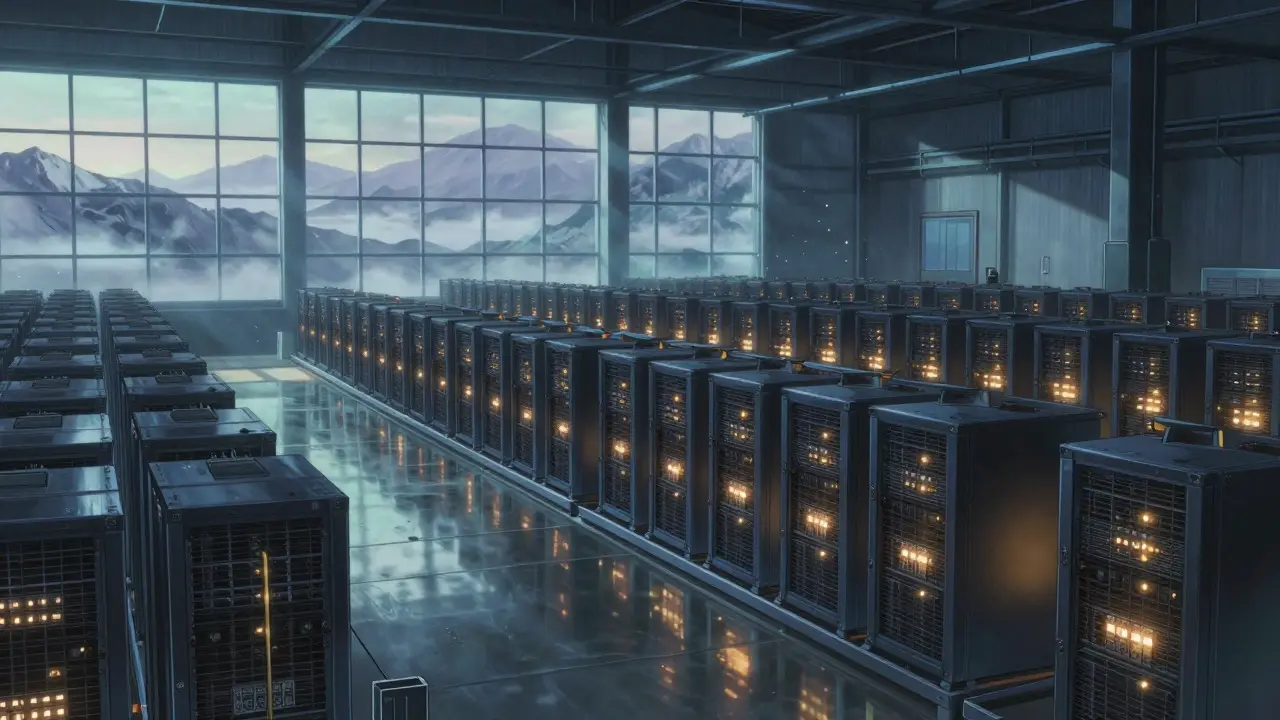
Imagine you have a warehouse full of ASIC miners humming away in Almaty. You’re making money, but then the regulator knocks on your door. Without the right paperwork, that profitable operation could shut down overnight-or worse, lead to heavy fines. For years, Kazakhstan was the wild west of crypto mining. Today, it is one of the most strictly regulated jurisdictions in the world.
If you are planning to mine cryptocurrency in Kazakhstan in 2026, you need to understand one critical fact: you cannot just plug in and start hashing. The government has built a complex framework centered around the Astana International Financial Center (AIFC), which acts as the exclusive gateway for legal mining operations. This guide breaks down exactly what you need to do to get licensed, the costs involved, and the strict rules you must follow to stay compliant.
The Core Requirement: You Must Be a Legal Entity
Before you worry about hardware or electricity contracts, you need to establish your legal status. In Kazakhstan, individuals cannot simply register as freelancers to mine Bitcoin. The law requires all miners to possess the status of a Kazakhstan legal entity or an individual entrepreneur. However, for serious commercial mining, setting up a formal company is the standard path.
This requirement establishes clear jurisdictional control. It means the government knows exactly who owns the machines and where the profits go. If you are a foreign investor, this usually involves creating a local subsidiary or partnering with a local entity that already holds the necessary permits. There is no "gray area" here; if you are not registered, you are operating illegally.
The AIFC Monopoly: Your Only Path to a License
Here is where things get specific. Unlike many countries where you might apply to a central bank or a ministry of finance, in Kazakhstan, all crypto licenses are granted exclusively through the Astana International Financial Center (AIFC). The AIFC operates under its own common-law-based regulations, distinct from the rest of Kazakhstan’s civil law system.
To get a license, you don’t just fill out a form. You undergo a structured three-phase process that typically takes between six and nine months. Here is what that looks like:
- Preparation Phase: You need a detailed business plan, financial projections backed by evidence, and comprehensive Anti-Money Laundering (AML) policies. You must also define your management board structure.
- Incorporation Phase: You must establish a company specifically within the AIFC jurisdiction. This includes renting physical office space within the AIFC premises in Astana. You also need to hire at least two local employees: an AML officer and a compliance officer. These aren’t just titles; they require specific local expertise.
- Application Phase: You demonstrate that your operational systems are live. This includes showing off your client onboarding procedures, risk assessment capabilities, and proving your management board has the necessary competence.
This process is designed to filter out hobbyists and ensure only serious, compliant players enter the market. The requirement for a physical office and local staff adds significant overhead, but it signals to regulators that you are committed to long-term, transparent operations.
The Digital Mining Pool Mandate
One of the most unique aspects of Kazakhstan’s regulatory framework is the mandatory use of Digital Mining Pools (DMPs). In most parts of the world, miners can join any pool they want, or even solo mine. In Kazakhstan, you are prohibited from engaging in mining activities outside of licensed DMPs.
As of 2023, the government had accredited five such pools. This centralized approach allows the state to monitor hash rate distribution and ensure that mining activities align with national energy strategies. It effectively eliminates independent, unmonitored mining farms. When you set up your operation, you must integrate with one of these approved pools. This creates a single point of contact for regulators to track production and sales.

Financial Rules: Taxes and Forced Sales
Licensing is only half the battle. Once you are up and running, you face strict financial obligations. The tax rate for mining operations in Kazakhstan is set at 15%, which is competitive compared to some Western jurisdictions. However, the real constraint lies in how you handle your earnings.
As of 2025, crypto miners are required to sell 75% of their mined assets on AIFC platforms. This is a significant increase from the 50% requirement that was in effect during 2024. Why does this matter? It forces capital into the domestic financial system. By requiring you to sell the majority of your output on local exchanges, the government captures foreign currency flows and maintains oversight of capital movements.
This rule impacts your liquidity strategy. You cannot simply hold all your Bitcoin in a cold wallet overseas. You must actively manage your inventory to meet the 75% sale quota. Failure to comply can result in penalties or even the revocation of your license.
| Requirement | Detail | Impact |
|---|---|---|
| Tax Rate | 15% | Moderate cost of doing business |
| Mandatory Asset Sale | 75% on AIFC platforms | High liquidity requirement, limits hoarding |
| Licensing Jurisdiction | AIFC only | Centralized, expensive entry barrier |
| Pool Requirement | Licensed DMPs only | No independent/solo mining allowed |
| Timeline | 6-9 months | Long lead time for ROI calculations |
Infrastructure and Energy Considerations
You can’t mine without power, and Kazakhstan’s energy grid is under pressure. The government views crypto miners as both a burden and a potential solution. On one hand, massive mining farms strain the national grid. On the other, they provide a stable load that can help balance supply and demand.
Regulatory authorities have discussed a 70/30 energy program. Under this model, foreign investors would fund upgrades to thermal power plants. In return, 70% of the generated capacity would go to the national grid, while 30% would be reserved for crypto miners. While this isn’t a guaranteed contract for every miner, it shows the direction of policy: mining is welcome, but only if it contributes to infrastructure development.
To qualify for licenses, you must prove ownership or legal rights to a digital mining data processing center. This means you need proper facility management, cooling systems, and security protocols. The regulators inspect these facilities to ensure they meet safety standards and don’t pose a fire hazard or grid instability risk.

Why Kazakhstan Changed Its Approach
Kazakhstan didn’t always have these strict rules. After China banned crypto mining in 2021, thousands of miners fled to Kazakhstan, causing blackouts and economic disruption. The government realized that unchecked growth was unsustainable. They shifted from a laissez-faire attitude to a controlled, notification-based system.
Today, the goal is economic modernization with state oversight. The government wants to capture the value of the mining industry through taxes and exchange fees, rather than letting it leak out as unreported cash. The 84 licenses issued by 2023 and the $1.4 billion in revenue generated by AIFC exchanges in 2024 show that this model is working for the state. For operators, it means a stable but rigid environment.
Challenges for International Operators
If you are coming from the US, Europe, or Asia, the bureaucracy can feel overwhelming. The requirement to hire local AML and compliance officers is a major hurdle. These roles require deep knowledge of Kazakh law and AIFC regulations. You can’t just import your own team; you need locals who understand the nuances.
Additionally, the six-to-nine-month timeline for licensing is a significant commitment. You need to budget for legal fees, office rent, and salaries before you see a single satoshi in profit. Many smaller operators find this prohibitive and choose to partner with existing licensed entities instead of starting from scratch.
Future Outlook: Tighter Control?
The trend in Kazakhstan is toward greater state involvement, not less. Recent increases in the asset sale requirement (from 50% to 75%) suggest that the government wants more control over capital flows. There are also discussions about a state-run crypto reserve strategy, where mining activities could support broader sovereign cryptocurrency initiatives.
For now, the framework remains focused on licensing and transparency. If you can navigate the AIFC process, hire the right local talent, and accept the 75% sale mandate, Kazakhstan offers a viable, legally protected environment for large-scale mining. But expect the rules to evolve, and stay close to regulatory updates.
Can I mine crypto as an individual in Kazakhstan?
Technically, you can register as an individual entrepreneur, but for commercial-scale mining, you are expected to operate as a legal entity. The regulatory framework is designed for companies, requiring AML officers, compliance teams, and incorporation within the AIFC. Individual miners often face higher scrutiny and limited access to licensed pools.
How much does it cost to get a crypto mining license in Kazakhstan?
There is no fixed "license fee," but the costs are substantial. You must pay for legal setup, AIFC incorporation, office rent in Astana, salaries for local AML and compliance officers, and share capital deposits. Expect to spend several thousand dollars per month on administrative overhead alone before accounting for hardware and electricity.
What happens if I don't sell 75% of my mined assets?
Failure to meet the 75% sale requirement on AIFC platforms can result in penalties, fines, or revocation of your mining license. The government uses this rule to control capital flight and ensure tax collection. Compliance is monitored through the mandatory digital mining pools.
Do I need to buy new equipment to comply with regulations?
Not necessarily. The regulations focus on legal structure, location, and reporting, not specific hardware models. However, you must prove ownership or legal rights to your data processing center and ensure your equipment meets safety and efficiency standards to avoid grid penalties.
Is Kazakhstan still a good place for crypto mining in 2026?
It depends on your scale. For large operators who can absorb the bureaucratic costs and benefit from the 15% tax rate, yes. The stability of the legal framework is a plus. For small hobbyists, the high entry barriers and mandatory pool requirements may make other jurisdictions more attractive.
Calliope Clio
August 15, 2026 AT 11:06Ugh, another article about how to sell your soul to the man for a few satoshis. 🙄 The sheer amount of bureaucracy required just to plug in a machine is exhausting to read about. Who has time for this? I’d rather sleep than fill out AML paperwork. 😴
Alexander Scheel
August 15, 2026 AT 12:07It is truly fascinating how the state demands moral superiority through compliance officers while simultaneously hoarding capital. One might argue that requiring 75% of assets to be sold on local platforms is less about 'financial stability' and more about ensuring the government gets its cut before you can even think about holding value. It’s a tax on freedom, dressed up as regulation.
Tasha Davis
August 16, 2026 AT 03:21This is actually so cool! I never knew Kazakhstan was trying to be so organized with crypto. It sounds like a lot of work but if you follow the rules it seems totally doable! Let's go team compliance! 💪✨
Evelyn Kula
August 16, 2026 AT 12:00Don't believe the hype. They say AIFC is the gateway but it's really just a trap for foreign money. Once you're in, they control everything. The pools are monitored, the sales are forced. It's not mining, it's digital serfdom. Wake up people! 👁️
Ashley Snyder
August 16, 2026 AT 18:09I guess it makes sense they want to keep an eye on things after the blackouts. If I were running the grid, I'd want to know who's pulling power too. Maybe it's not all bad if it keeps the lights on for everyone else?
Kate Staab
August 18, 2026 AT 03:25The environmental cost is ignored again. Sure, pay your taxes and hire your compliance officer, but what about the carbon footprint? It’s dramatic how we pretend this is 'green energy' when it’s just burning coal to mine speculative assets. Typical.
Abigail Sparks
August 18, 2026 AT 14:37Listen up! If you’re serious, you need to get your AML officer hired yesterday. Don’t wait until the application phase. Start networking in Astana now. The timeline is 6-9 months, which means if you start today, you’re not profitable until next year. Move fast or get left behind!
OLIVER CHRISTIAN
August 18, 2026 AT 15:40Hey folks, just wanted to add some context here. The AIFC operates under common law, which is a big deal for international investors used to civil law systems. It provides a layer of predictability that’s rare in Central Asia. However, don’t underestimate the cultural nuance involved in hiring local staff. You need people who understand both the letter of the law and the unwritten rules of doing business in Astana. It’s a steep learning curve, but very rewarding if you stick with it.
Kelsey Anne
August 19, 2026 AT 04:05Facts. No gray area. Register or leave.
Mike Baca
August 20, 2026 AT 07:43its wild how much control they have now. i mean sure, back in the day it was chaos but now? feels like theyre building a fortress around their hash rate. kinda poetic in a dystopian way. whats the point of decentralization if the state owns the pool? 🤔
Uday N M
August 20, 2026 AT 15:30Kazakhstan thinks it can regulate crypto. India watches from afar. We have our own problems. But at least we don't force you to sell 75% of your coins. That is theft.
Shawn Schaerer
August 21, 2026 AT 01:17One must consider the strategic implications of the 70/30 energy program. Is it truly infrastructure development, or merely a mechanism to subsidize state-approved entities? The formal requirement for thermal plant upgrades suggests a long-term commitment to fossil fuels, which contradicts global ESG trends. A rigorous analysis of the ROI for such investments is warranted before committing capital.
Sarah Campbell
August 23, 2026 AT 00:10OMG this is crazy! 😱 Like, imagine having to rent an office just to mine bitcoin? That’s so extra! But also, if you make millions, maybe it’s worth it? I’m confused but also intrigued! 🤷♀️💸
Dina Lazarova
August 24, 2026 AT 00:05It is quite evident that the pretentious notion of 'freedom' in crypto is entirely dependent on one's willingness to adhere to strict bureaucratic protocols. The idea that one can simply 'plug and play' is a myth perpetuated by those who lack the intellectual capacity to understand jurisdictional nuances. One must appreciate the elegance of the AIFC framework, however tedious.