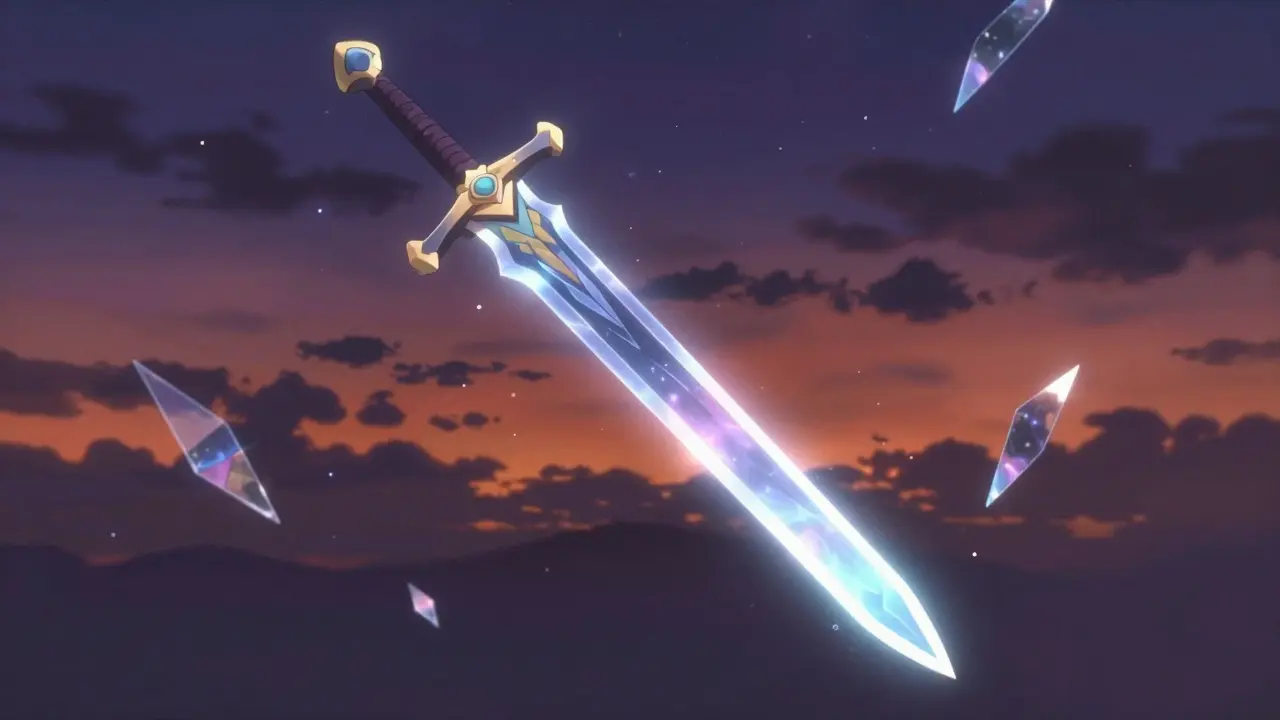
Imagine spending three hundred hours grinding for a legendary sword in a fantasy RPG, only for the game to shut its servers down three years later. In the traditional gaming world, that sword-and all the time you spent earning it-simply vanishes. It's a digital dead end. But what if that sword wasn't tied to a single server? What if you could take that same weapon, or perhaps a version of it, and use it in a completely different game, or even sell it on an open market for real value? This is the core promise of Blockchain Game Asset Interoperability is the ability for players to move and use digital assets like skins, weapons, and currencies across different games and virtual platforms without restrictions.
The Shift from Renting to Owning
For decades, we've been "renting" our digital lives. When you buy a skin in a popular battle royale game, you aren't actually buying the item; you're buying a license to use that item within that specific software. The moment you leave the game, the item ceases to exist in any meaningful way. Web3 Gaming flips this script. By moving assets onto a decentralized ledger, the item exists independently of the game's code.
Think of it like a physical collectible. If you own a rare trading card, you can show it off at a hobby shop, trade it at a convention, or sell it online. The card doesn't disappear just because you leave one specific room. Interoperability aims to bring this same level of tangible ownership to the digital realm, transforming assets from temporary perks into portable property.
The Tech Stack Making It Possible
To make an item "travel" between games, you need a system that every game can agree on. You can't just send a piece of code from one developer to another; they use different engines and languages. This is where the blockchain infrastructure comes in.
First, we have the Blockchain itself. It acts as a shared source of truth. Instead of Game A and Game B trying to sync their private databases, they both look at the same public ledger to verify who owns what. This removes the need for a middleman and prevents the "scalability nightmare" that would happen if every game had to manually track transfers from every other game in existence.
Then there are Smart Contracts, which are essentially self-executing agreements. These contracts handle the heavy lifting of the transfer. For instance, a smart contract can ensure that if you move a character skin from a racing game to a combat game, the ownership is updated instantly and securely without needing a human admin to approve the trade.
Finally, the assets themselves are usually wrapped as NFTs (Non-Fungible Tokens). An NFT isn't just a piece of art; it's a digital deed. Because these tokens follow specific standards, any game that recognizes that standard can "read" the NFT and grant the player the corresponding item in their world.
| Feature | Traditional (Web2) Gaming | Interoperable (Web3) Gaming |
|---|---|---|
| Ownership | Controlled by developer | Controlled by player |
| Portability | Locked to one game | Cross-platform capability |
| Asset Value | Zero outside the game | Marketable on secondary exchanges |
| Persistence | Gone if servers shut down | Exists on the blockchain forever |
Putting Theory into Practice: Real World Examples
This isn't just a theoretical dream for the future. We're already seeing it happen. Take Football Rivals, a mini-app on Telegram. It doesn't exist in a vacuum; it's interoperable with digital assets from NFL Rivals, a game created by Mythical Games. Players can take their assets from the larger game and use them within the Telegram app to compete in weekly challenges and earn rewards.
This specific setup works because it utilizes the Mythos Chain and the scalability of Polkadot. By leveraging a dedicated gaming chain, the developers can ensure that transactions are fast and cheap, which is critical because no one wants to pay a $20 gas fee just to move a digital football jersey between apps.
The Hurdle: Why Isn't Every Game Doing This?
If the benefits are so clear, why aren't we seeing this in every AAA title? The reality is that technical and creative hurdles are significant. For one, there is the "Mechanical Mismatch." A sword that is balanced for a slow-paced turn-based RPG would be completely broken (either too weak or too strong) in a fast-paced first-person shooter. Developers have to figure out how to "translate" an asset's attributes so they make sense in a new environment.
Then there's the onboarding friction. Asking a casual gamer to set up a crypto wallet and manage private keys is a huge ask. Most people just want to hit "Play," not manage a digital vault. Until the blockchain elements are hidden behind a seamless user interface, mainstream adoption will struggle.
Finally, there is the lack of a universal standard. While many games use Ethereum or Polygon, different chains often don't talk to each other. This creates "walled gardens" within the Web3 space itself, where your assets are portable within one ecosystem but stuck if you want to move them to another.
The Road to Connected Digital Worlds
Looking ahead, the goal is the creation of "connected digital worlds." This is a step beyond the typical definition of a metaverse. Instead of one giant 3D map, it's a network of diverse experiences-racing, fighting, social, and strategic-where your digital identity and possessions follow you.
As we move toward 2027 and beyond, interoperability will likely become a competitive advantage. Players will naturally gravitate toward games that respect their time and investment. If a new game launches and tells you, "Hey, we recognize the assets you earned in those other three games; here's a starter pack based on your history," that's a powerful incentive to switch platforms.
We are moving toward a future where your digital inventory is as real as your physical closet. You might have a collection of rare items that you curate over a decade, moving them between different virtual worlds as your tastes change, all while maintaining their value and provenance on a public ledger.
What happens if a game I use my assets in shuts down?
Because the assets are NFTs stored on a blockchain, they don't disappear when the game servers go dark. You still own the token. While you can't use the item in that specific defunct game, you can still sell it on a marketplace or potentially use it in another game that supports the same asset standard.
Do assets keep the same stats across different games?
Usually, no. Each game has its own balance and mechanics. While the ownership of the item is the same, the developers of the second game decide how that item functions in their world. A "Legendary Fire Sword" might be a powerful weapon in one game but simply a decorative skin or a high-value crafting material in another.
Is it safe to move assets between platforms?
Moving assets via smart contracts is generally secure because it eliminates the need for a middleman. However, the risk usually comes from the "entry points," such as phishing links or fake marketplaces. As long as you use reputable platforms and keep your private keys secure, the blockchain transfer itself is highly transparent and verifiable.
Can I use any NFT in any blockchain game?
No. A game must explicitly support the NFT standard (like ERC-721 or ERC-1155) and the specific blockchain network the asset is on. If a game is built on the Mythos Chain, it won't automatically recognize an NFT from a random chain unless there is a bridge or a specific integration in place.
Why is this better than just having a shared account?
A shared account (like a Google or Epic Games account) is still centralized. The company still owns the database. If they decide to ban you or delete your account, you lose everything. Blockchain interoperability gives you actual ownership; the assets live in your wallet, not on the company's server.
Rob Mitchell
April 13, 2026 AT 16:42The mechanical mismatch is the real bottleneck here. Most devs won't sacrifice their game balance just to let an external NFT be overpowered. We need more robust translation layers.
Amanda Faust
April 14, 2026 AT 21:03actually the concept of a universal standard is basically impossible because every chain has different consensus mechanisms and gas structures it is a pipe dream to think a single asset will work everywhere without a bridge and bridges are just honeypots for hackers
Surender Kumar
April 16, 2026 AT 11:26this sounds like a cool futre for gaming. hope we get more games like this soon 🚀
7stargee Emmanuel Obani
April 17, 2026 AT 23:57another crypto scam 🙄 purely for the bags
Jessie Tayaban
April 18, 2026 AT 08:06OMG imagine the absolute chaos of seeing a racing car in a fantasy dungeon!! It would be so hilariously weird and i love that idea so much 🤩 just imagine the glitchy mess if the code isnt perfect haha
Lela Singh
April 18, 2026 AT 22:35Absolutely electrifying vision! The potential for cross-pollination between genres is simply dazzling. We are witnessing a digital renaissance where ownership finally means something tangible!
Prasanna Shembekar
April 19, 2026 AT 03:09my heart is actually racing thinking about my old items being back i just cant believe we waited this long for this
Agnessa Dale
April 19, 2026 AT 22:49It's so wonderful to think about players finally getting credit for their hard work across different worlds. This kind of innovation really brings the community together and gives us something to look forward to in the next few years!