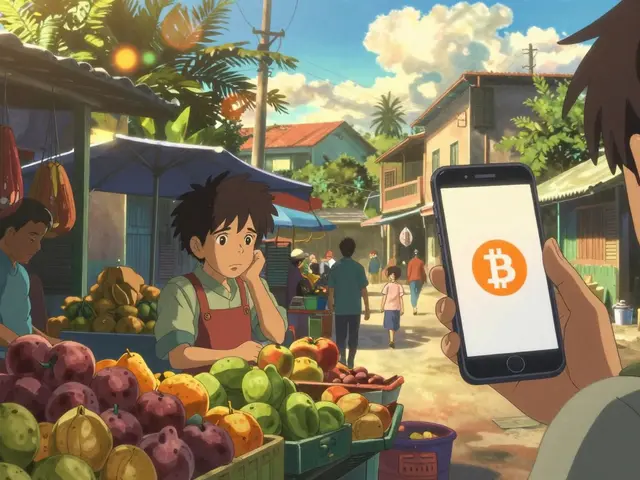
For a brief moment, history was made. On September 7, 2021, El Salvador became the first country in the world to adopt Bitcoin as legal tender alongside the US dollar. It was a bold move by President Nayib Bukele, promising financial inclusion and cheaper remittances. But fast forward to mid-2026, and the landscape looks very different. The mandatory requirement for businesses to accept Bitcoin is gone. The government no longer accepts it for taxes. So, what actually happened? Did the experiment fail, or did it just evolve?
If you are trying to understand the current status of Bitcoin in El Salvador, you need to look past the initial hype and the recent headlines about the policy reversal. This guide breaks down exactly how the law changed, why the International Monetary Fund (IMF) forced these changes, and what this means for tourists, investors, and locals today.
The Rise and Fall of Mandatory Bitcoin Acceptance
To understand where we stand in 2026, we have to look at the timeline. When the Bitcoin Law was enacted in 2021, it didn't just encourage usage; it mandated it. Every business, from large supermarkets to small street vendors, was legally required to accept Bitcoin if they had the technology to do so. The goal was clear: integrate cryptocurrency into daily life to reduce reliance on traditional banking systems, which left nearly half the population unbanked.
The government pushed hard. They launched the Chivo wallet is the official state-sponsored mobile application for Bitcoin transactions. To get people on board, they deposited $30 into every new account. Gas stations offered discounts for payments made via Chivo. Within a month, three million downloads were recorded-46% of the population. That number sounded impressive, but the reality on the ground was messy.
Technical glitches plagued the launch. Servers crashed under the load. More importantly, trust was low. Only 12% of consumers used crypto in that first month. By 2024, reports showed that 92% of Salvadorans did not use Bitcoin for transactions. Businesses complained about volatility and complexity. The mandate felt like a burden rather than a benefit.
The IMF Pressure and the January 2025 Reversal
The turning point wasn't internal dissatisfaction alone; it was external pressure. El Salvador needed money. In early 2025, the country secured a $1.4 billion loan from the International Monetary Fund is a global organization focused on monetary cooperation and financial stability. However, the IMF had conditions. One major condition was scaling back the aggressive Bitcoin policies.
On January 29, 2025, the Legislative Assembly voted 55-2 to modify the Bitcoin Law. The changes took effect on May 1, 2025. Here is what changed:
- No more mandatory acceptance: Businesses can now choose whether or not to accept Bitcoin. If they don't have the tech or don't want the risk, they aren't forced to.
- Government services excluded: You can no longer pay taxes or state bills with Bitcoin. These must be paid in US dollars.
- Voluntary private sector use: Bitcoin remains legal tender in name, but its use is confined to voluntary agreements between private parties.
Economist Rafael Lemus noted that "Bitcoin no longer has the strength of legal tender." While technically still recognized, the tooth has been pulled from the legislation. It’s now an option, not an obligation.

Current Status: What Does This Mean for You?
So, if you are visiting El Salvador in 2026 or doing business there, what should you expect? The US dollar is king. It is the primary currency for all daily transactions. Bitcoin is treated more like a speculative asset or a niche payment method rather than everyday cash.
| Feature | Pre-May 2025 | Post-May 2025 (Current) |
|---|---|---|
| Business Acceptance | Mandatory | Voluntary |
| Tax Payments | Accepted | Prohibited (USD only) |
| Government Promotion | Active (Chivo subsidies) | Minimal/None |
| Legal Status | Full Legal Tender | Legal Tender (Limited Scope) |
For tourists, this simplifies things. Bring US dollars. Use credit cards. Don't expect your local taco stand to have a QR code for Lightning Network payments unless it's a high-end tourist spot catering specifically to crypto enthusiasts. For expats and remote workers, you can still hold Bitcoin, but converting it to spend locally requires going through exchanges or peer-to-peer platforms, as direct merchant acceptance is rare.
The Government's Strategic Reserve: A Different Game
While the everyday use of Bitcoin faded, the government's investment strategy remained intact. El Salvador holds a significant amount of Bitcoin in its strategic reserves. As of early 2025, the country held 688 Bitcoin, worth approximately $574 million, representing a profit of $287 million. By March 2025, they expanded this to over 6,100 coins.
This distinction is crucial. The government separated monetary policy (using Bitcoin for daily transactions) from fiscal investment (holding Bitcoin as a reserve asset). They admitted that forcing citizens to use volatile crypto for groceries didn't work. But they still believe in Bitcoin as a long-term store of value for the nation's treasury. This pivot allowed them to satisfy the IMF's demand for fiscal responsibility while keeping their crypto-friendly brand alive for international investors.

Why Adoption Remained Low
You might wonder, why didn't the initial push work? Several factors contributed to the low adoption rates despite the massive download numbers for the Chivo wallet.
- Vatility: Bitcoin's price swings make it terrible for pricing goods. If a loaf of bread costs $2, and Bitcoin drops 5% overnight, the baker loses money. Most Salvadorans prefer the stability of the US dollar.
- Technical Barriers: Not everyone has a smartphone capable of running the Chivo app smoothly. Digital literacy varies widely across the population.
- Trust Issues: Early hacking incidents and server failures eroded confidence. People were skeptical of a system controlled by the state that seemed prone to errors.
- Lack of Merchant Incentive: Once the initial subsidies ended, many merchants saw no reason to deal with the complexity of crypto when USD worked perfectly fine.
A study highlighted that by 2024, only 5% of citizens paid taxes with Bitcoin, and just 20% of large firms accepted it. The grassroots momentum never truly materialized because the fundamental utility wasn't there for the average person.
Looking Ahead: Tourism and Tech Hub Ambitions
Despite the rollback of mandatory legal tender status, El Salvador hasn't abandoned its crypto identity. The country continues to host events like the PLANB Forum, positioning itself as a hub for blockchain innovation in Central America. The focus has shifted from forcing domestic adoption to attracting foreign investment and tourism.
The "Bitcoin Beach" concept in El Zonte still attracts digital nomads and crypto enthusiasts. While the broader economy relies on USD, specific enclaves maintain a strong crypto culture. This segmented approach seems more sustainable. Instead of trying to change the entire national economy overnight, El Salvador is carving out niches where Bitcoin thrives.
The lesson here is valuable for other nations considering similar moves. Mandates can create short-term stats (like wallet downloads), but they cannot force organic trust. Financial inclusion requires infrastructure, education, and stability-things that a volatile cryptocurrency struggled to provide on its own.
Is Bitcoin still legal tender in El Salvador in 2026?
Technically, yes, but with major limitations. Following the May 2025 reforms, Bitcoin is no longer mandatory for businesses to accept, nor can it be used for tax payments. It is now a voluntary option for private transactions, effectively reducing its role to that of a specialized asset rather than everyday currency.
Do I need the Chivo wallet to travel in El Salvador?
No. For most travelers, US dollars and credit cards are sufficient. The Chivo wallet is primarily useful if you are staying in specific crypto-friendly zones like El Zonte or if you wish to support businesses that explicitly advertise Bitcoin acceptance. For general tourism, it is not necessary.
Why did El Salvador change its Bitcoin law?
The change was driven by conditions set by the International Monetary Fund (IMF) for a $1.4 billion loan. The IMF argued that mandatory Bitcoin acceptance created economic instability and lacked public support. The reform aimed to restore fiscal credibility while allowing voluntary crypto use.
How much Bitcoin does El Salvador hold?
As of early 2025, El Salvador held over 6,100 Bitcoin in its Strategic Bitcoin Reserve Fund. This represents a significant portion of the country's digital assets, valued at hundreds of millions of dollars, serving as a long-term investment rather than a circulating currency.
Can I pay taxes with Bitcoin in El Salvador?
No. Since May 2025, the use of Bitcoin for paying taxes or any state-related bills has been prohibited. All government obligations must be settled in US dollars.