
Are you looking for a safe place to trade tokens on the Aptos is a high-performance Layer-1 blockchain designed for speed and security using the Move programming language network? If so, you’ve probably heard of Liquidswap is the leading decentralized exchange (DEX) and automated market maker (AMM) built by Pontem Network specifically for the Aptos ecosystem. But with so many options popping up every day, does it actually deliver on its promises of safety and speed?
In this review, we break down exactly what Liquidswap offers, how it compares to giants like Uniswap, and whether it’s right for your trading style. We’ll look at fees, security audits, and the user experience so you can decide if this platform fits your portfolio.
What Exactly Is Liquidswap?
Liquidswap isn’t a traditional centralized exchange like Binance or Coinbase where a company holds your money. Instead, it’s a Decentralized Exchange (DEX) is a peer-to-peer marketplace that allows users to trade cryptocurrencies directly without an intermediary custodian. This means you keep control of your assets in your wallet until the exact moment you swap them.
Built by Pontem Network is a prominent developer studio and venture builder in the Aptos ecosystem, known for creating core DeFi infrastructure including wallets and exchanges, Liquidswap was launched as the first major DEX on Aptos. Its main goal is to provide a secure environment for swapping volatile tokens (like APT for USDT) and stablecoins (like USDT for USDC) with minimal slippage.
The platform uses an Automated Market Maker (AMM) is a smart contract system that replaces traditional order books with liquidity pools, allowing trades to happen automatically based on mathematical formulas model. Think of it like a vending machine: instead of waiting for another person to buy from you, you trade against a pool of funds provided by other users. This design ensures that markets are always open and liquidity is available 24/7.
How Liquidswap Works: The Dual-Pool System
One of the standout features of Liquidswap is its approach to handling different types of assets. Most early DEXs used a single formula for everything, which often led to poor prices when trading stablecoins. Liquidswap solves this by offering two distinct pool types:
- Volatile Pairs: These work similarly to Uniswap is the pioneering decentralized exchange on Ethereum that popularized the constant-product AMM formula (x*y=k) for trading volatile assets. They are designed for tokens whose prices fluctuate wildly, such as APT paired with a new meme coin. The algorithm adjusts dynamically to handle these price swings.
- Stable Pairs: Inspired by Curve Finance is a specialized DEX protocol optimized for trading stablecoins and assets pegged to similar values, using a low-slippage invariant curve to minimize impermanent loss, these pools are built for assets that should stay close to parity, like USDT and USDC. Because the prices don’t move much, the math keeps slippage incredibly low, even for large trades.
This dual approach gives traders flexibility. You get the broad coverage of Uniswap for risky bets and the precision of Curve for moving stablecoins around efficiently.
Security: Can You Trust Your Funds?
When dealing with smart contracts, security is non-negotiable. One hack can wipe out your savings instantly. So, how secure is Liquidswap?
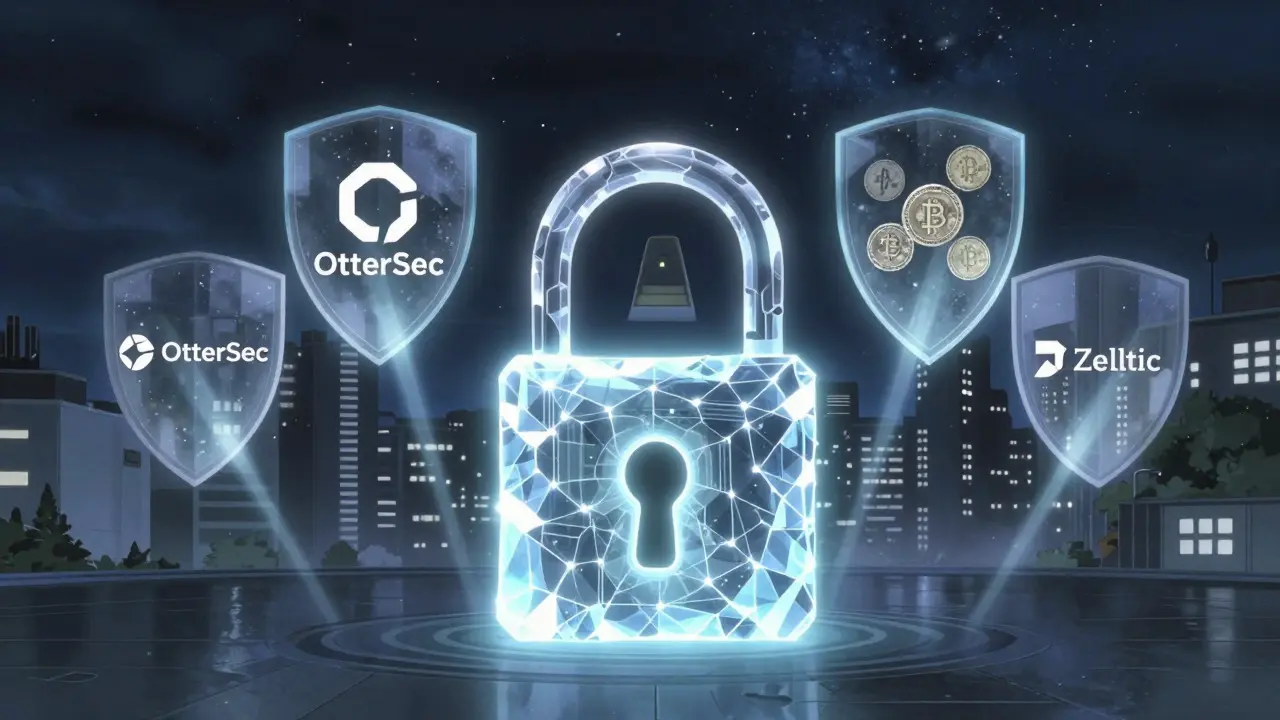
Pontem has made a big deal about safety, and for good reason. Liquidswap’s code has undergone rigorous auditing by top-tier blockchain security firms, including OtterSec is a leading blockchain security firm specializing in formal verification and smart contract auditing for various ecosystems including Aptos and Solana and Zellic is an independent research and security audit firm focused on blockchain protocols, known for deep technical analysis and bug bounty programs. Having multiple audits reduces the risk of hidden bugs or vulnerabilities that hackers could exploit.
Furthermore, because Liquidswap runs on Aptos, it benefits from the underlying security of the Move Language is a systems programming language developed by Facebook for the Diem project, now used by Aptos and Sui, designed to prioritize asset safety and prevent common smart contract exploits. Unlike Solidity (used on Ethereum), Move treats digital assets as resources that cannot be accidentally duplicated or deleted, adding an extra layer of protection at the code level.
While no system is 100% immune to risks, Liquidswap’s combination of professional audits and a robust underlying language makes it one of the safer choices in the Aptos DeFi space.
Fees and Performance: What Will It Cost You?
Let’s talk money. Every time you swap on Liquidswap, a small fee is charged. This fee goes to the Liquidity Providers (LPs) are users who deposit pairs of tokens into a DEX pool to facilitate trading, earning a portion of the transaction fees in return for their capital who fund the pools. While specific fee tiers can vary depending on the volatility of the pair, Liquidswap generally aims for competitive rates compared to industry standards.
Typically, you might see fees ranging from 0.05% for stablecoin pairs to around 0.30% for more volatile token pairs. These are standard for AMMs and help ensure there’s enough incentive for people to keep their money in the pools.
Performance-wise, Aptos is known for being fast. Transactions on Liquidswap confirm in seconds, not minutes. This means less waiting around and lower gas costs (fees paid to the network for processing transactions). If you’re tired of Ethereum’s congested networks and high gas bills, the speed here is a breath of fresh air.
Liquidswap vs. Competitors: How Does It Stack Up?
To give you a clear picture, let’s compare Liquidswap to some well-known alternatives. Remember, direct comparisons can be tricky because they operate on different blockchains, but we can look at functionality and reputation.
| Feature | Liquidswap | Uniswap | PancakeSwap |
|---|---|---|---|
| Blockchain | Aptos | Ethereum & L2s | BNB Chain & Multi-chain |
| Pool Types | Volatile & Stable (Curve-style) | Volatile (Concentrated Liquidity) | Volatile & Stable |
| Primary Focus | Aptos Ecosystem Native | Ethereum Standard | Multi-chain Accessibility |
| Security Audits | OtterSec, Zellic | Multiple Top Firms | Multiple Top Firms |
| Best For | Aptos Users & Low Slippage Stable Swaps | Large Capital & Deep Liquidity | Cross-Chain Trading & Yield Farming |
As you can see, Liquidswap shines if you are already invested in the Aptos ecosystem. It doesn’t have the massive multi-chain reach of PancakeSwap yet, but within Aptos, it is the dominant player. If you hold APT or Aptos-based tokens, Liquidswap is likely your best option for finding liquidity.
Pros and Cons: The Honest Truth
No platform is perfect. Here is a balanced look at the advantages and disadvantages of using Liquidswap in 2026.
Pros
- Native Integration: Seamless connection with Aptos wallets like Petra Wallet is a widely used browser extension and mobile wallet for the Aptos blockchain, enabling users to manage keys and interact with dApps securely.
- Low Slippage: Especially for stablecoin pairs, thanks to the Curve-inspired architecture.
- Speed: Fast transaction finality due to Aptos’ high throughput.
- Security: Multiple audits and the safety features of the Move language.
- User-Friendly: Clean interface designed for both beginners and experienced DeFi users.
Cons
- Ecosystem Limitation: Primarily useful only if you are trading on Aptos. You need to bridge assets from other chains first.
- Liquidity Depth: While growing, it may not match the sheer depth of Uniswap on Ethereum for exotic or low-cap tokens.
- Bridge Risk: To use Liquidswap, you often have to move funds via bridges, which introduces a separate point of potential failure.

Who Should Use Liquidswap?
Liquidswap is ideal for you if:
- You already hold assets on the Aptos blockchain.
- You want to trade stablecoins with minimal price impact.
- You are comfortable connecting a self-custody wallet and managing your own private keys.
- You value speed and lower transaction fees over the deepest possible global liquidity.
If you are strictly an Ethereum trader and don’t plan to explore other chains, Liquidswap might not be relevant to you just yet. However, if you are diversifying into newer, high-performance chains, it’s a tool worth having in your belt.
Getting Started: A Quick Guide
Ready to try it out? Here is how you can start trading on Liquidswap:
- Get a Wallet: Install a compatible wallet like Petra or Martian.
- Fund Your Wallet: Buy APT on a centralized exchange and send it to your wallet address. You’ll need APT to pay for gas fees.
- Connect to Liquidswap: Visit the official Liquidswap website and click “Connect Wallet.”
- Select Tokens: Choose the token you want to sell and the token you want to buy.
- Review and Swap: Check the rate and slippage tolerance. Confirm the transaction in your wallet.
It’s straightforward, but always double-check the URL to avoid phishing sites. Bookmark the official link once you find it.
Final Thoughts
Liquidswap has carved out a strong position as the go-to DEX for the Aptos ecosystem. By combining the best elements of Uniswap and Curve, it offers a versatile trading experience that prioritizes safety and efficiency. While it lacks the multi-chain presence of older competitors, its focus on Aptos makes it indispensable for users in that specific community.
If you are active on Aptos, Liquidswap is not just an option-it’s likely your primary hub for swaps and liquidity provision. Just remember to do your own research, start small, and always verify contract addresses before interacting with any DeFi protocol.
Is Liquidswap a centralized or decentralized exchange?
Liquidswap is a decentralized exchange (DEX). It operates via smart contracts on the Aptos blockchain, meaning no central company holds your funds. You trade directly from your wallet.
Which wallets are compatible with Liquidswap?
Liquidswap supports most Aptos-compatible wallets, including Petra, Martian, and Pontem Wallet. These wallets allow you to sign transactions and manage your Aptos assets securely.
How does Liquidswap make money?
Liquidswap charges a small trading fee on each swap. These fees are distributed to the Liquidity Providers (LPs) who deposit tokens into the pools, incentivizing them to keep the market liquid.
Is Liquidswap safe to use?
Liquidswap has undergone multiple security audits by reputable firms like OtterSec and Zellic. Additionally, it runs on the Aptos blockchain, which uses the Move language designed for enhanced asset safety. However, as with all DeFi platforms, users should always exercise caution and verify URLs.
Can I trade Bitcoin or Ethereum on Liquidswap?
Not directly. Liquidswap operates on the Aptos blockchain. To trade BTC or ETH, you would typically need to bridge wrapped versions of these assets (like wBTC or wETH) onto Aptos first, then swap them on Liquidswap.
What is the difference between Liquidswap and Binance Liquid Swap?
They are completely different products. Liquidswap is a decentralized exchange on the Aptos blockchain built by Pontem. Binance Liquid Swap (BSwap) is a feature within the centralized Binance exchange that allows users to earn yield on deposited funds. Do not confuse the two.