
Ever wonder how institutional investors decide which crypto exchange data to trust? It’s not just about picking the biggest platform. For serious market participants, the answer lies in rigorous benchmarking processes like those conducted by IX Asia Indexes, operating under IX Capital International Limited. This Hong Kong-based firm doesn’t just track prices; it actively vets exchanges quarterly to ensure its indices reflect fair market value. If you’ve been following the ixCrypto Index Series, you know that the integrity of the index depends entirely on who is included in the calculation.
The most recent milestone was the 2025 Q3 review, published on October 10, 2025. This isn't a casual check-up. It’s a strict audit of trading volumes, system stability, and regulatory compliance. Understanding this process reveals why certain platforms make the cut while others get left behind. Let’s break down exactly what happens during these reviews, who passed the latest test, and what it means for the broader crypto market.
What Is the IX Fintech Exchange Review?
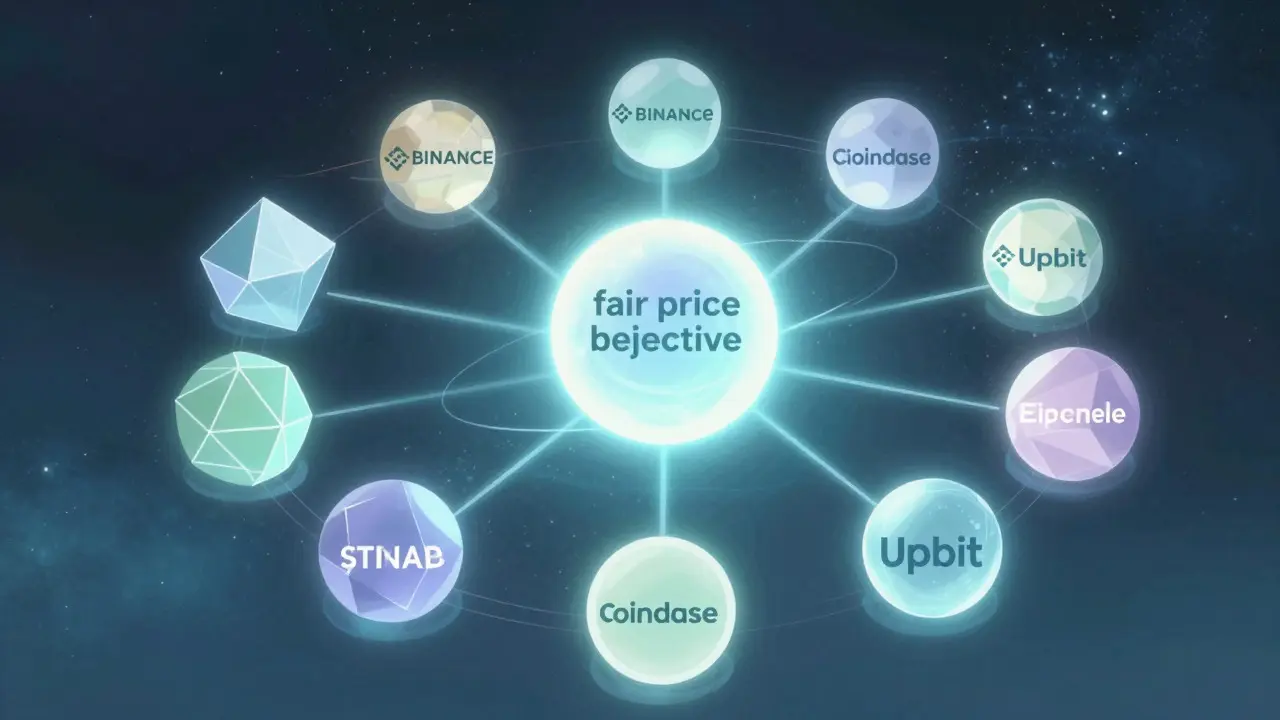
At its core, the IX Fintech exchange review is a quarterly methodology component designed to select exchanges that contribute to the 'fairest price objective' of the ixCrypto Index. The goal is simple but hard to execute: calculate an average price from multiple reliable sources to minimize manipulation risk. Since launching its first Hong Kong-based crypto benchmark index (IXCI) in December 2018, IX Capital has expanded its offerings to 29 specialized indexes. These serve various purposes, from exchange futures products to mark-to-market valuations for portfolio construction.
To maintain methodological integrity, the company established an Index Advisory Committee. This group includes representatives from fund management, brokerage firms, financial blockchain experts, and crypto service providers. Their job is to keep the rules tight and the process transparent. This structure helps explain why IX Asia Indexes has earned industry recognitions, such as the Fintech Award from ETNet in 2019 and 2021, and the Startup of the Year award from the Hong Kong Fintech Impetus Awards in 2022.
Key Criteria for Exchange Inclusion
So, what makes an exchange 'good enough' for the index? The 2025 Q3 review highlights several non-negotiable criteria. It’s not just about having high volume; it’s about consistency and reliability. Here are the main factors evaluated:
- Volume Rankings: Based on past 90-day averages to ensure sustained activity rather than one-off spikes.
- Background Checks: Verification of the exchange's corporate history and founders' backgrounds.
- Pair Coverage: Completeness of USD, USDT, USDC, and BTC trading pairs.
- Overconcentration Rules: Ensuring no single exchange dominates the index calculation disproportionately.
- API Reliability: Technical assessment of how consistently the exchange provides data feeds.
- System Stability: Metrics regarding uptime and resistance to outages.
Exchanges failing to meet minimum trading volume thresholds, those with active regulatory warnings, or platforms showing signs of market manipulation are excluded. This rigorous filtering is crucial because the index aims to represent the 'average of multiple exchanges,' reducing the impact of any single platform's quirks.
2025 Q3 Review Results: Who Made the Cut?
The results of the 2025 Q3 review, covering the period ending September 30, 2025, show a stable panel with some notable additions. Ten exchanges passed the evaluation. Notably, there were no removals from the previous quarter's selection, indicating high stability among the top-tier players.
| Exchange Name | Status in Q3 2025 | Notes |
|---|---|---|
| Binance | Retained | Consistent inclusion |
| MEXC | Retained | Consistent inclusion |
| Bitget | Retained | Consistent inclusion |
| OKX | Retained | Listed twice in documentation suggesting dual verification |
| Gate.io | Retained | Consistent inclusion |
| Huobi Global | New Addition | Added for Q3 2025 |
| Crypto.com | Retained | Consistent inclusion |
| Coinbase Exchange | Retained | Consistent inclusion |
| Upbit | New Addition | Added for Q3 2025 |
The addition of Huobi Global and Upbit signals IX Asia Indexes' continued focus on capturing diverse market liquidity, particularly in Asian markets where Upbit holds significant influence. Meanwhile, the retention of major global players like Binance and Coinbase reinforces the index's credibility among institutional investors.
How IX Compares to Other Index Providers
In the $2.1 billion crypto index market, IX Asia Indexes holds an estimated 8-10% share, positioning itself as a specialist in Asian-market focused benchmarks. How does it stack up against competitors like CoinDesk or CryptoCompare?
CoinDesk's Bitcoin Price Index (BPI) uses a weighted average of select exchanges, similar in concept but different in execution. CryptoCompare employs a multi-exchange approach but incorporates data from over 200 exchanges. IX’s unique differentiator is its quarterly published review process with specific, transparent inclusion criteria. While using fewer exchanges (10 vs. 200+) might seem like a limitation, IX argues that quality over quantity leads to more accurate 'fair price' calculations. However, critics point out that a smaller pool can be more susceptible to systemic issues if a major included exchange fails, as seen in past industry incidents involving pricing mechanism flaws.
A key methodological distinction is that IX excludes stablecoins and coins triggering conflict of interest based on methodology rule 3.9, effective since October 2020. This adds another layer of purity to the index, ensuring it reflects genuine asset performance rather than synthetic or manipulated flows.

Risks and Limitations to Consider
No methodology is perfect. One criticism leveled at exchange-based pricing models, including IX’s, is their reliance on internal exchange prices rather than external oracle data. Olena Sosedka, co-founder of Concord Fintech Solutions, noted that systems valuing collateral solely on internal prices can be 'blind to manipulation.' IX mitigates this through its multi-exchange averaging and stringent selection criteria, but it remains a theoretical vulnerability.
Additionally, the quarterly frequency of reviews means there can be gaps between when an issue arises and when the index adjusts. Quantitative traders have noted that 'eight-day implementation gaps for critical corrections' could create temporary vulnerabilities. To address this, IX Asia Indexes plans to expand its exchange review frequency from quarterly to monthly starting in Q2 2026. They also aim to implement oracle-verified price feeds as a secondary validation layer by Q4 2026, directly addressing the oracle criticism.
Practical Implications for Investors
For retail investors, the direct impact might seem abstract, but it matters. The ixCrypto Index is tracked through ixCryptobot, available on Telegram with a subscription fee of $2/month. This tool delivers real-time index data, allowing individuals to monitor the same benchmarks used by professionals. For institutional clients, integration requires access to IX Asia Indexes' API services, with enterprise pricing estimated between $5,000 and $20,000 annually. The learning curve is moderate, typically requiring 2-3 weeks for full integration, supported by comprehensive documentation and 24/7 technical support.
With 7 cryptocurrency ETFs in Hong Kong and Singapore tracking IXCI variants as of Q3 2025, the index has moved firmly into the mainstream of regulated finance. Its IOSCO compliance and ISO/IEC 27001:2013 UKAS certification provide the necessary credibility for traditional finance channels to adopt these digital asset benchmarks.
How often does IX Fintech review crypto exchanges?
Currently, the review process occurs quarterly. However, the company plans to increase this frequency to monthly starting in Q2 2026 to enhance responsiveness to market changes.
Which exchanges were added in the 2025 Q3 review?
Huobi Global and Upbit were newly added to the index panel in the 2025 Q3 review, joining existing members like Binance, MEXC, and Coinbase.
Does the IX index use oracle data for price verification?
Not yet. Currently, it relies on multi-exchange averaging. However, IX Asia Indexes plans to implement oracle-verified price feeds as a secondary validation layer by Q4 2026.
How can retail investors access the ixCrypto Index?
Retail investors can access real-time index data through ixCryptobot on Telegram, which costs $2 per month. Institutional clients use the API services with enterprise subscriptions.
Why is IX Asia Indexes considered credible?
Its credibility stems from IOSCO compliance, ISO/IEC 27001:2013 UKAS certification, an independent Index Advisory Committee, and multiple industry awards including the ETNet Fintech Award.

Hicham Mounir
August 20, 2026 AT 16:03Look, I know this feels like a lot of corporate jargon, but honestly? It’s a huge deal for the rest of us.
Think about it: for years, we’ve been guessing which price feed to trust when the market gets volatile.
Now there’s a structured way to see what the 'real' average is across major players.
It’s not just about the big banks anymore; it’s about giving everyone a clearer picture.
I remember back in 2018 when these indices were just a novelty.
Now they’re actually being used by ETFs in Hong Kong and Singapore.
That’s a massive shift from 'crypto casino' to 'regulated asset class.'
The fact that they added Upbit is interesting too.
Asian liquidity is a beast, and ignoring it was always a blind spot.
So yeah, if you’re trading seriously, keep an eye on this.
It might just save you from getting caught off guard by a single exchange glitch.
Let’s hope it stays transparent as they scale up.
michelle aguilar
August 22, 2026 AT 14:56Oh, how *delightfully* thorough! One simply cannot afford to be seen using a lesser source of data, can one?
After all, precision is the hallmark of the truly discerning investor.
One must wonder, however, if such rigorous auditing isn’t merely a performance for the uninitiated masses?
But then again, who am I to judge the methods of those who seek legitimacy through paperwork?
It is rather charming, really, the way they emphasize 'fairness' while still relying on internal exchange prices.
One does hope the oracle implementation arrives before the next quarterly review, though.
Until then, let us all pretend that ten exchanges are enough to capture the soul of the market.
How quaint. How *very* 2025 of them.
Mohamed Shoaeb
August 23, 2026 AT 08:35this is actually pretty cool i think
the move to monthly reviews starting next year is a smart call
i mean quarterly is fine for now but markets move fast these days
also nice to see upbit included finally
india has a lot of volume flowing through asian exchanges so this helps with better pricing signals
no drama just facts here
good job ix team
Quang Thai Tran
August 24, 2026 AT 00:03One must remain vigilant, for the truth is rarely as simple as a quarterly report suggests.
The inclusion of Huobi Global, despite its turbulent past, raises eyebrows among the discerning few.
Is this genuine stability, or merely a calculated move to appease certain Asian stakeholders?
Furthermore, the reliance on internal exchange data remains a chink in the armor of their methodology.
Who controls the API, controls the narrative, and IX Asia Indexes seems to be dancing on a tightrope.
Let us not forget that CoinDesk and CryptoCompare offer broader coverage, albeit with less 'curated' exclusivity.
The transition to monthly reviews is a band-aid on a potentially deeper wound.
Until oracle verification is fully implemented, skepticism should remain our default setting.
The system is only as strong as its weakest link, and we have yet to see that link tested under true duress.
Dianne Ritter
August 25, 2026 AT 06:30I think it's good that they are trying to standardize things.
It makes it easier for people to compare prices without getting confused by different exchanges showing slightly different numbers.
Not sure if I personally use it much but it sounds helpful for bigger investors.
Calliope Clio
August 27, 2026 AT 05:20Ugh, another 'rigorous' audit. 🙄
Just tell me the price already. 😩
Do we really need a committee of 'financial blockchain experts' to decide what Bitcoin is worth today? 🤨
Feels like overkill for something that updates every second anyway. 📉
But sure, let's pretend 10 exchanges are enough to represent the whole world. 🌍
Can't wait for the 'oracle-verified' magic to fix everything by Q4 2026. ✨
Until then, I'll stick to my gut feeling. 💸
Abigail Sparks
August 28, 2026 AT 05:56Listened up, folks! This is your wake-up call!
If you're still trading off a single exchange feed, you're leaving money on the table-literally.
The IX index isn't just a number; it's a shield against manipulation.
Why do you think Coinbase and Binance stayed in the rotation? Consistency!
And don't sleep on the Upbit addition-that's where the real Asian volume lives.
Stop guessing and start using tools built for institutional-grade accuracy.
The $2/month Telegram bot is a steal compared to the losses from bad data.
Get your head in the game before the next quarterly review hits!
Your portfolio will thank you later. Now go check the data!
OLIVER CHRISTIAN
August 28, 2026 AT 06:09Great breakdown here, thanks for sharing the details.
For anyone wondering about the practical side, the integration process for institutions is smoother than most expect.
The documentation is solid, and having 24/7 support makes a big difference during setup.
I've seen teams get stuck on API rate limits with other providers, but IX seems to handle that well.
Also, the ISO certification adds a layer of trust that smaller index providers often lack.
It’s not just about the price, but the reliability of the data feed itself.
If you're building a product around crypto assets, this is worth considering.
The shift to monthly reviews will definitely help with more dynamic market conditions.
Keep an eye on the Q2 2026 update for the oracle integration, that’s a game changer.
Glad to see the industry maturing in this direction.
Kelsey Anne
August 28, 2026 AT 14:47You’re all missing the point.
This is about control.
Who decides the price? The committee.
They hold the power.
Trust them blindly.
Or don’t.
Either way, you’re wrong.